“Bugger.”
It’s Christmas Tree Keng’s stiff upper-lip response to losing at least half his bumper crop to flooding rains this year.
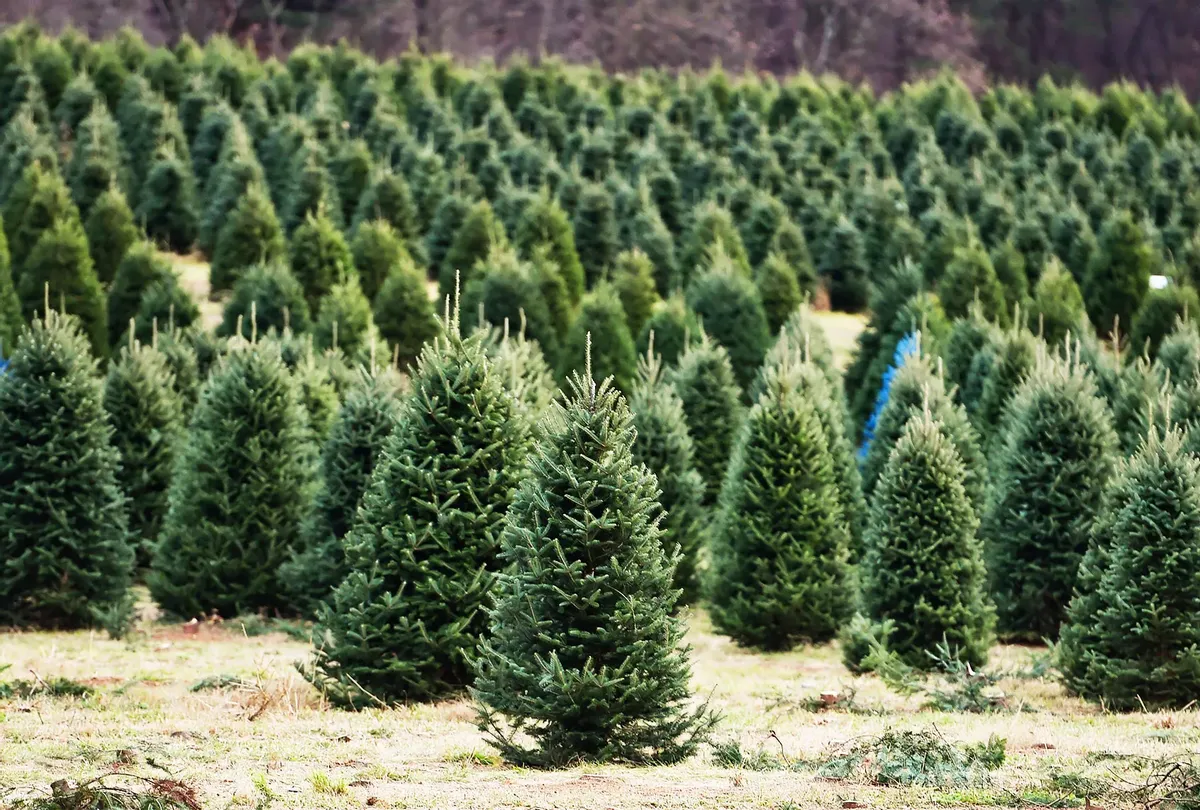
The retired farmer and his wife have managed a 12-hectare pine tree farm in Bywong, about 29 kilometres from Civic, since 1987. They’ve seen it all – from droughts to disease – but nothing compares to 2022’s sopping wet La-Nina-induced nightmare.
“Because the land is soaked with so much water, most of the crops are either drowning or drowned,” Keng Tan says.
“The roots can’t breathe and they drown, and the leaves then start turning brown on the lower branches and work their way up until the whole tree is dead. Just imagine putting your plant in a tub of water for six months. It’s not good.”
The result is hundreds of Pinus radiata trees, some carefully maintained over several years, that can no longer be sold to the public. Keng says a loss of this scale outweighs that of even the 2006 drought.
“Not enough rain and too much rain are both bad, but too much is worse,” he says.
“Drought typically only kills off the new trees whereas too much rain kills across all age groups and we suffer bigger losses. It takes more than one year to recover too.
“You invest a lot of work into the older trees, carefully pruning every year, so to lose them this year is hard.”
Keng studied forestry at university before he received a scholarship with CSIRO, where he worked a year before moving onto the public service and a job in computing and information technology.
But the interest in trees stayed with him. So he and his wife bought a block of land near Gundagai to start a Christmas tree farm, using pine trees imported from California.
“But it was very hard logistically, because of the distance from Canberra,” he says.
“Back in those days, there weren’t any mobile phones either, so it was hard to make deliveries.”
They bought their present farm near Bywong in 1987 and started from scratch again. Now retired from the public service, cultivating well-formed Christmas trees is a full-time job for Keng.
The average time between a seed and a tree ready for someone’s living room is about five years, so it’s far from an overnight project. It also depends on soil quality.
“Maybe in New Zealand, it would only be three years.”
Trees of all sizes are arranged in lines, like an orchard, and people wander through to pick their own. Keng provides a saw, and delivery, if needed.
“It’s formulated around a family situation, where parents and children can take a day to enjoy themselves by walking around the farm and picking a tree to bring home,” he says.
This year, there’s a fixed price of $80 a tree, regardless of size.
“If you want knee-high, you can, or anything up to 3.2 metres high. People living in an apartment might want one in table-top size while others with big mansions go for the bigger ones.”
Source - https://the-riotact.com