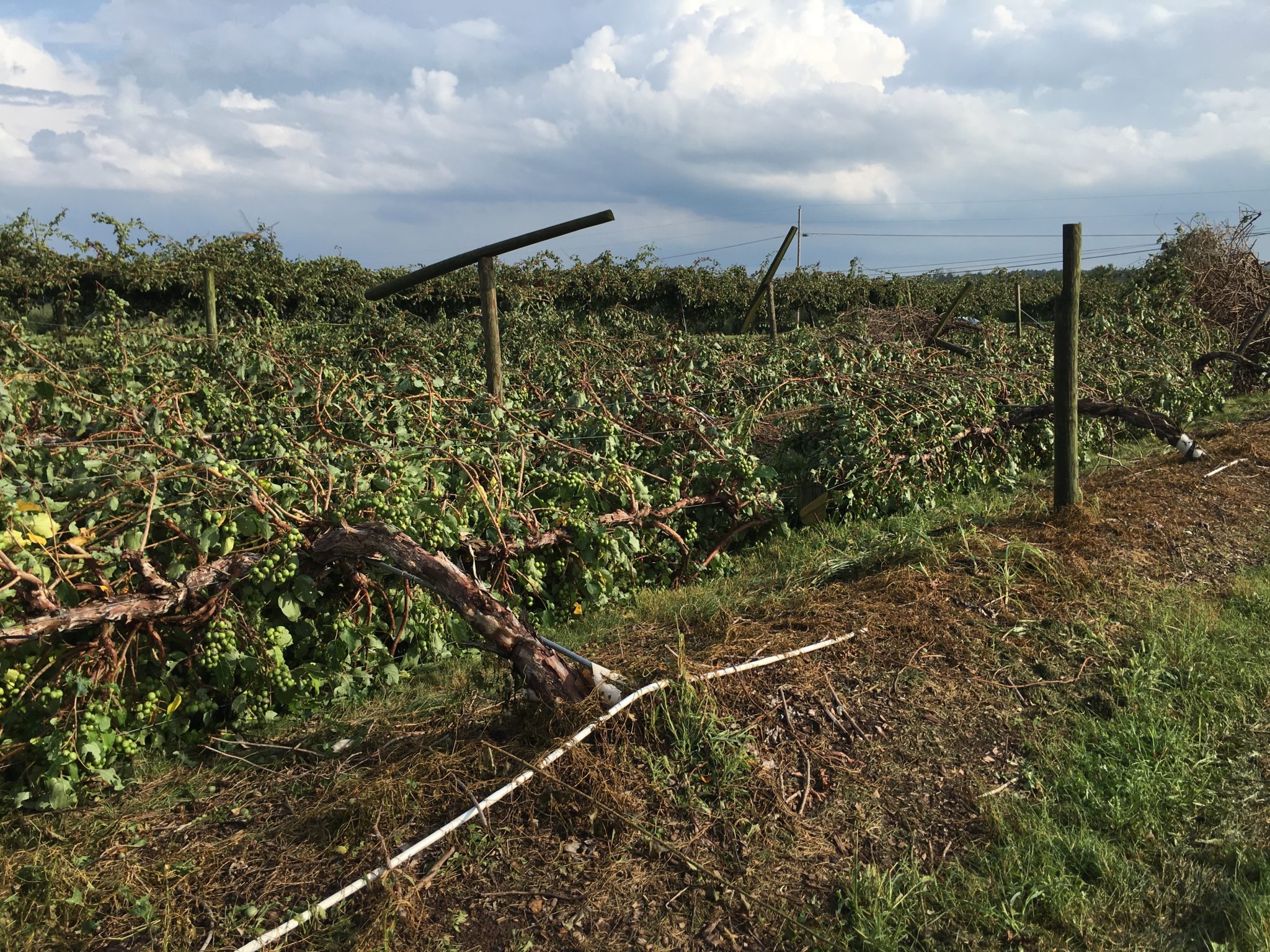
Severe hail and rain across parts of western Victoria last week were a further blow in an already tough season for the region’s farmers.
A drier than normal season, plus frost damage, were already affecting farmers’ decisions around their harvests.
While claims are still being made, the damage to crops is estimated to be in the tens of millions.
Large storms moved through the Wimmera on Wednesday evening, with a supercell thunderstorm developing further south, affecting parts of the southwest district and southern Wimmera.
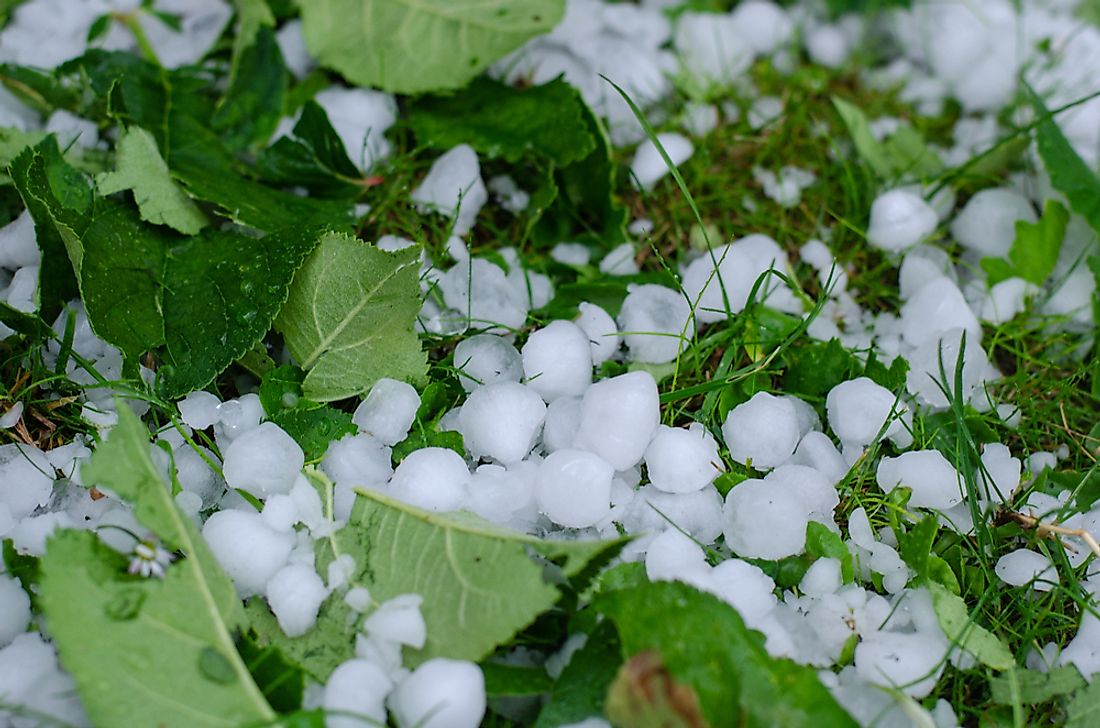
It hit Casterton particularly hard, where VICSES volunteers were called to more than 170 requests for assistance after 22 millimetres of rain fell in 20 minutes, wind gusts approached 90-kilometres an hour, and hail up to five centimetres in diameter.
Nhill-based crop insurance assessor Marty Colbert said in Victorian terms, it was a severe hail storm due to the size of the hail and the timing of the crop season.
Following a dry season and frosts, Mr Colbert said his work was ‘gut-wrenching’ at times.
“As an assessor, I seem to go from ‘car crash to car crash’,” he said.
Mr Colbert said it would be a significant loss, particularly to lentil crops.
“A way of explaining the loss is yield that will not end up in your header box. It might still be there, but if you can’t harvest it and get it into your header, it’s a loss,” he said.
“Then it becomes another problem because it’s on the ground, it’ll become a weed when it germinates over summer, so you’ll be spraying that out. So there’s a few incidental costs that come along as well.”
Green Lake farmer Cam Mibus estimated most of his crops would not be harvestable.
“We’ve got about 900 hectares of crops in the ground and probably 90 to 95 per cent of that has been hit by the storm,” he said.
“It has been an average, or just below average, year, but we would have had some sort of harvest.”
Mr Mibus said hailstones up to the size of golf balls fell on his home during the 35-minute event.
“We knew after about five minutes we were in a bit of trouble,” he said.
“We’ve had some building damage – the crop assessors will be here in the next week or two. I haven’t seen an event like this before, and my father hasn’t seen one this bad either.
“We’ll try to store some of the surviving crop and keep a lot of the damaged beans and barley for stock feed, we’ve just got to do what we can.”
Wimmera farmer and Victorian Farmers Federation grains president Craig Henderson said while he and others in his area escaped hail damage, they were assessing frost damage.
“I was talking to a farmer who he thought he had a pretty good crop, but when he had a look at it, there’s 120 hectares of extensive frost damage,” he said.
“We’ve had a really tough year, and you seem to get more frost damage when it’s moisture stressed.
“Considering the rainfall, it’s like it was in 1982. It’s a real testament to modern farming practices to see the crops that are out there –we’ve retained our subsoil moisture and that’s really come home in the spring for us.
“Most people won’t be receiving average yields, but it won’t be devastating like it was 40 years ago.”
Murtoa farmer Leo Delahunty said while the hail storm followed a relatively narrow path, the full extent of the damage would not be known for some time.
“From what I understand the storm was relatively isolated, but there were a number of farms that got pretty badly hit by it,” he said.
“Our area has been relatively lucky – we have been frosted, resulting in crops being cut for hay, but equally there are some crops that still have quite good potential because of the subsoil moisture that we had from the last summer rains,” Mr Delahunty said.
He said the resilience of the crops had been ‘quite incredible’.
“I think we’re going to see quite a wide range of reports come harvest time – some very poor crops through to some very good ones, but in terms of hail damage I would imagine the assessment of the damage won’t really be totally concluded until harvest time when the yield maps are seen,” he said.
Source - https://theweeklyadvertiser.com.au