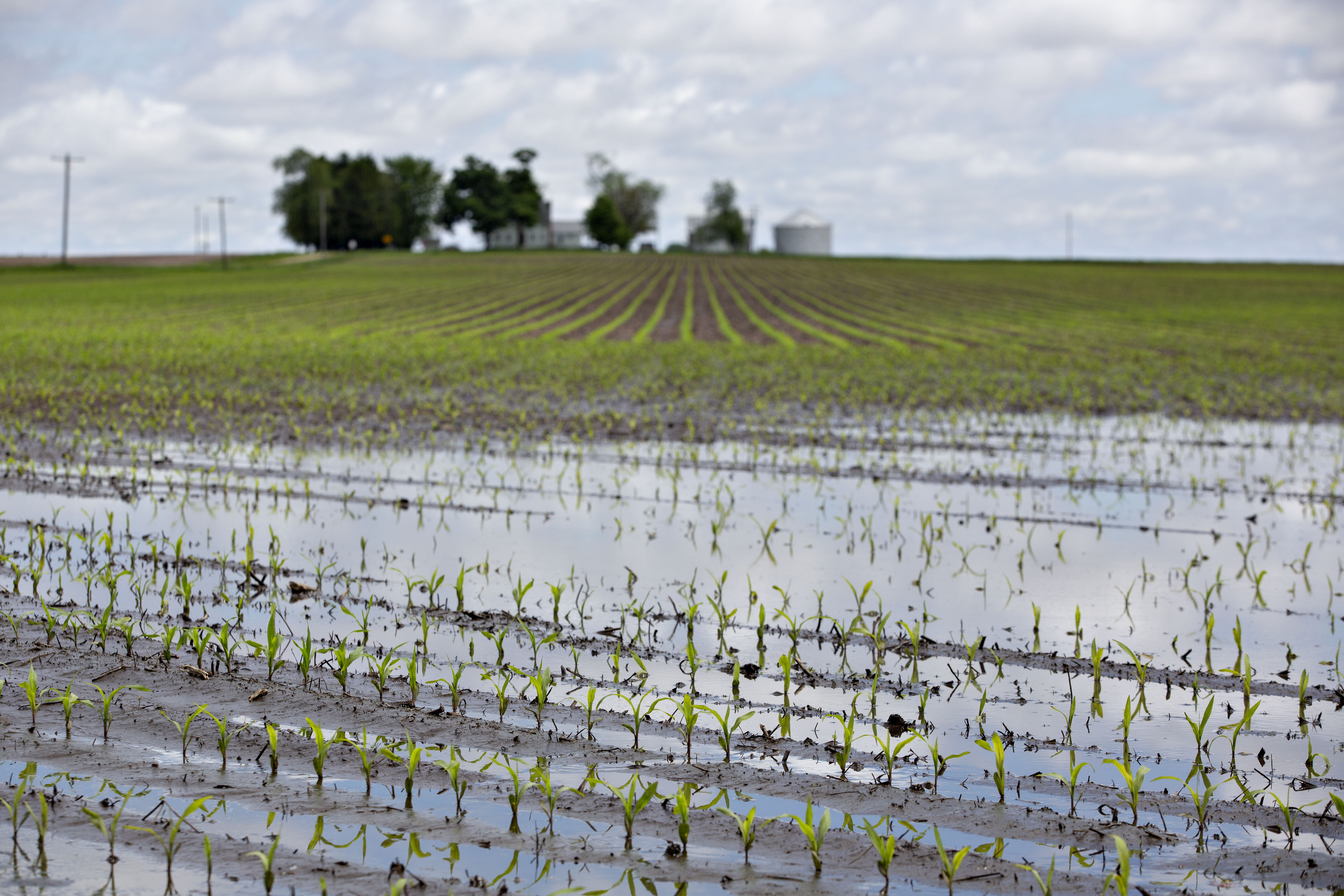
Heavy rain and flooding have seen less than half the expected rice crop planted in some areas of the country, as the window to sow closes.
In southern New South Wales, growers would typically be wrapping up sowing at this time of year.
Rice Growers' Association of Australia president Peter Herrmann says optimal sowing conditions have been replaced by an unseasonable amount of rain.
He says growers are still frantically trying to plant what they could.
"In theory, the window's still open but we've been saying this now for quite a few weeks and the weather keeps coming," Mr Herrmann said.
"Some poor families are in the situation where they haven't had the opportunity, despite their best preparations, to sow any rice crop this year."
Less than half the intended crop planted
Michael Chalmers is a rice grower at Wakool, west of Deniliquin, and chair of the local Rice Growers' Association branch.
While he managed to get half of his rice sown before the start of October, some of it was submerged for up to three weeks.
"It's drill-sown rice, which ironically doesn't want to be under water until about the end of November, so it's struggling along," he said.
Drill-down rice is planted directly into the soil and uses less water than aerial-sown rice.
Mr Chalmers said there would be a yield reduction and that counterparts in the Wakool region were even worse off.
"Talking to a good friend down the road, he's lost about 160 hectares of rice under floodwater — it's been under water for about a month," Mr Chalmers said.
"I would guess at the moment he has something like less than 40 per cent of the intended area planted."
After such a good year for the industry in 2021, Mr Chalmers says this year is a "bitter disappointment".
"Last year was a fantastic year, probably the best year I've ever seen for growing rice and this year's the polar opposite," he said.
'Tragedy' after a huge investment
At this stage, it is unclear how bad the losses are.
Mr Herrmann says it is a big blow for the industry after increased investment into this year's crop to cover high fertiliser costs.
"There's the opportunity cost of crops that aren't going to be sown," he said.
"Then there's the terribly distressing circumstances of losing crops that were so close, and that we had invested so much of our money in to produce.
"We're still in damage control mode so counting our losses is something we probably do in the middle of the night when we prefer to be sleeping."
Looking ahead
Mr Chalmers does not expect the domestic market to be impacted but things could be different overseas.
"Our export markets, probably there will be an effect given that there is a global rice shortage at the moment," he said.
Mr Herrmann says it is unclear what the coming months hold for growers, but he hopes the rain and flooding ease to ensure crop rotation can go ahead, which is vital for rice growers.
"We want that winter crop rotation, that pasture rotation, and inundation is not good for pastures," he said.
Source - https://www.abc.net.au