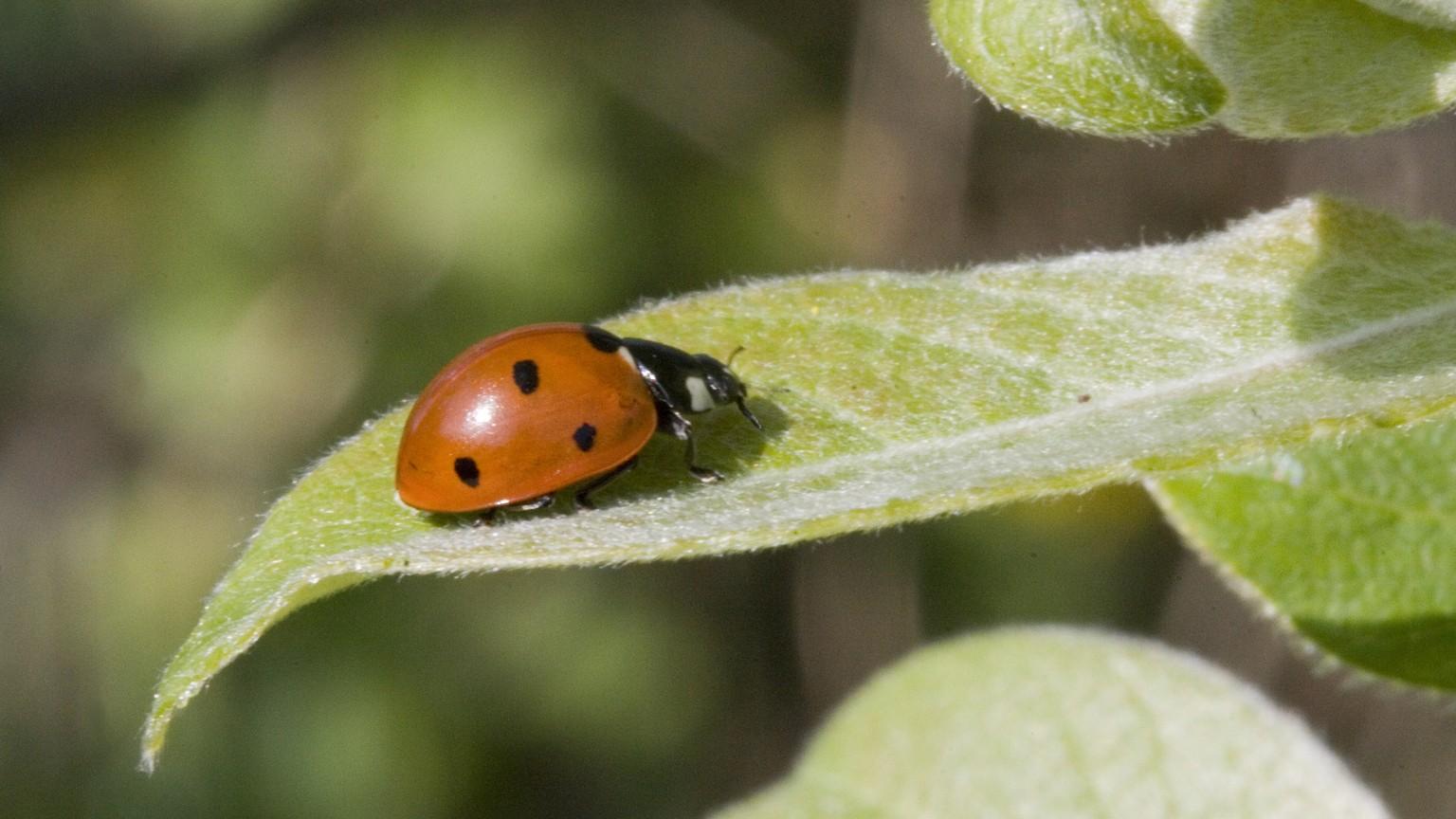
Australia - University researcher turning ladybirds into assassins

08.04.2024 436 views

Ladybirds — those tiny, spotted insects— are beloved by many, with some believing their bright colours and polka dot livery bring good luck.

Now, pushing beyond the realm of luck and into agriculture, the small beetle is taking on a new role as a pest-eating assassin, thanks to new research from Murdoch University.

Murdoch University PhD researcher Shovon Chandra Sarkar has successfully trained ladybirds to eat pests, namely, the highly invasive tomato potato psyllid.

How ladybirds are trained to be pest-eaters

On its own, the tomato psyllid can cause crop yield losses of more than 50 per cent and can also spread a serious bacterial disease called "zebra chip" in potato and tomato plants.

Psyllids also feed on capsicum, chili, goji berry, tamarillo, eggplant and sweet potato crops.

Sarkar found when ladybirds were introduced to psyllids early enough into their life cycle, they could learn to recognise them as their preferred prey.

"I worked on two ladybirds, one is native to Australia and another one introduced in 2002 in Queensland, and now it's all over in Australia," he said. "They both are commercially available ... other ladybirds we did not try, but maybe we can in the future."

Both of these types of ladybirds can be bought by farmers online and Sarkar said they can easily be trained to eat pests.

Scientists are increasingly turning to methods such as these as alternatives to agrichemicals, which often have reduced effectiveness as they develop resistance over time.

"One of the challenges that we face here in Australia is we use insecticides and indeed other pesticides in our farming systems," said Paul Umina, a professor specialising in sustainable agriculture at the University of Melbourne.

"They work very well, but unfortunately sometimes the pests that we're actually trying to target evolve resistance to those chemicals.

"And so unfortunately that presents a real dilemma for growers and farmers because the chemicals that they were using to achieve pest control may no longer work.

Source - https://www.sbs.com.au

27.04.2026

India - Crop Ruined by Parrots is 'Damage by Wild Animals', says HC; Gives Relief

Holding that citizens cannot be forced to bear losses caused by protected wild animals, the Nagpur Bench of the Bombay High Court has ruled that denying compensation to a farmer merely because parrots were omitted from a government list would breach principles of equality. 

27.04.2026

The World Bank: Agri-risk management in Bulgaria

CAP has steered Bulgarian agriculture toward greater resilience, but the sector continues to suffer from an absence of a comprehensive risk management strategy and limited research on internal and external risks, the report concludes.

27.04.2026

USA - Farmers Broaden Risk Strategies Beyond Crop Insurance Programs

Farmers and ranchers are using a broader mix of tools to manage risk as markets, weather, and policy uncertainty continue to shift. A new report from the USDA Economic Research Service shows savings and off-farm income remain the most common risk management strategies on U.S. farms.

27.04.2026

Nigeria - Firm, FG Disburse ₦396m Insurance Payout to Farmers in Four States

The Federal Government has partnered with Leadway Assurance and PULA Advisors to pay out N396.7m in insurance claims to smallholder farmers, in a move aimed at protecting Nigeria’s food system from worsening climate risks.

27.04.2026

Ghana Targets US$3bn Post-Harvest Loss With One Million Tonne Storage Plan

Ghana loses an estimated $3 billion worth of food to post-harvest losses each year, a figure nearly equivalent to the country’s entire annual food import bill, a senior government official has disclosed, as authorities outlined a national plan to build storage and market infrastructure to reverse the trend.

27.04.2026

Australia - Farmers in WA food bowl region take $25 million cyclone hit

Fruit and vegetable producers in Western Australia's Gascoyne are estimated to have suffered losses above $25 million from Tropical Cyclone Narelle.

23.04.2026

Canada - Agricorp pays out more than $253 million after challenging 2025 season with soybeans recording the biggest losses

As of mid April, Ontario farmers claimed more than $253 million in Agricorp production insurance for the 2025 season, more than double the $115 million claimed a year earlier. 

23.04.2026

USA - Cold damages Michigan apples, peaches and cherries, MSUE say losses uneven

Michigan State University Extension educators are expecting widespread but highly variable fruit damage across the state following this weekend’s low temperatures.