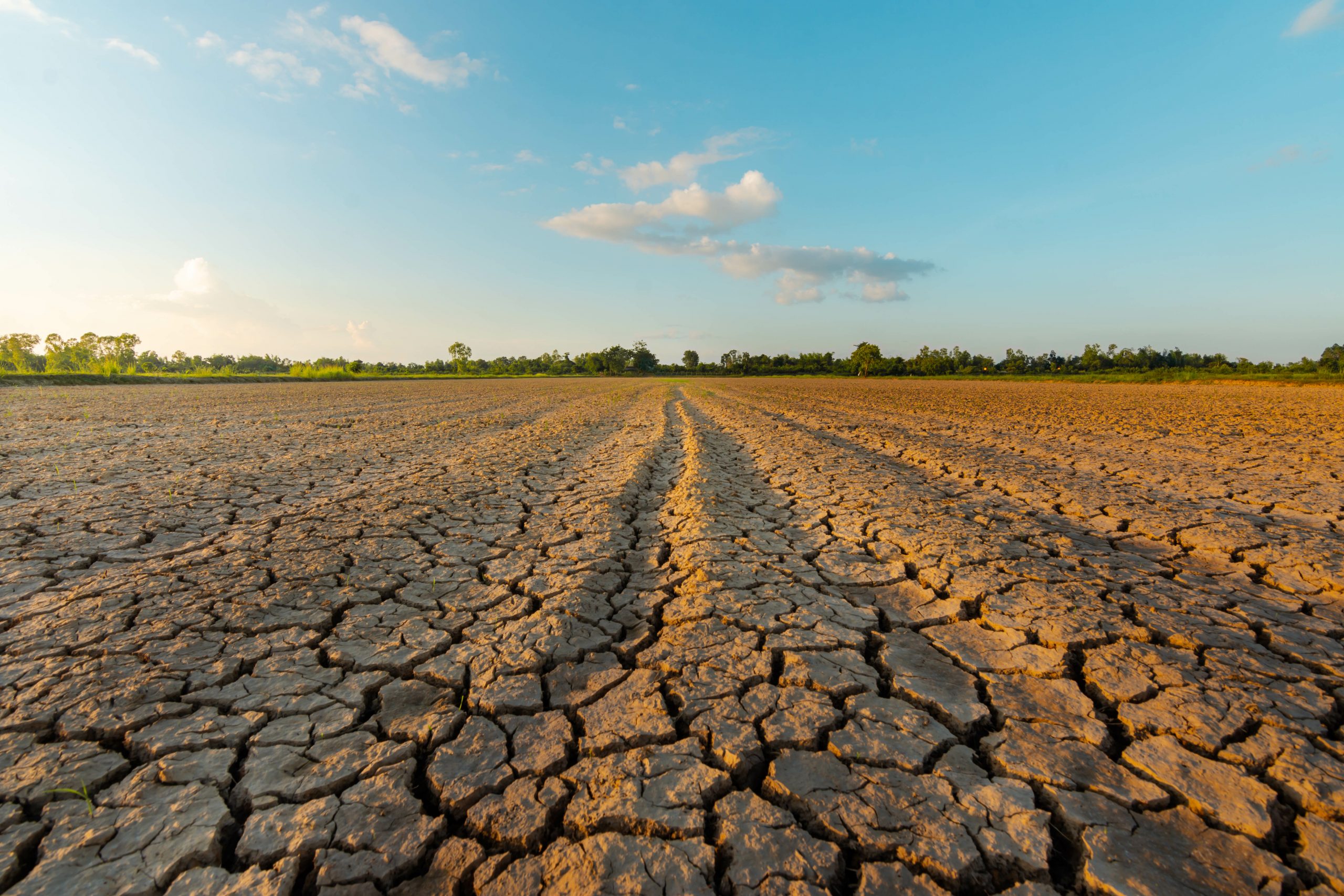
Grain crops are failing in parts of the country due to dry weather and severe frosts.
Farmers are weighing up whether to cut them for hay instead of taking them through to harvest, but some crops are too poor even for hay.
Crops are running out of moisture in large parts of South Australia and north-west Victoria, where rainfall this growing season has been in the lowest 10 per cent on record.
On top of the dry conditions, some areas have also been smashed by severe frosts this week, which can damage plants and limit grain production.
Many farmers are concerned that if they don't receive decent rain soon, their crops will produce little grain.
Frosts smash already struggling crops
Crop assessor Marty Colbert said damage from three consecutive frosts would be "severe" in some regions.
"Our crop canopies aren't very big this year so the frost has plenty of opportunity to get in among it, and the consecutive days do have a cumulative effect," he said.
"I wouldn't be surprised if there could be 50 per cent losses, and we're not out of the frost window yet."
Severe frosts in some regions has been the latest blow for grain growers. (Supplied: Pat Hallam)
Mr Colbert said in past seasons with mild springs and favourable rainfall, he had seen crops recover remarkably well from frost damage, but it would be a different story this season.
"I've seen crops completely recover, they just grow a whole new crop of fresh tillers and you'd wonder whether there'd ever been a frost," he said.
"But this year is the direct opposite of that, given we're all heading to the bottom of the barrel of moisture reserves, so these plants are already moisture-stressed and thus have very little potential for recovery."
Thinner by the day
Rick Plant, who farms at Cocamba in Victoria's Mallee, said his region was in desperate need of rain.
"We had 100 millimetres in the first week of January and ever since then we've been very dry all the way through," he said.
Crops in some regions are running out of moisture and dying. (Supplied: Rick Plant)
"Some areas are really tailing off and fizzling out and the crop is on its way to dying.
"Some of the crops that germinated early have held on pretty well, but anything that germinated late or is on heavier soil types has really struggled."
Some crops are performing better than others, but will still need more rain before the season is out. (Supplied: Natalie Plant)
If there's enough bulk in drought or frost-affected crops, they can be cut for hay, which could be a good option, given southern Australia's fodder stocks are low and hay prices are the highest they have been in several years.
But in some areas, crops are so poor that farmers can't justify the cost of cutting them for hay, nor do they want to leave the paddocks bare and run the risk of wind erosion over summer.
Mr Plant predicted grain yields could be as low as half a tonne to the hectare and would not cover costs.
"I think any crop that's still hanging in alright will make grain and the poorer crops don't have enough bulk to make it worthwhile, I just don't think it would be economical," he said.
Crops in the Victorian Mallee are hitting the wall as they run out of moisture. (Supplied: Natalie Plant)
Confronting situation
Joel Pymer is a young farmer and hay contractor from Wonwondah, south of Horsham in the Wimmera.
He recently took his windrower north to a farm near Swan Hill to cut a failed canola crop for hay.
"I hadn't been up there for a while so it was quite confronting really," he said.
"The crops on the sandier soil types seem to be going alright in spots, but they're really struggling on the heavier soil types."
In a good season, this canola crop could have been chest high. (Supplied: Joel Pymer)
Even by windrowing the canola in 24 metre swathes, Mr Pymer said there still wasn't much biomass.
"It's a tough decision for many farmers, whether to cut or not cut those failed crops," he said.
Weather models not helping
Agriculture Victoria seasonal risk agronomist Dale Grey said despite weather models predicting rain, it just wasn't materialising.
"It's been a cow of a year for climate prediction," he said.
"We still have half the models predicting a wetter possibility for spring, and the other half sitting on the fence and saying anything could happen, and that's been going on for months.
"And rain is not manifesting, we're just getting these drier months, so my confidence is shot, I'm not believing these models at all."
Dale Grey says weather forecasting this season has been tough. (ABC Wodonga: Annie Brown)
Mr Grey advised farmers to make decisions — like whether to cut crops for hay — based on the conditions in front of them, rather than what long-term forecasts were saying.
"I think people need to be making decisions based on what they can see and measure, what soil moisture they have … rather than making a decision based on what a forecast may be saying," he said.
"Some years, the forecasts are not useful, that's a fact, and this year looks like one of those."
Huge input costs
Mr Plant said he and other farmers were facing big losses this season after spending heavily on inputs like fertiliser and putting faith in good subsoil moisture and a promising long-term rainfall outlook.
"I think the issue we've had this year is the fact we've had subsoil moisture and the rainfall outlook was pretty good so people have spent up on their crops to capitalise on that; a fair bit of urea has gone out, but we just haven't had the rain," he said.
"It's been an expensive crop to not have a great deal of prospects at the end."
Farmers hopeful of a good season have spent up big on inputs like urea, but face making little money back. (ABC Rural: Clint Jasper)
It costs several hundred dollars per hectare to grow crops, irrespective of yields, so wheat yields below one tonne to the hectare would be unlikely to cover costs.
But Mr Plant said tough seasons were part of life in the Mallee.
"That's farming I suppose," he said.
"It's happened before and it will happen again — we live in hope, that's the reality of being a farmer."
Source - abc.net.au