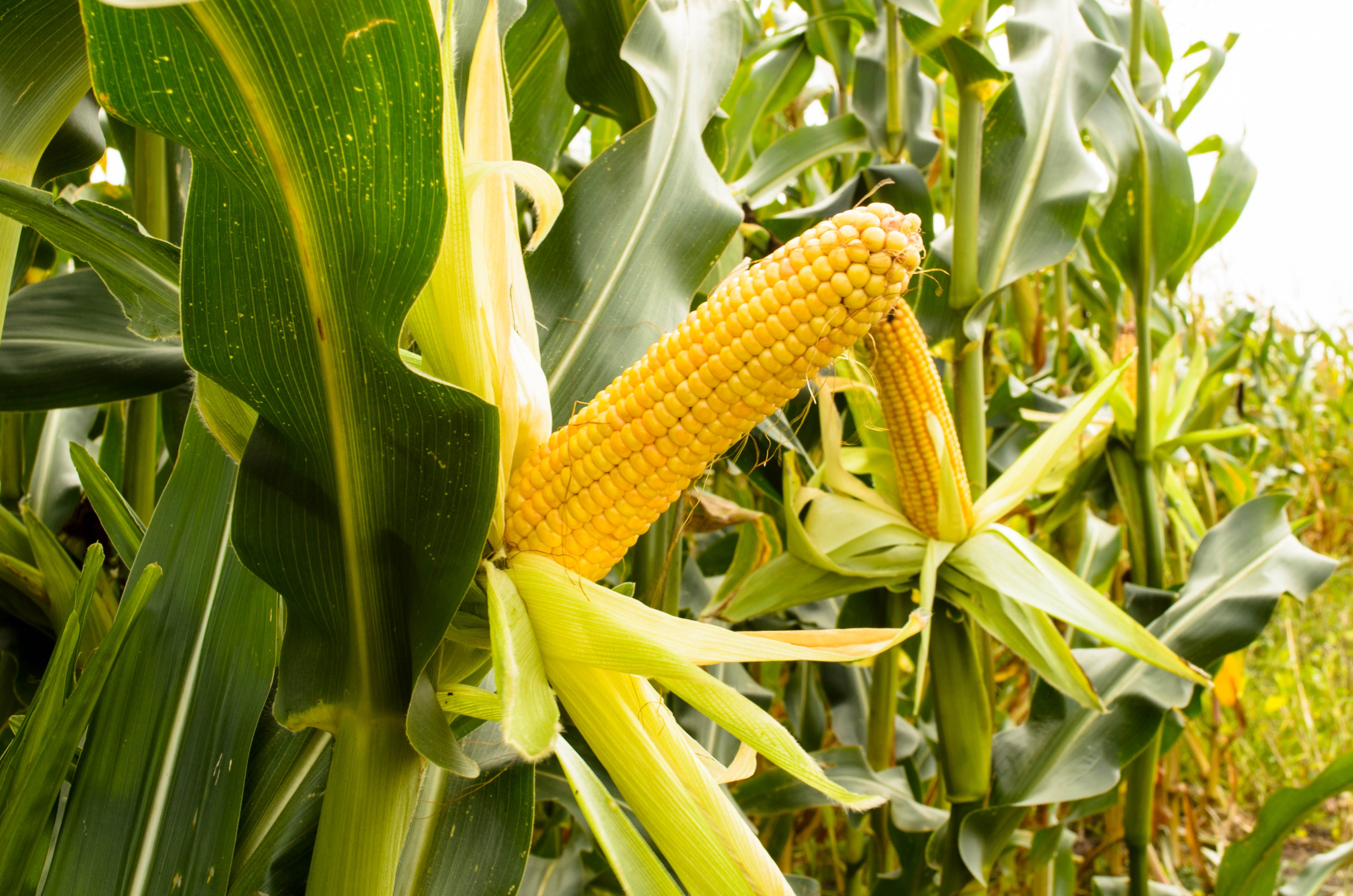
Brazil has been slated for a record corn harvest this year after drought ravaged the country’s soybeans just months ago and its corn a year ago, but dryness once again threatens to curb potential on its second crop.
Brazil is typically the second-largest corn exporter behind the United States, and those supplies primarily stem from its second crop that accounts for three-quarters of the full-year output.
Four states are responsible for at least 87% of second corn production, and top grower Mato Grosso just experienced one of its driest Aprils on record. Planting there was quicker than normal this year with close to 90% done by the end of February.
In Mato Grosso’s crop-heavy north region, April rains were the second-driest in more than two decades behind 2016. Coupled with hot temperatures, second corn yields dropped by 30% in 2016, but late planting had also been an issue.
In the last couple of decades, Mato Grosso’s corn yields were good in only one of six years where April rainfall was notably low, and that was based on abundant May moisture. Showers could arrive early next week, though weather models are mixed on those chances.
May rainfall is only one-third that of April due to Mato Grosso’s seasonal patterns, though if the dry period starts earlier than normal, ample rains are less likely to return. The center-west state accounts for about 45% of the country’s second corn crop.
Weather has been worse in nearby Goias, which grows 12% of the second corn. April rains were less than 40% of normal in its prime crop areas, and the next two weeks may feature just 0.5 inch (12.7 mm).
Another 18% and 12% of second corn comes from Parana and Mato Grosso do Sul, respectively, and those states observed more rain than normal last month. Both are expected to be dry for the next 10 days, especially Parana, though the crop is doing well so far.
Parana’s agriculture agency rated 92% of its second corn in good condition as of Monday, down from 96% a week earlier. Some 42% of the crop was pollinating and 32% was in grain fill, and 24% awaited pollination. Heat, which can disrupt pollination, is not expected in the coming week, but the dryness must be watched.
However, good rainfall up until now should provide a cushion. Parana’s second corn yields usually meet or exceed averages when April moisture is ample, and subsequent yield losses are modest if May rains are too light.
Second corn yields in Parana last year fell 50% from the prior cycle as April featured almost no rain, and very late planting led to late-season frost damage. Dry weather in late 2021 and early 2022 cut Parana’s soybean yields more than 40% on the year.
ESTIMATES, EXPORTS
Brazil’s corn exports in the 2020-21 marketing year were 40% lower than in the prior season because of the poor crop. The U.S. Department of Agriculture predicts 2021-22 exports at a record 44.5 million tonnes, more than double the previous year.
That is assuming a 116 million-tonne full crop, possibly too high given the recent and expected weather. USDA may update that number next week, though any crop reductions could curb exports, too. Brazil’s Conab last month pegged the crop at 115.6 million tonnes.
A total harvest that large would substantially beat the previous high of 102 million tonnes set two years ago and is primarily based on a 6% planted area increase from last year’s record. The full harvest reached only 87 million last year after a very weak second crop.
It was a forgone conclusion last year that the slippage of Brazil’s crop would lead to an increase in U.S. corn export sales, but that was not the case. High prices and the cheap relative cost of alternatives, which included wheat at the time, were possible reasons.
No. 4 corn exporter Ukraine is largely offline and its restoration date is unknown, so importers may have to increase reliance on U.S. and Argentine supplies in the next few months should Brazil’s crop fall short.
Ukraine and Brazil share key customers in Egypt, Iran and Spain, though Ukraine’s top buyer, China, does not currently import South American corn due to phytosanitary restrictions. Japan and South Korea are the commonalities for Brazil and U.S. corn, and U.S. exporters have the proximity advantage in the Mexican market.
Brazil’s corn exports typically peak around August following the second harvest.
Source - https://www.hellenicshippingnews.com