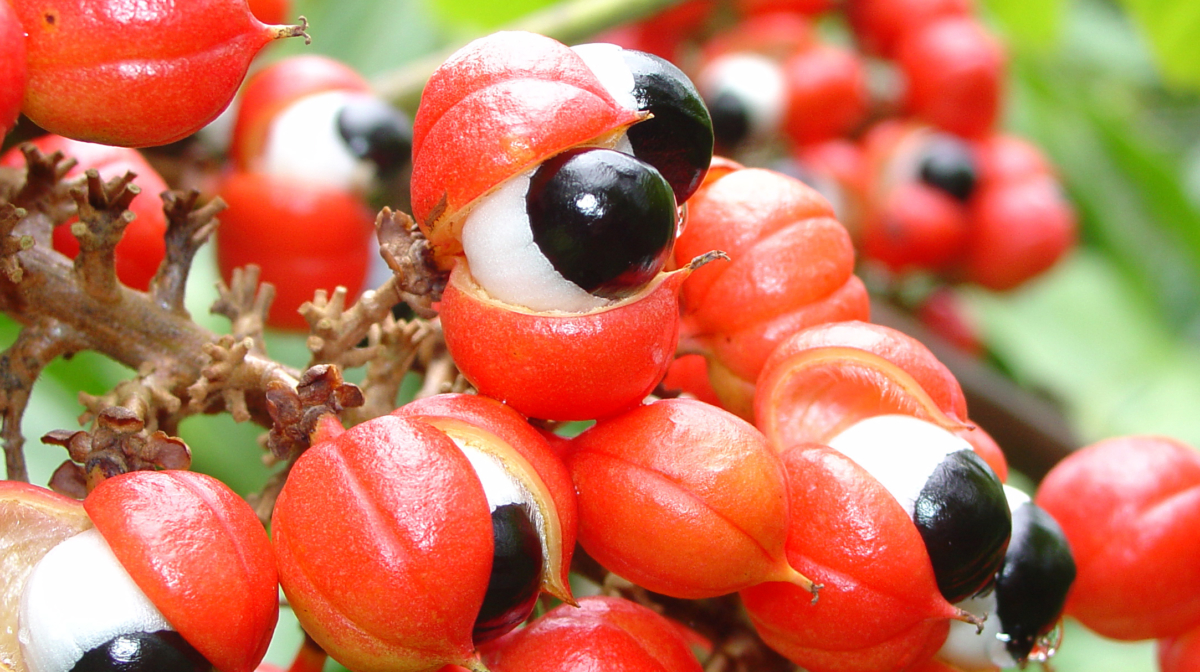
The fungus has been observed in guarana clones, indicating that the new pathogen needs to be monitored so that it does not become a problem for the crop in the future.
A new species of fungus found in guarana plants, with symptoms characterized as leaf spots similar to anthracnose, is capable of causing leaf disease in açaí and palm oil plants. The discovery was made in research based on field observation, isolation of the fungus and laboratory analysis with morphological and molecular characterization, carried out by the Molecular Biology Laboratory of Embrapa Western Amazon (AM).
The new species belongs to the group of fungi called pestallotioids, which encompasses three genera (Pestalotiopsis, Pseudopestalotiopsis and Neopestalotiopsis) and causes diseases in a wide range of hosts. In guaranazeiro, species that are part of two of the three genera that include pestaloids have been identified. Of the six strains analyzed, three were identified as fungi of the species Neopestalotiopsis formicarum, while the other three isolates are described as a new species baptized as Pseudopestalotiopsis gilvanii. The study also brings the first report of Neopestalotiopsis formicarum as a pathogen of the guarana plant.
Pseudopestalotiopsis gilvanii was isolated in guarana plants and aroused concern about the way it affects the crop, because it causes symptoms that burn the leaf, reducing the possibility of photosynthesis and, consequently, impairing the development of the plant. "In addition, the fungus has been observed in guarana clones that are launched cultivars, indicating that this new pathogen needs to be monitored so that it does not become a problem for guarana cultivation in the future," warns Embrapa researcher Gilvan Ferreira da Silva, coordinator of the Molecular Biology Laboratory.
The scientist points out that the discovery is important not only for revealing a new species, but also for identifying a new pathogen that can become a problem for some crops of economic importance in tropical regions. However, the researcher makes it clear that producers can remain calm, since the new pathogen at the moment is not yet a threat, the fungus has been observed in the field at low frequency, requiring monitoring to better understand the behavior of the pathogen.
Ferreira says that at first anthracnose was suspected, another disease that affects the guarana tree, caused by the fungus Coletotrichum guaranicola. However, scientists verified the occurrence of the disease in plants resistant to anthracnose, developed through genetic improvement. With this, it was even suspected of a breakdown in plant resistance to the fungus that causes anthracnose.
Other results, however, showed that it was a new pathogen. And molecular studies combined with morphological characterization indicated that part of the isolates did not correspond to anything that was described in the literature indicating that it was a new species. The discovery was later confirmed and described in an article published in the journal Phytotaxa, which specializes in taxonomy.
DISCOVERY PUBLICATION
The discovery of the new pathogen was published in the scientific journal Phytotaxa and is reported in the scientific article Pseudopestalotiopsis gilvanii sp. nov. and Neopestalotiopsis formicarum leaves spot pathogens from guarana plant: a new threat to global tropical hosts, which has as authors the researchers Gilvana F.Gualberto; Aricléia de M. Catarino, postdoctoral student of the Graduate Program in Agriculture in the Wet Tropic at the Amazon Research Institute (INPA); Rogério E. Hanada, researcher at Inpa; Gilvan Ferreira da Silva, researcher at Embrapa Amazônia Ocidental; Thiago Fernandes Sousa, master's degree in Microbiology from the Federal University of Viçosa (UFV) and advising Gilvan, at Embrapa Amazônia Ocidental; Fernanda F. Caniato, professor at the Federal University of Amazonas (UFAM); and Jeferson Cruz, technician at the Molecular Biology Laboratory of Embrapa Western Amazon.
PHYTOPATHOGENIC POTENTIAL FOR VARIOUS CULTURES
After confirming that they were phytopathogenic species in guarana, it was decided to investigate the potential of these new pathogens to affect other plants economically important for the tropical region. Under controlled research conditions, the fungus was inoculated in samples of açaí plants (both in the species Euterpe precatória, known as açaí-do-amazonas, and in the species Euterpe oleracea, açaí-do-pará), oil palm, banana and rubber tree, which are cultures studied in Embrapa Western Amazon
In the results it was found that the fungus Ps. gilvanii was pathogenic to acai palm trees, both of the species Euterpe oleracea and E.precatoria. It also affected palm oil (Elaeis guineensis), but had no pathogenic effect on banana (Musa paradisiaca var. pacovan) and rubber trees (Hevea brasiliensis).
Research also indicated that the fungus N. formicarum was not pathogenic to rubber trees, but was pathogenic to other species tested. The symptoms caused by pestallotoid fungi manifested in these cultures are also similar to those of anthracnose, presenting leaf burning spots that impair the photosynthesis capacity of plants.
THE AGRICULTURAL IMPORTANCE OF THIS GROUP OF FUNGI HAS INCREASED
Ferreira clarifies that there is no talk of the frequency of these diseases, nor of losses caused, since the pathogen has been recently described and studies in this regard have not yet been carried out. However, he comments that the discovery of this new plant pathogen comes at a time when studies indicate this Pestalotioides group as emerging pathogens.
While in the 1980s and 1990s pathogens of this group were considered unimportant, in recent years the scientific literature on them has increased a lot. Dozens of articles have been published annually on these pathogens and in 2021 alone there were 61 studies in the PubMed database. Studies have even been published that show the agricultural importance of diseases caused by this group in China, with examples showing that it affects production, such as Pinus bungeana pine, and the Camelliae sinensis tea plant, as well as coconut trees (Cocos nucifera) in Bangladesh.
PREVENTIVE STRATEGIES
New studies are being sent to act preventively in relation to these phytopathogenic fungi and establish disease control strategies. "New projects have been developed and approved to expand research in the field of molecular biology, genomics and transcriptomics," announces the Embrapa researcher.
As the new fungi have been verified in some of the clonal cultivars of guarana, putting at risk materials that stand out for being very productive, further research will be done to evaluate the levels of resistance and susceptibility of these cultivars to these new pathogens.
The researcher explains that, in partnership with researcher Fernanda Caniato, from Ufam, the fungus Ps. gilvanii will be studied at the genomic level, with the identification of the genes of the microorganism and the defense genes of the guarana tree against this new pathogen.
Studies will be carried out with transcriptome (complete set of RNA transcripts) of the interaction between the pathogen and guarana clones, both resistant and susceptible, to verify transcripts expressed differentially in resistant plants and susceptible plants.
Another line of research has also been initiated that is evaluating the potential of bacteria and fungi to combat and control pathogenic fungi. This work, which focuses on the development of forms of biocontrol of plant pathogens, is supported by the Amazonas State Research Foundation (Fapeam) and coordinated by Caniato, from Ufam, in partnership with Embrapa.
Source - https://abrafrutas.org