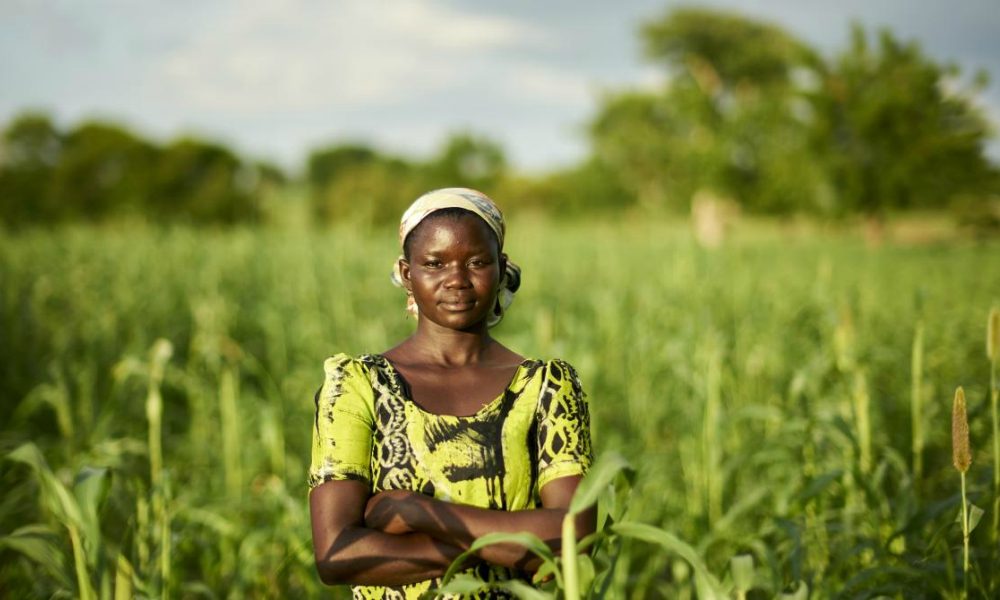
Climate change is creating a nightmare scenario for subsistence farmers around the world.
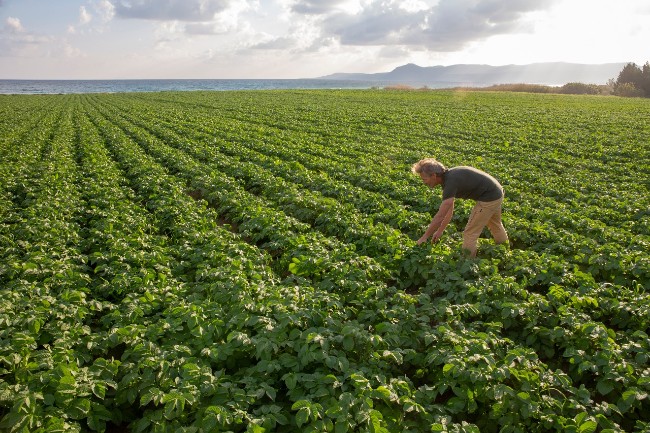
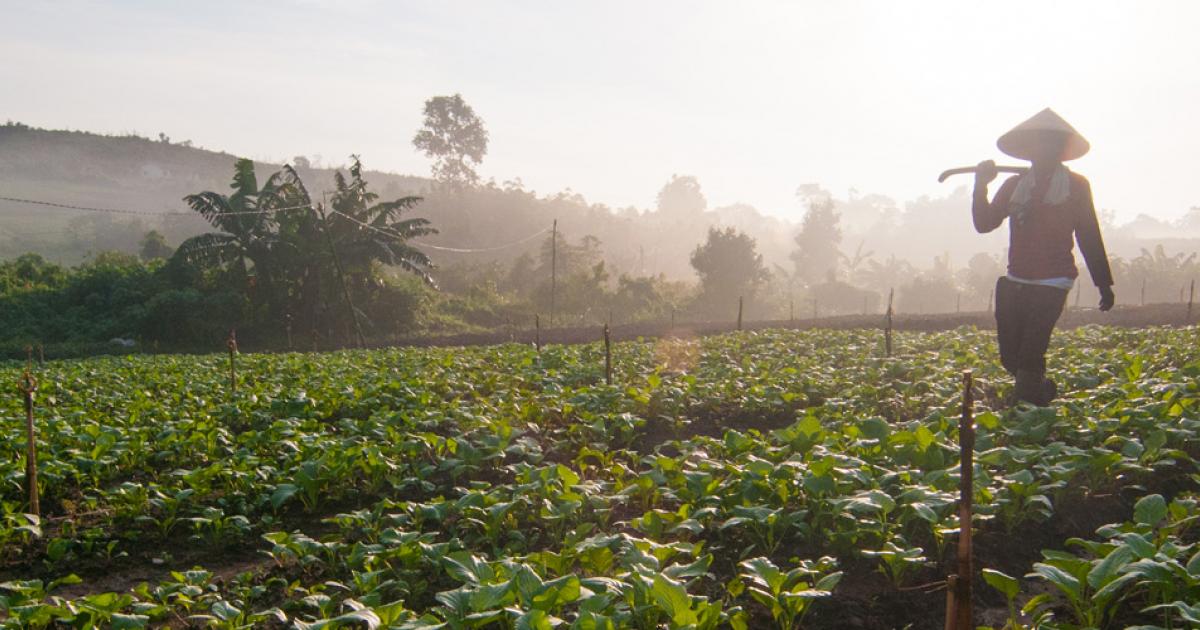
Subsistence farms are typically small operations, often less than 2 hectares, with outsize importance to the families that operate them, and to the surrounding community that relies on the crops. As of 2013, nearly 2 billion people on the planet relied on small-scale subsistence farms for survival. But those farms are in trouble: Rising CO2 levels have increased the likelihood and severity of extreme weather events like droughts, floods, and wildfires—a trend that can leave those farmers with nothing to eat and no money to buy food elsewhere. According to the Food and Agriculture Organization of the United Nations, extreme weather disasters cost developing nations’ agriculture sectors $108 billion between 2008 and 2018.
But one company thinks it can help solve the problem with a seemingly unlikely tool: blockchain.
Using blockchain technology to protect people from climate change might sound a bit like using gasoline to protect against a blaze, but the Lemonade Crypto Climate Coalition, which launched last week, says that’s exactly what it wants to do.
Most blockchain technology is famous for being energy intensive: One Bitcoin transaction uses enough energy to power an average U.S. house for six weeks, according to some analyses. Put another way, each Bitcoin transaction is equivalent to releasing 402 kilograms of CO2. The Lemonade Crypto Climate Coalition, a new nonprofit arm of insurance tech firm Lemonade Foundation, believes it can leverage blockchain technology to provide insurance against climate disasters for upward of 2 billion subsistence farmers on the planet, and avoid making the planet hotter while doing it. The Lemonade Foundation is focusing its early efforts in Africa but wants to one day bring its ideas to South America, Asia, and anywhere else where small-scale farmers need crop insurance.
Climate insurance is not a new concept, but providing the service to subsistence farmers has been difficult historically. Claims are often small—on the order of tens of dollars—meaning that it’s incredibly difficult for traditional insurers to underwrite and process claims and still make money. “Everything’s upside down. It costs you more to service the claim than the claim itself,” says Daniel Schreiber, Lemonade’s cofounder and CEO.
Lemonade is partnering with weather tech company Tomorrow.io for the weather monitoring and climate data that will be used to underwrite and process insurance claims. “They’ve done some pretty sophisticated and highly granular modeling of weather patterns . . . really using the best data that’s available,” Schreiber says. The data should get even better if Tomorrow.io’s plans to launch a suite of rain-tracking satellites later this year comes to fruition.
Lemonade’s proposed solution is to use smart contracts—a blockchain feature brought to prominence by Ethereum—to basically automate the payout process. Smart contracts are programmable functions that execute on a blockchain-backed network. Users decide the terms of the contract in advance, and if conditions are met, payment is issued automatically. For example, a wager on a March Madness game could be made, and once the game ends, the network would automatically pay out the winner and deduct money from the loser. Or, in the case of a sweet potato farmer in sub-Saharan Africa, if there’s a drought in the region that exceeds a certain threshold, they might receive the cash value of their lost crops.
Such smart contracts are only as good as the data you feed them, but blockchains have developed an ancillary technology, known as oracles, that are designed to scrape and verify data from the digital world for exactly this purpose. In the case of Lemonade’s new insurance technology, oracles would continuously monitor data from weather stations and satellites to determine which claims it should pay out.
Cascade Tuholske, a postdoctoral research scientist at the Columbia Climate School, says the idea makes sense on a regional scale. “On an individual farm basis, to resolve actual crop loss would be pretty hard with any existing meteorological product, but for a large-scale drought, the general meteorological pattern for West Africa or sub-Saharan Africa can be resolved fairly well,” he says, adding that as satellite and weather station data continue to improve in the region, models are only expected to get better. “Especially in West Africa, crop insurance has been shown to be a robust strategy to shore up farm losses during challenging times,” he says. “These farmers need help.”
WHAT ABOUT THE ENVIRONMENT?
Lemonade is well aware of the ecological impact of many traditional blockchains, and appears equally keen to avoid them. Its insurance product will run on the Avalanche blockchain, which is designed to be low cost and environmentally friendly.
The key difference between Avalanche and many other crypto networks like Bitcoin or Ethereum is that it uses “proof of stake” instead of “proof of work” to validate transactions on the network. For those who need a refresher, most blockchains rely on proof of work to validate transactions on the network. In essence, proof of work requires that a system perform a resource-intensive mathematical computation as a show of good faith. This prevents users from gaming the system and limits vulnerabilities to denial-of-service attacks and other malicious activities because users have to invest substantial computing power to participate.
Proof of stake, on the other hand, is a consensus mechanism, meaning users are selected by the network to validate transactions. Users with more assets on the network (and thus a higher stake in maintaining its fidelity) are more likely to be selected. The “winner” of this selection process validates a transaction; other users can then confirm the transaction’s validity. (Every user who participates in the validation process earns rewards on the network, often in the form of the native digital currency.)
While typically not quite as secure as proof of work, proof of stake requires orders of magnitude less energy and comes with cheaper, faster transactions, which is good for someone trying to process a $60 insurance payout for a lost crop. On Avalanche, “the transactional costs are a tiny fraction of what they are on Ethereum,” Schreiber says. “On Ethereum, you can’t do a $5 transaction, because you’ll end up paying $30 in transaction fees.”
GETTING PEOPLE TO SIGN UP
Lemonade is partnering with Pula, a Kenyan company that has for years been operating across Africa to provide microfinancing solutions to farmers. If Pula can deliver on its promises and convince users to sign up, it could be a chance for blockchain to undo some of the harm it’s done to the planet. For Schreiber, that’s what makes the project so exciting.
“Blockchain is an interesting technology in many ways, but one thing that nobody could accuse it of right now is having a real-world impact,” he says. “That’s what makes this initiative so interesting. It’s an attempt to do exactly that: To use all the powers of this novel technology, to leverage them for what couldn’t be more real world: subsistence farmers who are exposed to the weather.”
Source - https://www.fastcompany.com