Cross-Canada project to reduce methane production will be led by UBC researcher.
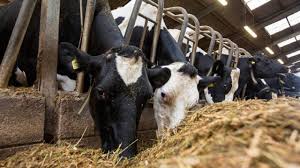
A pan-Canadian research project will try to understand more about how methane is generated in the rumen of beef and dairy cattle.
Dr. Leluo Guan, of the University of British Columbia (UBC) was recently awarded $7.9 million in funding from the Natural Sciences and Engineering Research Council of Canada (NSERC) and the Social Sciences and Humanities Research Council (SSHRC). She is the Canada Research Chair in Animal Function Genomics and Microbiome.
Other researchers on the project include Guan’s colleagues from UBC those from the University of Guelph, University of Alberta, University of Manitoba, Agriculture and Agri-Food Canada and the Canadian bovine genetics company Semex.
There are products that will reduce methane in cattle, such as Bovaer and some types of seaweed. However, researchers expected to find an improvement in feed efficiency, a benefit to farmers in return for reducing methane, and most of the technologies have not found the expected feed efficiency improvement.
That’s sent research back to the lab to try to figure out more about the hydrogen cycle in the rumen of beef and dairy cattle.
The answer is likely tied to the flow of hydrogen in the rumen.
“All of the stoichiometric equations that we would use to predict energy flow would have predicted that we would have seen that value (improved feed efficiency) in the animal. And we’re very perplexed as to why we haven’t seen that,” said Dr. Tim McAllister, principal research scientist for cattle production with Agriculture and Agri-Food Canada, based in Lethbridge, Alta.
The five-year study will look at the rumen microbiome and the methane-creation processes that happen there, and aims to find technology and management changes that can make rumen function most efficient. Guan has been conducting research in this area for years.
“We know that rumen microbial fermentation is essential to the growth and development of cattle and that methane formation is a necessary part of that process,” Guan said in a UBC article. “Rather than trying to stop these processes, we want to reduce the amount of methane they generate. In this study, that means looking at diet, nutrition, management and more.”
Data will be examined from more than 10,000 animals across Canada. Guan hopes to analyze the data using metagenomic and machine learning analysis.
“By changing the hydrogen flow from being used for methane synthesis to short chain fatty acids production, we can provide more energy sources for cattle and lower the methane at the same time. By targeting the microbes involved in these pathways, we could ultimately to reach a ‘win-win’ situation,” she said.
The project also includes a deep dive into cattle genetics, one of Dr. Guan’s specialties. University of Guelph has resulted in the ability of Canadian dairy producers to select for more methane-efficient cows.
Guan’s research has shown that rumen microbes can be heritable in beef cattle.
The Canadian beef sector has set a goals of reducing greenhouse gas emissions by 33 per cent by 2030 and dairy farmers plan to be carbon neutral by 2050.
Source - https://www.country-guide.ca