In 2014, Charlottetown-based research scientist Bourlaye Fofana was looking for a way to make plant products healthier by adding the antioxidant selenium.
Selenium is a mineral that's found in soil, water and some foods. The micronutrient is important in the diets of humans and animals.
But while he was investigating its nutritional benefits, Fofana's research led to a surprising discovery:
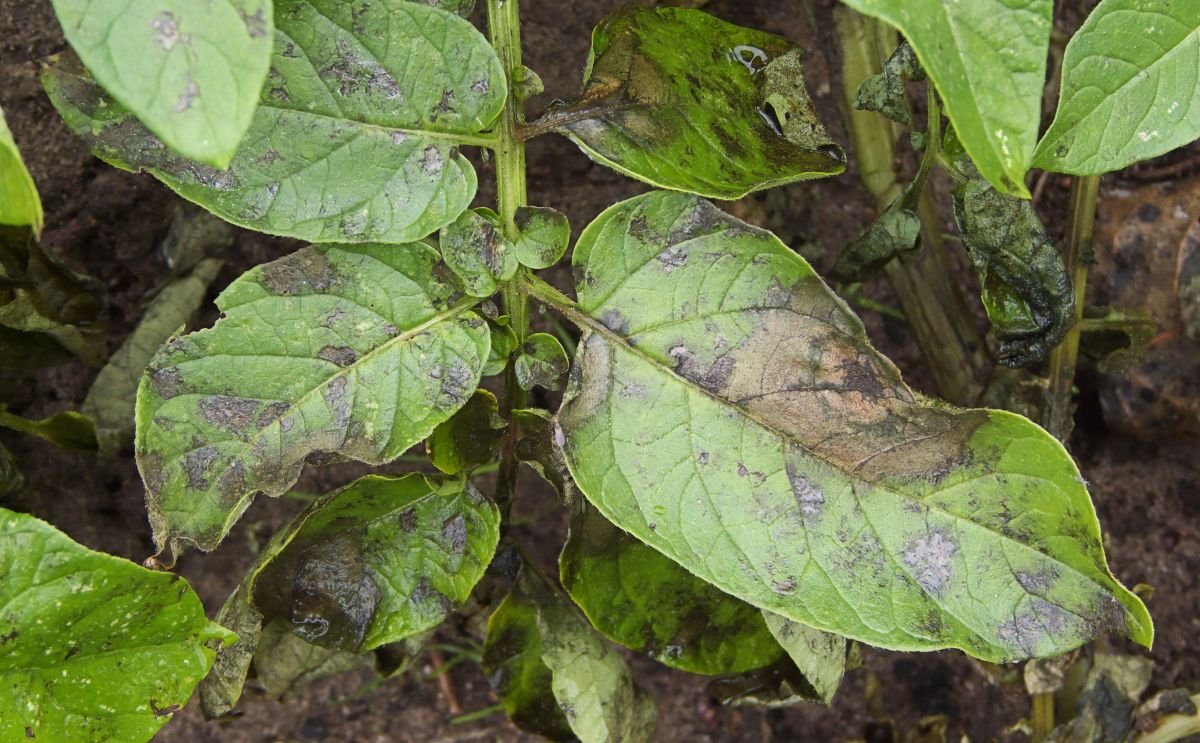
When selenium was sprayed on potato leaves, it boosted protection the plants have against late blight, a disease that can quickly devastate potato and tomato crops.
"Working on late blight came, I would say, by accident," said Fofana, a geneticist with Agriculture and Agri-Food Canada.
"Our interest was how to increase [the] antioxidant capacity of crops."
'Very surprised'
The researchers added selenium to flax, soybean and potato plants, and noticed positive results.
They then wanted to see what impact it could have in preventing disease, starting with late blight.
First, they soaked potato seeds with a selenium solution before planting them, and sprayed the leaves with it. But they soon concluded treating only the leaves of the growing plant would be enough.
The researchers did their tests in the greenhouse, and in vitro in the lab. Fofana was so surprised by the results that he ran the tests more than once.
"We noticed that there was a very low incidence of the disease in those that were treated with different concentrations of selenium," Fofana said. "I asked [to] repeat that three times again, because I want to make sure before we… publish that."
In the 1840s, late blight was to blame for major European crop failures and the Irish Potato Famine, which caused widespread hunger and drove an estimated 2 million people to leave their homeland for North America and other destinations.
Fofana tested the selenium on two other plant pathogens in vitro, with equal success.
"We were very surprised. I was astonished with stopping the growth and sporulation of the pathogens," he said.
While the lab tests have been successful, Fofana said he can't try selenium in an actual field setting because the tests could release late blight spores into the environment.
Organic growers excited
Fofana has been working with P.E.I. organic producers who are excited about the potential selenium has as a natural way to ward off late blight.
"Organic producers, in particular, only have one product that they can use to effectively control late blight on tomato or potato crops. And that is copper, or copper sulfate," said Karen Murchison, research co-ordinator for the P.E.I. Certified Organic Producers Co-op.
"It has its challenges. It's a heavy metal and it accumulates in the soil, and so there are issues around continued and ongoing use of that product.
"So our farmers are always looking for new ways to manage and control late blight on their farms.
"Selenium being a product that is sort of benign, and is a naturally occurring element in nature, it's a product that ... creates a lot of excitement for our farmers."
Murchison said selenium will also be of interest to conventional farmers who are looking to reduce their pesticide use as well.
She said blight is a huge issue, especially for organic growers.
"It's a devastating disease for the potato crop, and it can destroy a crop both in the field and in storage," Murchison said.
"It's something that has to be managed; it has to be controlled. Otherwise our farmers can suffer severe crop losses and severe financial losses as a result."
Source - https://www.cbc.ca