Alberta is upping its fight against antimicrobial resistance with a task force and new framework.
The issue is a human health risk and a growing problem for livestock producers. Microbes that adapt to products being used to treat them become a larger issue for both aspects of society.
“Antimicrobial resistance is the ability that microbes must adapt to treatment products that are being used against them, defence mechanisms or ways to avoid being affected by those antimicrobial products,” said Keith Lehman, chief provincial veterinarian.
The provincial ministries of Health, Environment and Protected Spaces, and Agriculture and Irrigation are all involved in the effort. Within those ministries are representatives who sit on the advisory council, including Lehman, chief medical officer Mark Joffe and chief scientist Jonathan Thompson.
These ministries have been working since 2016 to create the recently published framework, Alberta’s One Health Antimicrobial Resistance Framework for Action.
Lehman said antimicrobial resistance has far-reaching implications.
“It’s an important issue for the province, as well as for the country and the world. There’s a lot of work going on at the global level and at the national level. We felt it was important to put a provincial stamp on it and use this, really, as a jumping off point for action.
“It’s an issue because if those antibiotics or antimicrobials are no longer effective, we lose ways to be able to treat those infections, and that has a significant implication for both human health as well as the animal health side of things.”
People with infections resistant to the usual treatments because of antimicrobial resistance may face severe options such as amputation or death.
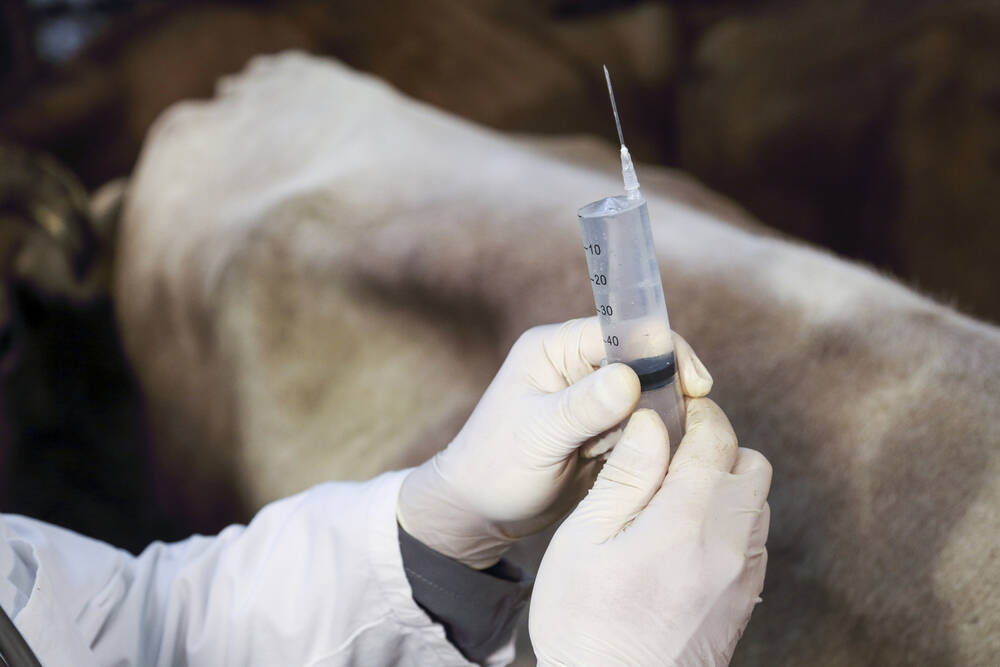
“On the animal health side of things, we’re unable to treat animals that are dealing with infections, and so they become less productive. And again, in the worst-case scenario, the infection becomes fatal for them,” Lehman said.
There are economic implications for producers and broader food security issues for the world, he added.
“Let’s say we lost 10 or 15 or 20 per cent of the animals to bacterial infections. We would have to just produce that much more to be able to be producing at the same level to meet that same demand by the public.
“There are broader implications too … If you are not producing enough, it obviously becomes more expensive. Cost is a food security element as well.”
The framework is specifically developed for Alberta and complements national and global efforts, primarily the One Health approach.
“At the end of the day, human health, animal health, food safety and environmental health, they’re all intertwined. I think this is the epitome of a One Health issue. This is the perfect example where we all need to come together and work on something,” Lehman said.
Developing the framework has been a long process, with interruptions along the way.
“It started in 2016 with a little bit of a jurisdictional scan, looking to see what was happening around the world and around the country,” said Lehman.
The Agriculture and Irrigation department held a One Health antimicrobial stewardship workshop in Edmonton at the Alberta Veterinary Medical Association. The event brought together people from agriculture, human health and environmental health.
“That was an interesting starting point. It got all those people together and opened the One Health door, and raised a lot of awareness around how each of those different sectors operates and what factors are at play with respect to antimicrobial resistance,” he said.
The pandemic and other priorities hindered the process, but work resumed in 2021.
“I think we were able to start to bring everybody back together virtually at that point, just kind of get back into it, validate what we have been hearing up until that point, make sure that we were still on the right track.”
A $5 million funding announcement comes with the framework, which will be used over the next two years to address 15 areas of action. Three have been highlighted as top priorities.
“Initially, one was related to stewardship and two were related to surveillance, and so we put together an expert advisory group to evaluate and provide some recommendations on that stewardship item. Now we’re kind of at the point where we would be able to take recommendations from that group and start attaching some dollar resources into it to further the actions,” Lehman said.
The next steps are to look at the two surveillance items identified as priorities and see if advisory groups are needed.
Lehman said the agriculture industry has done a lot of work promoting biosecurity, which helps prevent infection.
“On the ag side, infection prevention control is really about biosecurity, to a large degree. There’s been a lot of work in that area over the years to improve biosecurity on farm in terms of monitoring.”
Antimicrobial resistance is a complex issue because of the tie between human health, animal health and the environment.
“You can change one variable within that framework or within that complex environment and it can have broad reaching implications. It’s a very challenging thing to monitor and determine whether you’re having positive impacts or not, but we’re committed to working on this issue because it is important,” said Lehman.
Source - https://www.albertafarmexpress.ca