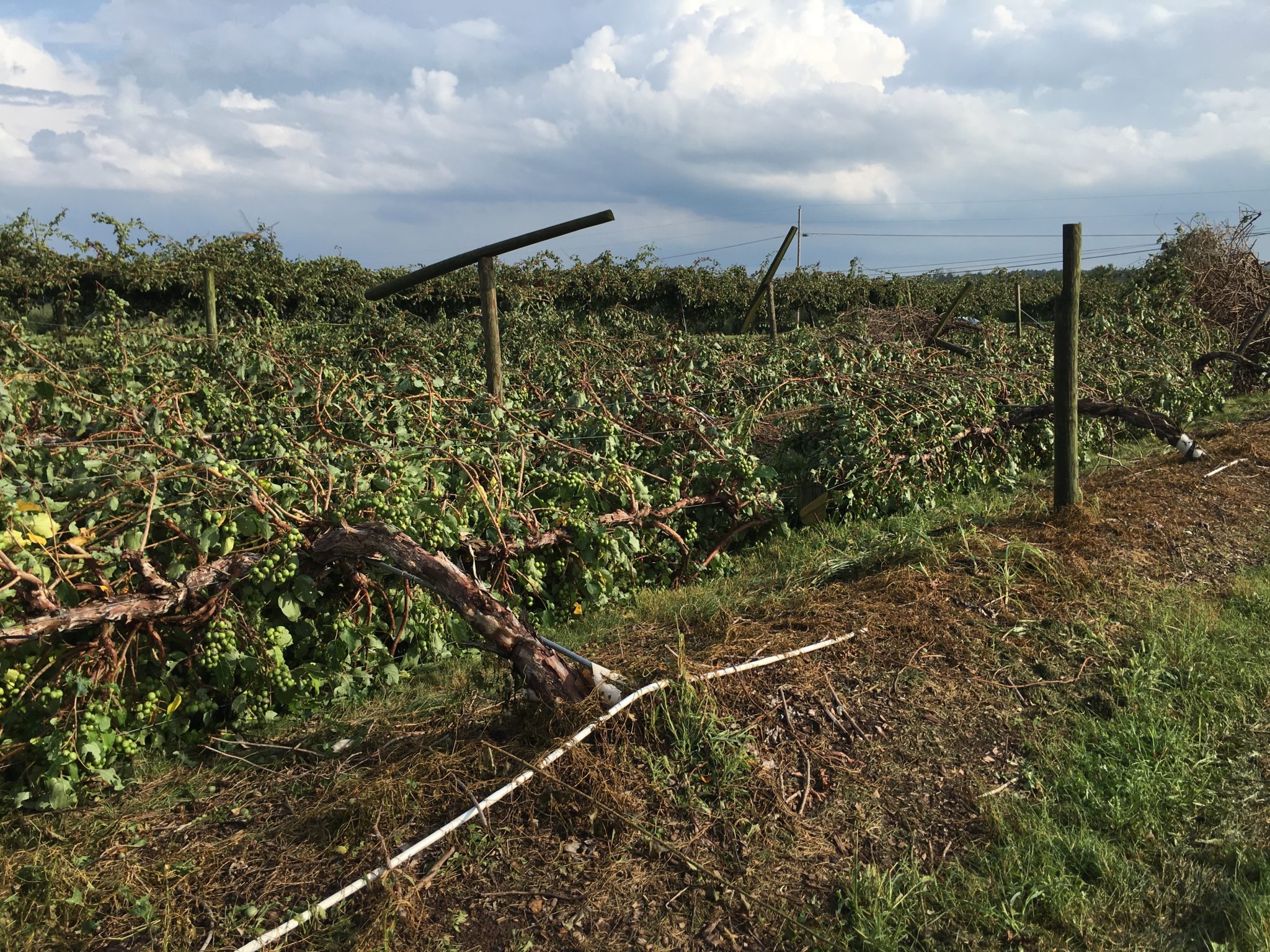
The Valley’s cherry and peach industries are reeling from the devastating cold snap of January 2024.
“This is the most challenging season our growers have seen in our lifetime,” said president of the B.C. Cherry Association Sukhpal Bal.
He estimates a 75 percent crop loss valley-wide this season.
The loss on Bal’s 85 acres of cherries at Hillcrest Farm in Kelowna is a whopping 97 percent.
The north and central regions of the valley report total or severe crop loss while the south has fared better.
Joe Ciaramella of CC Orchards in Naramata reported a crop loss of 80 percent from his 3.5 acres of cherries in Naramata.
Ciaramella attributes having even a small crop to factors such as his orchard being close to the lake, on a downward slope (cold rolls downhill) and facing west to catch the afternoon sun.
The age of his trees, which runs from 75 to 100 years may have helped.
“They’ve seen it all,” he said.
This year’s cold snap was so devastating because less than a week earlier the temperatures were well above freezing which meant the trees had no time to develop winter hardiness and fruit buds were unable to cope with such a sudden drop in temperature, Bal explained.
Temperatures dipped to as low as minus 30 C.
Bud kill was the most widespread impact although in a few instances trees and branches were damaged.
The survival of the vast majority of cherry trees causes Bal to question the rationale behind the province’s $70 million replant program announced in March which encourages growers to switch to more climate-change resistant varieties.
“Why rip out perfectly good trees?” asked Bal, who thinks a better use of money would be to bolster infrastructure such as crop covers and wind machines.
The impact of crop loss has far- reaching effects beyond the limited availability of local fresh cherries on grocers’ shelves and at fruit stands and farmers’ markets.
The financially significant export sector is bound to take a major hit.
Canada’s export of sweet cherries was $78 million in 2021 with B.C. farms producing 95 percent of that volume, according to a news release from Agriculture and Agri-Food Canada.
The same release said cherries are becoming Canada’s second-largest exported fruit behind blueberries.
The devastation of this year’s cherry crop not only reduces the growers’ income from the sale of fresh cherries but also results in fewer jobs and impacts value added products, including jam, juice and dried cherries along with soap and shampoo.
Although this year’s cold snap was the most serious, it followed several years of climate-related adverse events, such as the cold snap in 2020 and a heat dome with temperature records throughout the province in June 2021.
When exceptionally high temperatures occur in July and August, they can affect the cherries to be harvested that year plus buds that will form fruit in the following year.
“Farmers should not be bearing the brunt of extreme climate alone. The government needs to step up to the plate,” Bal said.
He said that farmers by themselves aren’t swaying any elections and need support from local people to apply political pressure.
The total estimated value of fruit production in B.C. is more than $450 million annually, according to Statistics Canada.
Almost all of the province’s tree fruits are grown in the Okanagan Valley.
Cherries, apples and peaches are the most prevalent.
Apples withstood the January cold snap much better than stone fruits, such as cherries, peaches, apricots and nectarines.
“There is not a peach to be found in the Okanagan,” Bal said.
His statement is verified by growers and fruit market operators up and down the valley.
Fruit markets are importing peaches and other soft fruits from the United States to satisfy customer demand and peach growers are diversifying to adapt to climate change.
Source - https://www.pentictonherald.ca