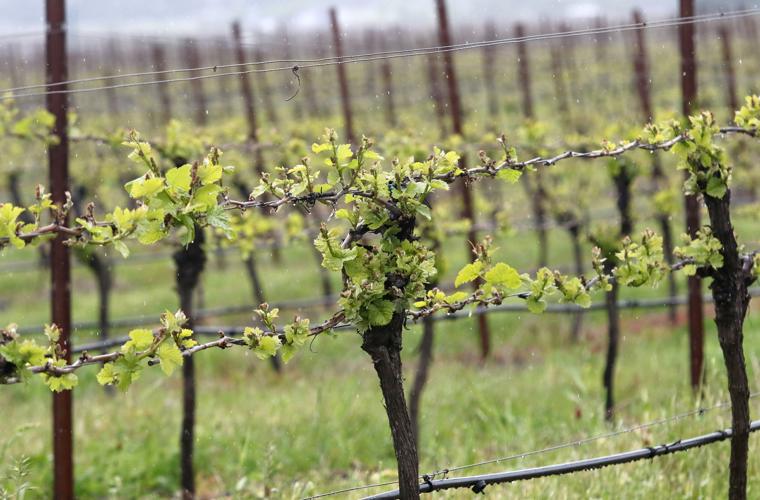
The Wine Growers Association of British Columbia is sounding the alarm about the impacts of climate change on the Okanagan's grape growers and wineries.
"It's all throughout the entire Okanagan," says Miles Prodan, president and CEO of Wine Growers British Columbia. "What we haven't seen before in other years it looks like it's extended beyond Kelowna, into Alberta."
According to B.C. wine industry data, the overall tonnage of grapes harvested has dropped steadily for the past six years.
"So over the last six years, we've seen a decline of 30%. We got the Ministry of Agriculture to help us with research. And sure enough, it was climate change," Prodan says.
The research showed that freezing events like the ones we had this past winter on December 21 and 22, 2022, plus other events like the heat dome and atmospheric river are contributing to the decline in wine grape production.
"Even if there's a fire burning up in Prince George, it may not actually affect the taste of the grapes. But it certainly has an impact on the growth of the grapes. So it's clearly climate change."
Prodan says some farmers are taking advantage of the province's replant program, pulling up their vines and replanting with grape varieties more resistant to climate change.
Prodan says we will likely see fewer grapes harvested across the Okanagan this year, possibly a 50% decline, which will translate into fewer bottles of B.C. wine.
"But where it really impacts, is the winery. So the growers can be compensated for loss of a crop to some degree, but a winery that doesn't have grapes to make wine and has lost half the amount of wine they can be making and selling. That is potentially catastrophic," Prodan says.
The B.C. wine industry creates more than 12,000 jobs and has a $3-billion impact on the province's economy, and at this point, Prodan isn't sure what the solution to the challenge looks like.
"I don't want to downplay the vineyards, but you know, you can replant or maybe it'll come back next year. But that forecast of 50% loss of the crop is going to have a serious impact on a number of mostly smaller wineries."
Prodan calls the replant program critically important, "but the short crop is problematic, and we're not sure what we can do about it," he said noting they also need to maintain grape standards.
"But on the other hand, wineries are going to need grapes to make wine so that they can have a product to sell."
Source - https://www.castanet.net