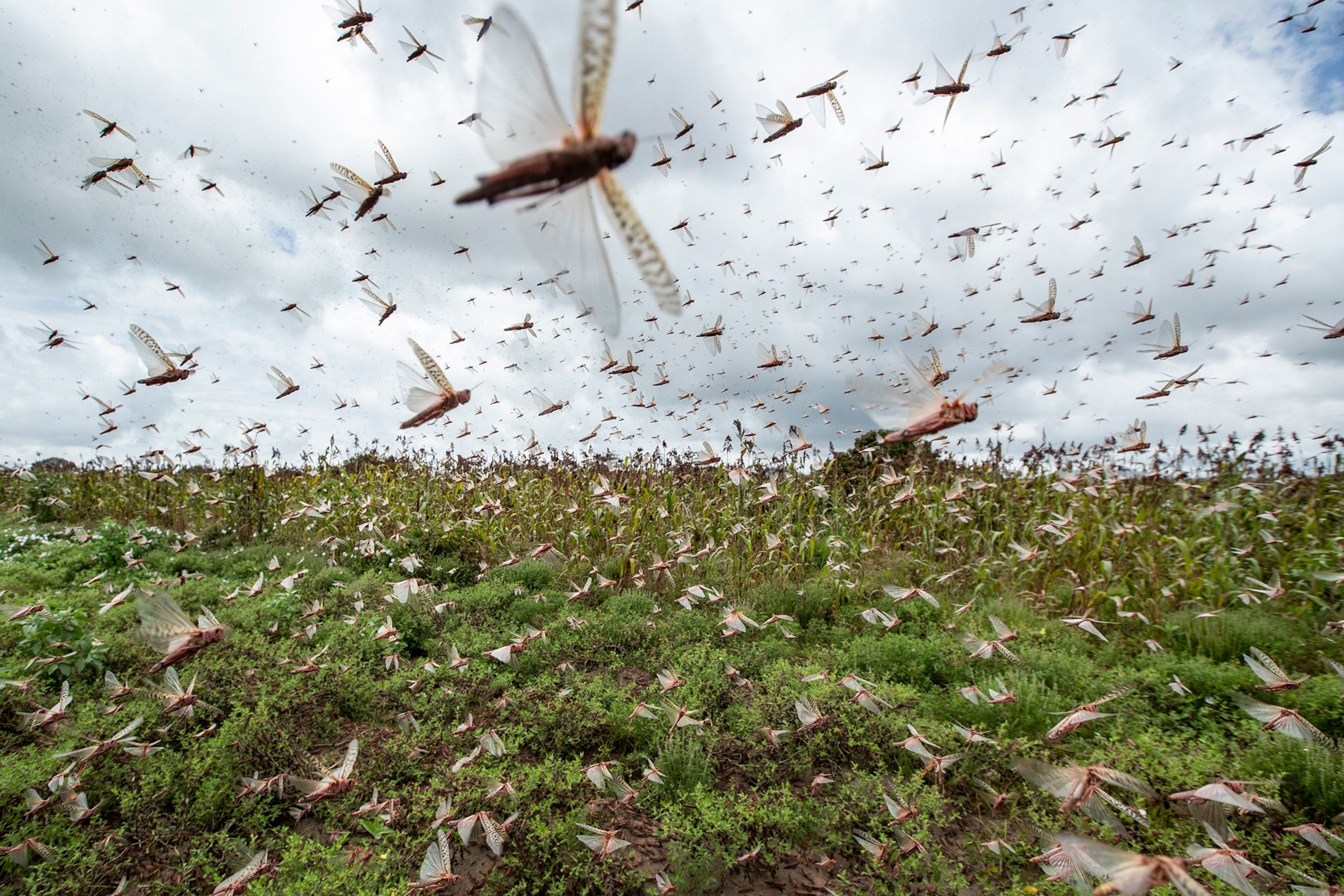
Hot, dry weather has accelerated grasshopper growth across much of Alberta this summer, say provincial analysts.
St. Albert residents have likely noticed plagues of grasshoppers bouncing about whenever they strolled through the grass in recent weeks.
That’s because warm, dry conditions this spring supercharged grasshopper development. Grasshoppers developed into their adult forms almost two weeks ahead of schedule this summer and have been seen in high densities in many regions, the Prairie Pest Monitoring Network reports. The hoppers are likely starting to lay eggs now, and could worsen crop losses in drought-stricken areas.
Morinville-area farmer Ward Middleton said he saw a fair number of grasshoppers in his area prior to the recent rains, which seem to have suppressed their activities. They had yet to cause any real harm to his crops.
“Anything a farmer is growing becomes food for the grasshopper,” he noted, and they can be an issue if their numbers get out of hand.
Know your grasshopper
Alberta has about 85 species of grasshopper, about five of which are considered pests because of their high reproductive rate and large appetites, Alberta Agriculture and Irrigation reports.
Grasshoppers are generally held in check by predators and the weather, but can develop quickly under hot, dry conditions, said Dan Johnson, who has studied grasshoppers for decades at the University of Lethbridge. That hot, dry spell Alberta got last May happened right when most of this year’s grasshopper eggs hatched, improving survival rates and resulting in the current population boom. It has been a patchy boom, however, with some fields having hundreds per square metre and others virtually none.
Johnson said the grasshoppers around St. Albert right now are likely the clear-winged, two-striped, and Carolina/road duster varieties.
Clear-wing grasshoppers are yellow or brownish grass-eaters with clear wings with dark patches on them, Alberta Agriculture reports.
Clear-wing grasshopper numbers exploded in Edmonton in May due to a long stretch of 30 C weather that let the bugs mature about 20 days faster than usual, Johnson said. The Coronation region had a massive outbreak of them in 2002, with people reporting that their car air cleaners were stuffed full of them after a drive.
The two-striped grasshopper is known for the black stripe on its hind leg and the two stripes on the top of its body, Alberta Agriculture said.
Two-stripes eat many plants, including lentils and alfalfa, and the females can lay scores of eggs, Johnson said.
“It’s nothing for them for a female to lay 150 eggs,” he said, each of which can hatch the next spring into a grasshopper.
The Carolina or road duster is the most eye-catching grasshopper around St. Albert, what with its great size, black and yellow-edged wings, and sandy brown carapace which often renders it invisible until you step too close and it leaps into the air. These grasshoppers are on the rise in Alberta, but generally aren’t a crop risk, Johnson said.
While Alberta Agriculture suggests spraying pesticides if farmers spot more than a certain number of grasshoppers per square metre, Johnson said actual crop damage was a better metric, as you might have hundreds of grasshoppers that aren’t actually eating your crops.
“That’s why scouting is the key,” he said, referring to regular field inspections.
Grasshoppers are an important food source for many birds, and many eat weeds, Johnson said. They are also incredibly diverse.
“It’s very typical at any given spot in Alberta to have 20 different species sitting there at any one time,” he said.
Source - https://www.stalbertgazette.com