Farmers in Manitoba’s Parkland and Interlake likely have fields flooded out, but with overland flooding still hanging on, assessing damage or filing crop insurance claims has been impossible.
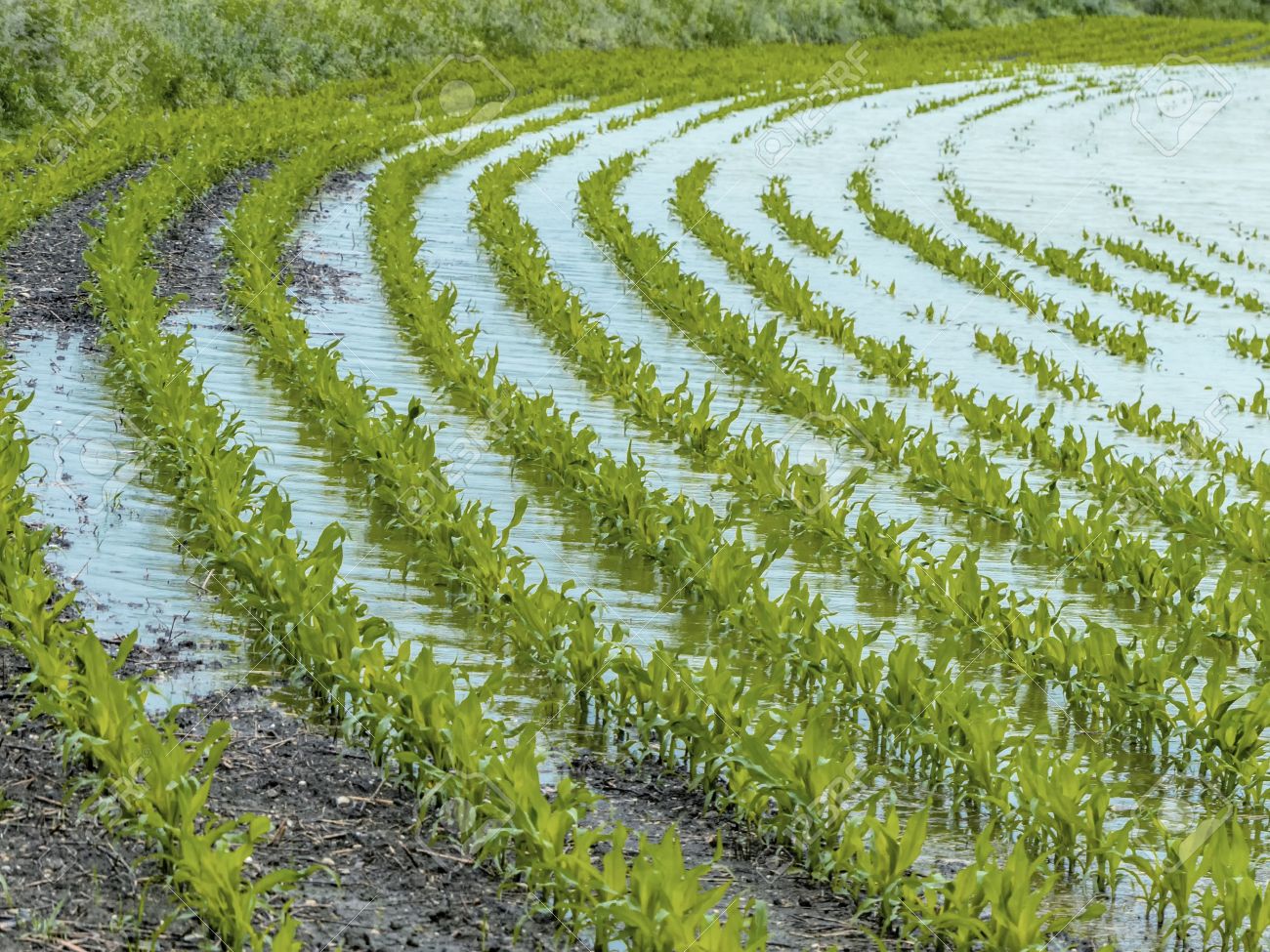
Flooding has damaged Manitoba’s first attempt at a 2026 crop, but more than a week after fields were underwater in several parts of the province, it’s still hard to tell exactly how many acres farmers will lose.
David Van Deynze, chief product officer with the Manitoba Agricultural Services Corporation (MASC), said they’ve received only around 22 reseed claims out of their Headingly office, which would take the brunt of claims coming out of the southern Interlake. There were about 30 around the Swan River Valley in the Parkland, some of which were already filed before heavy rain hit the area.
MASC’s phones, however, have been busy with flooded farmers asking about next steps.
Why It Matters
Farmers in Manitoba’s Parkland and southern Interlake expected to miss crop insurance seeding deadlines as fields remained flooded out or too wet to access thanks to torrential rains in the first half of June.
Farmers know how MASC’s program works, Van Deynze said, and while farmers have plenty of questions, there’s little ability to file a claim when they can’t reseed or even meaningfully assess their crop.
“(They’re) not even sure what kind of claim to register at this point in time, potentially,” he added.
“It’s not like a hail event necessarily where, you know, something big happens and then immediately we need claims … There’s very much a wait and see approach when it’s something like excess moisture or drought or those kinds of things,” Van Deynze said.
Seeding deadlines for full insurance coverage has already passed for some some crops, while others are imminent. MASC’s last full coverage grains deadlines (cereals, buckwheat, novel crops, mustard, mixed grains and flax) give farmers five days.
Farm fields under water
As of June 15, residents of the Swan River Valley and southern Interlake still faced serious flooding. Excess water also started to cause problems downstream in the Parkland. The Shell River, draining through Lake of the Prairies and into the Assiniboine River, was swollen well past its banks. By June 12, the Municipality of Roblin announced voluntary evacuations for flood-prone areas, and there were several dozen road closures in Roblin as well as the Rural Municipality of Riding Mountain West.
That joined June’s extensive road damage and evacuations in initially flood-stricken regions. By the end of the second week of June, at least nine communities and municipalities had declared states of local emergency: the town of Stonewall and municipalities of Rockwood, Rosser, Woodlands, St. Andrews and St. François Xavier in the southern Interlake; the town of Swan River and municipalities of Minitonas-Bowsman and Swan Valley West in the Parkland.
About 80 per cent of the R.M. of Rosser received over 200 millimetres of rain out of a single storm June 9, Reeve Ken Mulligan said in a letter to residents June 12.
Stonewall received over 255 mm over 13 hours in that storm. Only days before, Minitonas had seen almost 149 mm over 17 hours, according to Manitoba Agriculture data.
Meanwhile, Manitoba Hydro, spent the second week of June rushing to restore power to tens of thousands of outages, some of which extended multiple days.
The same storms had also resulted in large hail reports across several areas and high winds that topped out at nearly 130 kilometres an hour in southwest Manitoba.
Damage in the northwest
“It’s bad,” said Neil Kichuk, who farms just north of Minitonas, the day after their storm. “I’ve never seen it like this. We can’t go more than a couple of miles from our house.”
Roaring flood water took out roads, bridges, highways and buildings through the area. Several roadways were later cut to ease flood pressure.
The geography of the area was part of the problem. Much of the same rain that fell on agricultural communities in the Swan Valley region also fell on the Duck Mountains, rushing downhill onto the prairie below.
“That water that’s coming out of the hills right now is having some really drastic … impacts on the creeks and rivers that are supposed to hold that water and they’re spilling their banks, and there’s a lot of overland flooding on a lot of farmland,” Swan River Mayor Lance Jacobson said June 9.
Damage north of Winnipeg
Nick Matheson, who farms near Stonewall, did not expect to make MASC’s seeding deadlines.
“It’s been a rough couple days, not to lie,” Matheson said June 12, although he added that waters were going down in local ditches, allowing some water to come off fields.
He had not been able to get onto the fields to properly assess. In his case, the crop also got a dose of large hail right before the water encroached.
“Option wise, I don’t have a crystal ball,” Matheson said. “I couldn’t tell you what’s going to happen here in the timeline. There could be a lot of winter crop put in, you know, if the land dries up in July, August, that I can hopefully plan ahead for next year and go from there. But I mean, other than that, I don’t know. There could be some blacked out acres, or I take my chances and put in some early crop, like barley, or even take a chance of floating some canola in. I don’t know, I can’t answer that.”
Matheson more fortunate that some of his neighbours though, he noted. Some had a foot of water flooding their basements, noting that few in the area carry overland flood insurance.
Seeding, or reseeding?
Most of those acres north of Winnipeg did have crop seeded earlier this spring, MASC’s Van Deynze said.
Around Swan Valley though, a higher proportion of fields had yet to see a drill.
Cereals Canada’s percentage of completed seeding map suggested 95 per cent of acres were seeded as of June 8 in the Interlake, but areas north of Riding Mountain National Park had the lowest seeding completion of any region on the Prairies. Cereals Canada estimated only 55 per cent of acres were in the ground.
Jill Verwey, president of the Keystone Agriculture Producers, noted the difficulties farmers had this spring, even before floods hit.
“(Seeding) was a struggle, because it was cool and, and wet in a lot of cases to even get the crop in,” Verwey said.
Watching the fruits of that labour go underwater is a bitter pill to swallow, and uncertainty about how quickly water would recede and what options farmers would be left with hasn’t helped.
“My heart and thoughts are going out to the producers that are definitely affected, and rural communities that are in an isolated area,” she said.
She urged farmers to reach out to mental health supports such as the Manitoba Farmer Wellness Program and “reach out to your neighbour, take care of yourself and make sure that your fellow producers are okay … in the next number of weeks.”
Gearing up for an adjustment rush
While the flow of calls has yet to meet the flow of the floodwaters, MASC is getting ready for a quick response, Van Deynze said.
A number of drones will be on deck to help assess fields too wet to walk. They’re also getting ready to move money quickly for the most severe, cases of flooding damage.
“There’ll be a number of farmers that you know have half their land that’s been severely impacted, and the other half not so much … Those are much more challenging for us to figure out if or how much money we can advance, you know, as early as possible. But certainly, in the obvious situations, our plan is to deal with those claims as quickly as we can,” Van Deynze said.
If farmers are uncertain about next steps, he encouraged them to reach out to their local MASC office.
KAP, meanwhile, has worked to keep farmers informed of options, pointing them to resources and keeping in contact with the province, Verwey said.
Municipalities are taking point on aid, given the infrastructure damage resulting from the storm, she noted.
Most of the affected municipalities have since posted information on Manitoba’s Disaster Financial Assistance program or held informational sessions to help guide residents through program details.
Source - https://www.manitobacooperator.ca