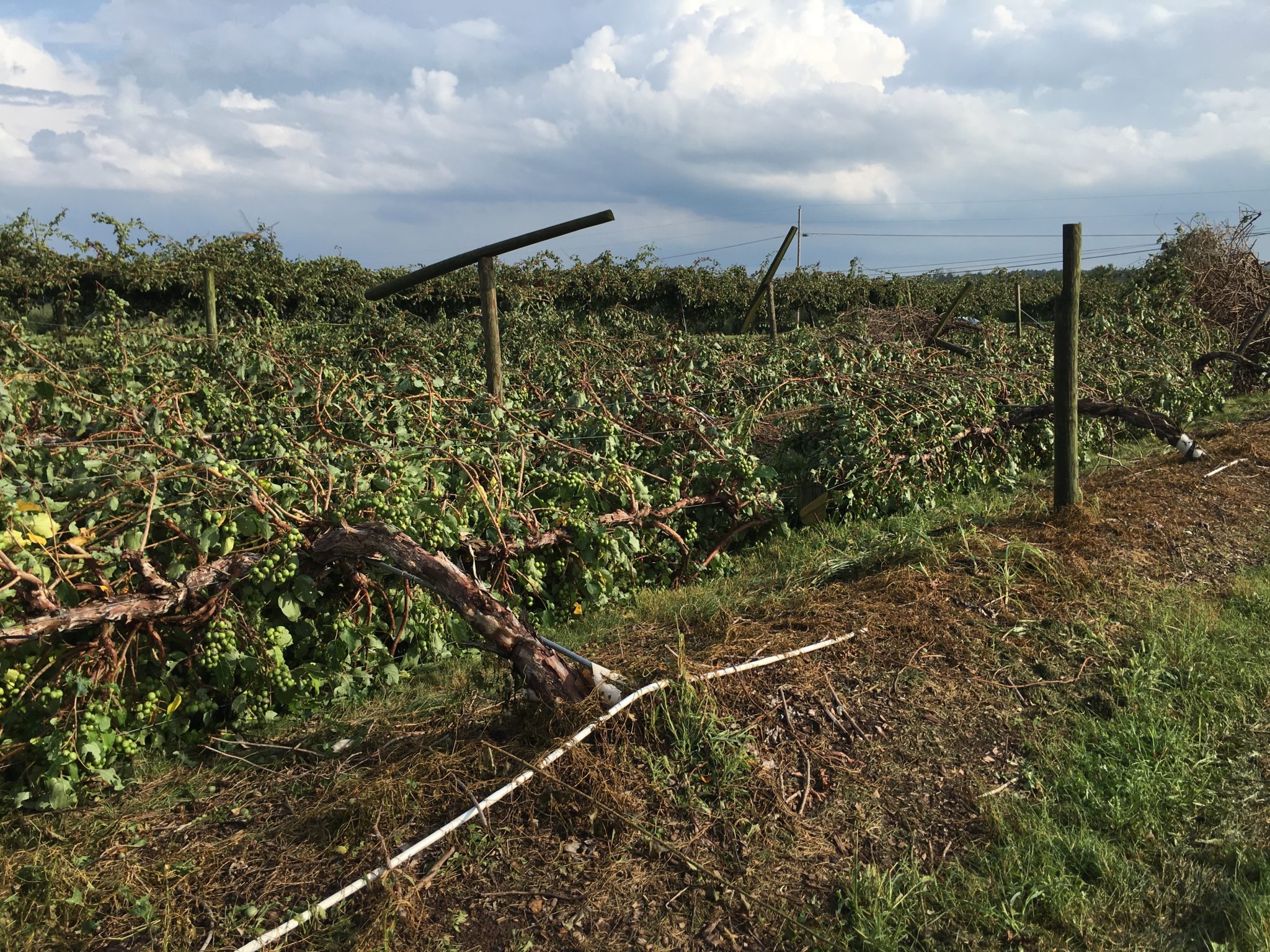
After one of the most devastating winter cold snaps in recent memory, Jennifer Deol and her husband made the agonizing decision to rip out more than a hectare of prized peach trees from their Kelowna, B.C., orchard.
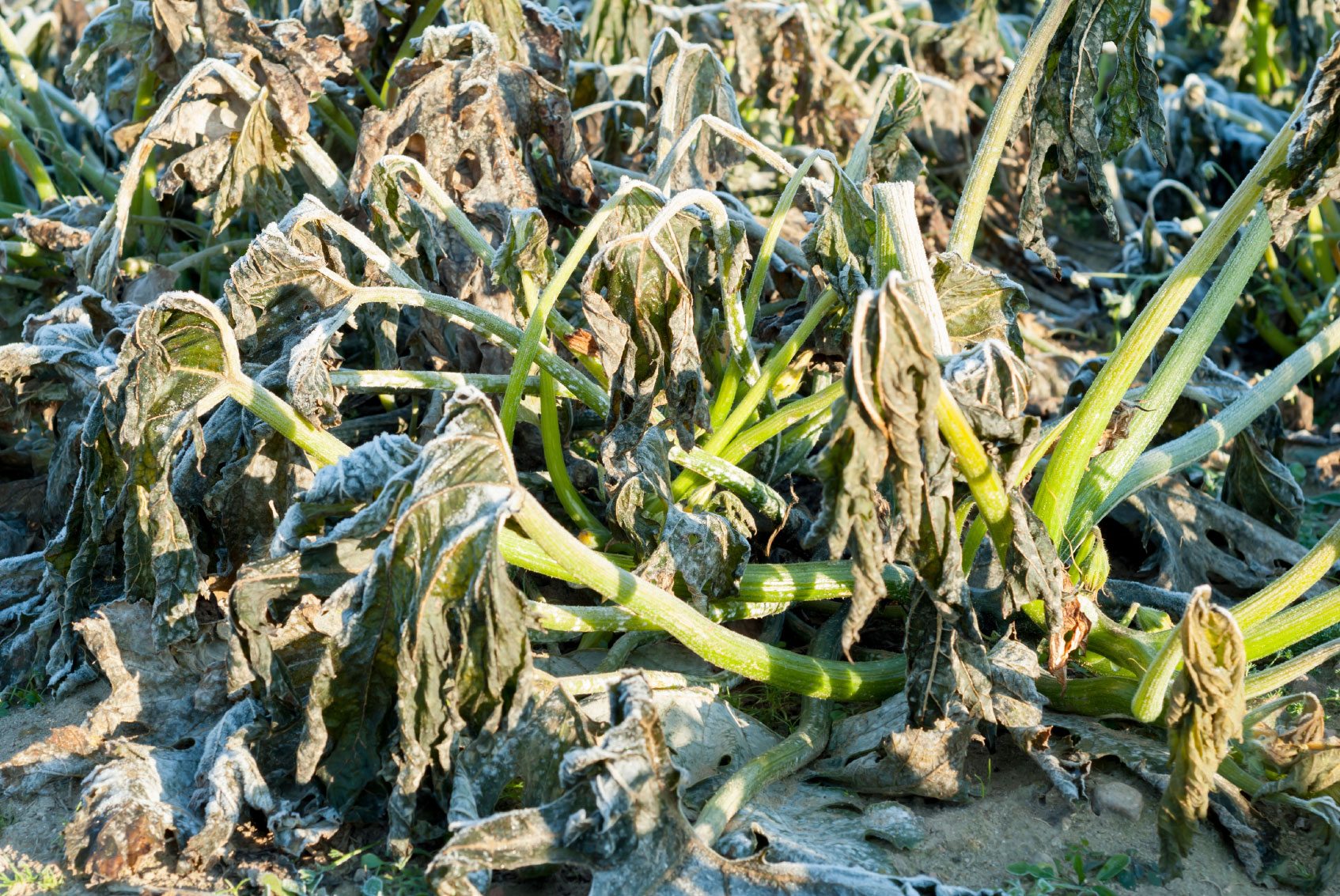
Extreme temperatures in early January severely damaged stone-fruit trees and grape vines up and down the Okanagan Valley, killing off the delicate buds on branches and vines that would have turned into this season's crops.
Now, Deol and other orchardists are planting hardier crops in an effort to mitigate their losses and adjust to the extreme weather events that have hit farms in British Columbia in recent years.
"Not even a single [peach] flower bloomed. We knew that we had to get ahead of this and pivot," Deol said.
"We are a couple of years [from] effectively going bankrupt and folding our business in."
Deol's mature peach trees were capable of producing softball-sized fruit — so large that in 2016 the previous owner of the orchard registered a peach as the heaviest ever recorded.
This year, in an effort to salvage the growing season, Deol is planting table grapes and rows of corn where those peach trees once stood.
"It's very tough," she said. "Farmers are very resilient but we're still humans at the end of the day and this is our livelihood. This is our income."
British Columbia has more fruit farms than any other province, with more than twice as many growers as Ontario and Quebec combined.
The total estimated value of fruit production in B.C. is more than $450 million annually, according to Statistics Canada. The vast majority of B.C.'s tree fruits are grown in the Okanagan Valley with cherries, apples and peaches being the most commonly grown tree-fruit crops in the region.
Last year saw a nearly two per cent decrease in fruit sales in B.C. due to lower yields with growers warning the fallout from this year's freeze will be significantly worse.
Although apple trees tolerated the extreme cold this past winter, which saw temperatures in Kelowna plunge to -27 C in mid-January, stone fruit trees suffered significant damage, especially peaches, apricots and nectarines, according to Sukhdeep Brar, vice-president of the B.C. Fruit Growers' Association.
"No one has any peaches ... It's a tough year after another tough year after another tough year," he said.
In addition, Brar estimates only about one-third of the Okanagan cherry crop survived this year.
The crop loss for fruit farmers is just the latest blow in a string of extreme weather events in recent years.
In 2021, a record setting heat dome in B.C. scorched orchards and stressed fruit trees. The past two winters have seen extreme cold resulting in crop losses for tree fruit farmers as well as wine grape growers, who are facing up to 95 per cent crop loss this year.
"The motto we have as farmers is, 'there is always next year.' But next year needs to be a good year. We don't have a year after that," Brar said.
The financial strain is taking its toll on producers, Brar said, with many suffering with their mental health because of the stress.
"I have dealt with it myself. We all deal with it. It can be very difficult," he said.
"The Okanagan [farming community] is 70 per cent Indo-Canadian and we don't like to talk about these types of things, but I think we need to start."
Earlier this year the B.C. government announced a $70-million program for grape and fruit growers to replant and strengthen orchards and vineyards. The funding is on top of a $15 million perennial crop-renewal program launched in 2023 to help producers replace diseased and unproductive plants.
That funding does little to help farmers in the short term, Brar said, adding that producers still need to invest time and money to maintain their orchards, even if there are little to no crops growing this year.
The lost stone-fruit crop this year is also a concern for fruit and vegetable market operators, who depend on B.C.-grown cherries, peaches and apricots to bring in customers.
West Kelowna's Paynter's Fruit Market is importing peaches from the U.S. this year to meet customers' expectations, owner Jennay Oliver said.
"It's the first time we've ever done it. It's hard for me to do, but we have to change. It's 'desperate times call for desperate measures,'" she said.
Oliver, who also grows vegetable and has stone fruit trees, is this year shifting from u-pick cherries and peaches to growing pumpkins, tomatoes and watermelons on her West Kelowna farm.
"There has to be some sort of silver lining and it's really finding out what's the strongest crop here," Oliver said.
Despite the scarcity of peaches and cherries, Oliver is hoping people will buy other types of produce directly from producers this season.
"Check in with your farmer. See how they are doing and see how you can support them and what crops they are growing," she said.
Source - https://www.cbc.ca