The summer of 2023 will likely be a great time to tour Okanagan wineries, soak up the sun, the atmosphere and the great 2022 wine crop.
But it will be six years before there will be such a summer again. It will take growers that long to fully recover the quantity of wine they produced last year because of December’s devastating cold snap.
“Unless you already bought plants, you won’t be planting this year,” Christa-Lee McWatters, chair of Wine Growers BC, told iNFOnews.ca. “You have to order in the fall for delivery in spring.”
Certainly there is some planting going on this year but only by those who planned for it last year.
It usually takes five years to get a full crop off a new vine so, it will be near the end of the decade before the volumes are back up to 2022 levels.
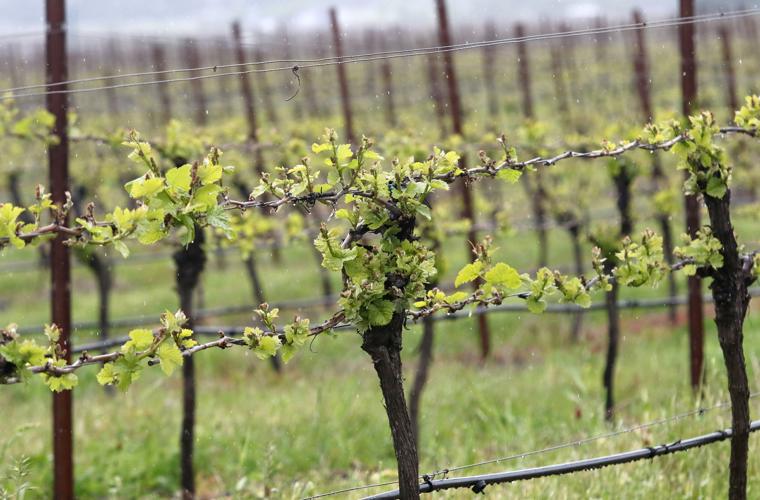
Not only were 29% of the vines killed, 45% of the vines suffered long-term damage.
“Right now, if you drive around, some places you can see the vines are dead,” McWatters said. “There’s a lot, though, where you see green but there’s no fruit on them. The vine is not completely dead. There may be some growth but we may not see fruit again for a few years.”
While that will affect what the wineries have to offer to visitors and clients in 2024, some may take action this year by possibly holding some wine back for next year.
“Probably with some, you will see some pricing activity to kind of slow some sales so they can stretch it out,” McWatters said. “People are frantically trying to find fruit right now from different growers. You’re going to see everybody take a slightly different approach.”
Boosting prices is not easy to do, given the stiff competition from cheap foreign wines.
McWatters is also the general manager of TIME Family of Wines, which will not be boosting prices and has a good inventory so will be fine in the short term.
The cold snap hit all regions of the Okanagan hard, especially from Dec. 18 to 23. In the Central Okanagan, the coldest night was -29 Celsius while Osoyoos got down to -21.8 C.
The total crop is expected to be cut by 54% this year.
Oliver is, by far, the largest grape growing region in the province, accounting for almost 44% of the province’s 28,609 tonnes of grapes in 2021 (the last year data is posted for).
That region is expected to lose 61% of its tonnage this year, dropping it to about 4,900 tonnes.
Osoyoos is the second largest grape growing region with 15.5% of the provincial crop. It’s expected to lose 59% of its grapes this year.
Each of the other regions in the rest of the province have less than 9% of the crop.
Right now, in order to carry a VQA Okanagan wine label, no more than 5% of the juice can come from outside the Okanagan. It still has to come from BC.
The Wine Advisory Industry Committee is considering holding a plebiscite this fall to see if vintners are willing to boost that to 15%.
Even if that happens, only about 8% (less than 2,400 tonnes) of BC wine grapes are grown outside the Okanagan so there’s no way even a bumper crop would make much of a dent in the shortfall.
It doesn’t matter what type of wine people prefer to drink, all varieties were hit hard.
Merlot is, by far, the most popular BC-grown wine, making up 17.3% of grapes harvested, as of 2021. That crop is expected to be down 66% this year.
Pinot Gris is the next most popular at almost 10%. That crop is likely to be down by 50% this year.
Chardonnay, at 8.6% of the crop, is expected to be down by 47% while Pinot Noir, which makes up 8.4% of the crop, should lose 48% this year.
More than 380 full-time jobs are expected to be lost because of the damage, about 20% of the workforce. Those will range from needing fewer people to prune and harvest the grapes, to fewer working to make the wine and fewer people in tasting rooms next year.
In terms of direct revenue lost, that’s estimated to be $133 million while $200 million in indirect economic losses are expected.
Most growers had some form of crop insurance but how much of their losses are covered depends on individual policies, McWatters said.
There is no such coverage for wineries so Wine Growers BC is lobbying provincial and federal governments for financial supports similar to what was offered to other farmers in recent years.
“While other climate change-related disasters, such as fire or flood, are more visually impactful, the long-term damage from the unprecedented temperature drop in December 2022 has resulted in as much, if not more loss to BC’s wine grape crop yet is not receiving the same type of recovery support,” Wine Growers BC said in a news release issued last week.
It's looking for a dedicated recovery grant, additional funding for the Perennial Crop Renewal Program and a revamping of the provincial crop insurance program.
Source - https://infotel.ca