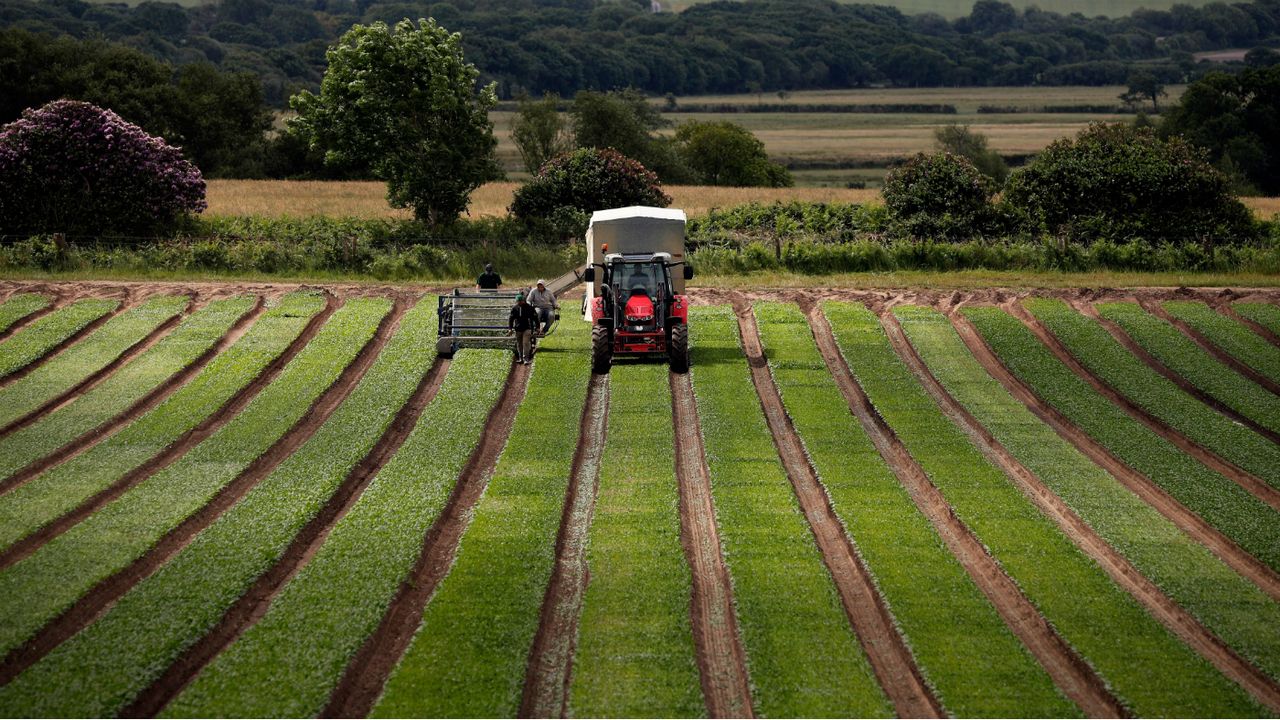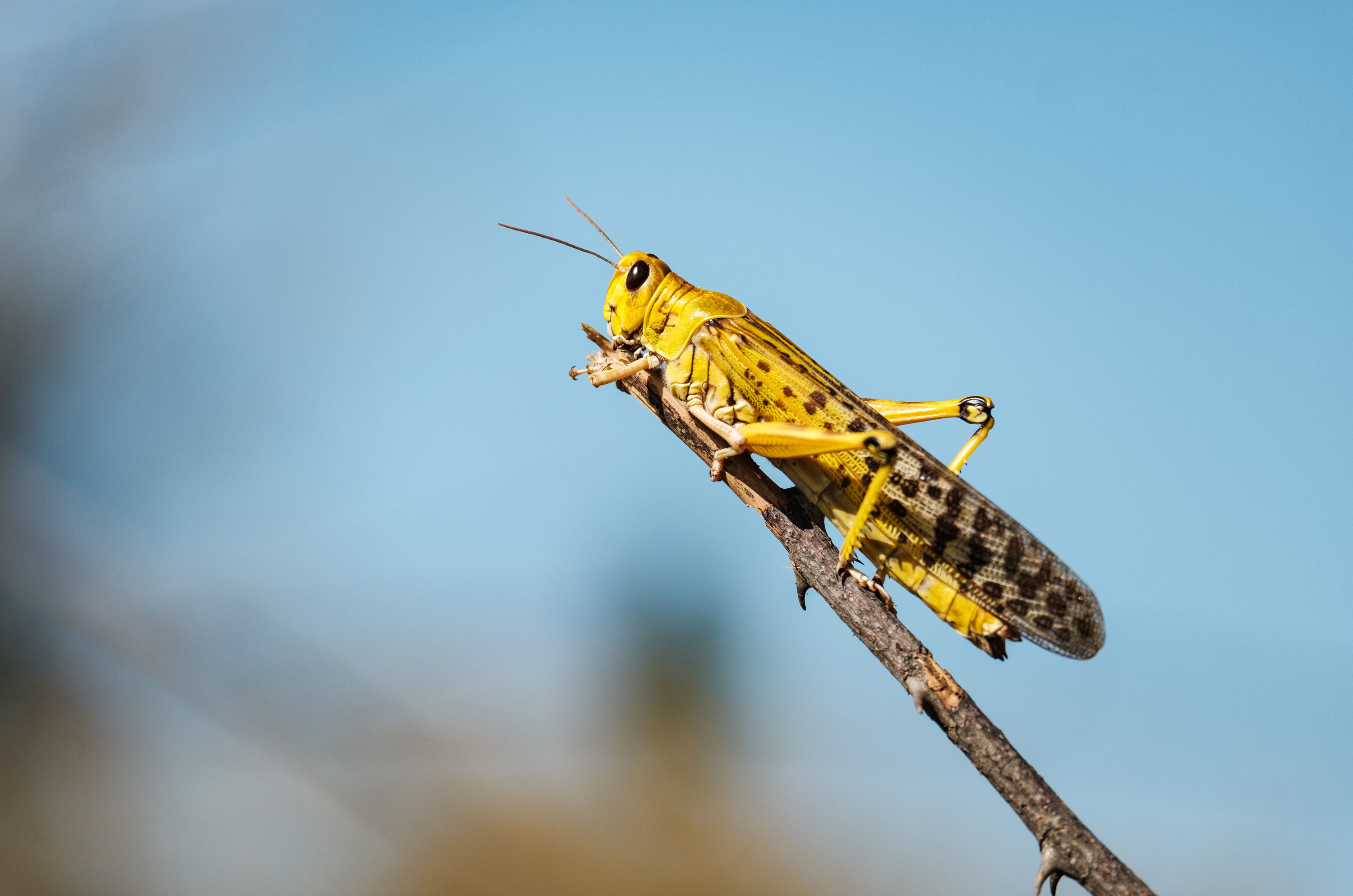
As scores of grasshoppers take over swaths of crops in Saskatchewan, farmer Josef Buttigieg sees the pests as both a blessing and a curse.
Grasshoppers and crickets have been munching on his hay fields over the past few weeks, but they’ve also become a source of food for his chickens.
“The birds have pretty much taken out the grasshoppers that are inside the quonsets and such, but it’s another story for the crops,” said Buttigieg, the owner of Fenek Farms north of Regina, on Thursday. “It just almost looks like a scene from the apocalypse, if you want to think about it that way.”
While Buttigieg expects he’ll have enough feed for his animals this winter, other producers in Saskatchewan may not be so lucky.
The Ministry of Agriculture reported on Thursday that grasshoppers have caused significant crop damage during the growing season.
It stated producers who are now harvesting are dealing with equipment plugged with the pest, which has created delays and will require them to clean their seed.
Aphids, diamondback moths, strong winds, heavy rains and hail also damaged crops this past week.
“I’ve been in a lot of fields down in the southwest and there’s a substantial amount of crop damage due to grasshoppers. They’re quite horrible down here,” said Matthew Struthers, a crops extension specialist with the ministry. “At the same time, there’s other parts of the province that have been lucky.”
The extent of the damage caused by grasshoppers or the weather won’t be known until farmers make crop insurance claims later this fall.
Struthers explained a perfect storm of sorts cultivated the galore of grasshoppers this year.
He said last year’s drought created ripe conditions where the insects were able to lay a tonne of eggs. After that, there was just enough moisture in the spring for the younglings to start growing.
What followed was dry summer conditions in some parts of Saskatchewan, mainly the southwest. Grasshoppers thrive in drier weather, Struthers said, adding there wasn’t enough constant rain to drown them out.
“Once the population gets quite large, and when they get quite mature, they are really tough to take control of and get rid of in your field,” he said.
Delores and Don Fauser, who farm near Woodrow in southwest Saskatchewan, have been swarmed with grasshoppers over the past week.
The insects have chewed their canola, leaves of nearby trees, raspberry bushes and Delores’ coveted perennials.
She couldn’t say how much damage the grasshoppers have done to the crops.
“It’s pretty bleak. It’s kind of depressing, actually,” Delores said. “The yard was really beautiful. We were all talking about how lush and green everything looked. The leaves from the apple trees are gone. They left the apples for some reason, but they’ll come back for them later.”
At this point, Struthers said, there isn’t much producers can do to annihilate the pests.
He said crop rotations, ideal seeding times and spraying when grasshoppers are nymphs can be helpful.
“But in a year like this, where the population has been so high, we’re finding that no matter how many times you might spray a field, the grasshoppers just continuously come back,” Struthers said. “You kind of have to pick your battles, and sometimes the grasshoppers win. And that’s when you call crop insurance.”
Buttigieg is grateful he received good rains this year. Otherwise, he suspects his hay crop would have been in worse shape.
He won’t be spraying because the farm follows organic practices.
“You’re kind of at the whim of it. There’s really nothing that you can do to eliminate grasshoppers,” Buttigieg said.
The Fausers are in the same boat.
“We can’t do much with these numbers, no,” Delores said. “We’ve farmed here for over 40 years, and we’ve had a few infestations during our time, but it’s never been quite like this.”
The crop report stated producers made the most of the hot and dry weather this past week by harvesting as much as possible.
Harvest progress provincially is now sitting at five per cent, which is behind the five-year average of eight per cent. The southwest is leading harvest with 17 per cent of their crop in the bin, followed by the west-central region with eight per cent.
Struthers said there’s still plenty of time to get harvest done, even if grasshoppers are clogging machines.
“It’s just a real hassle when your combine gets full of grasshopper guts, spare legs and stuff like that” he said. “But it’s just one more hassle. Producers have been here before. No two years are the same.”
Source - https://leaderpost.com