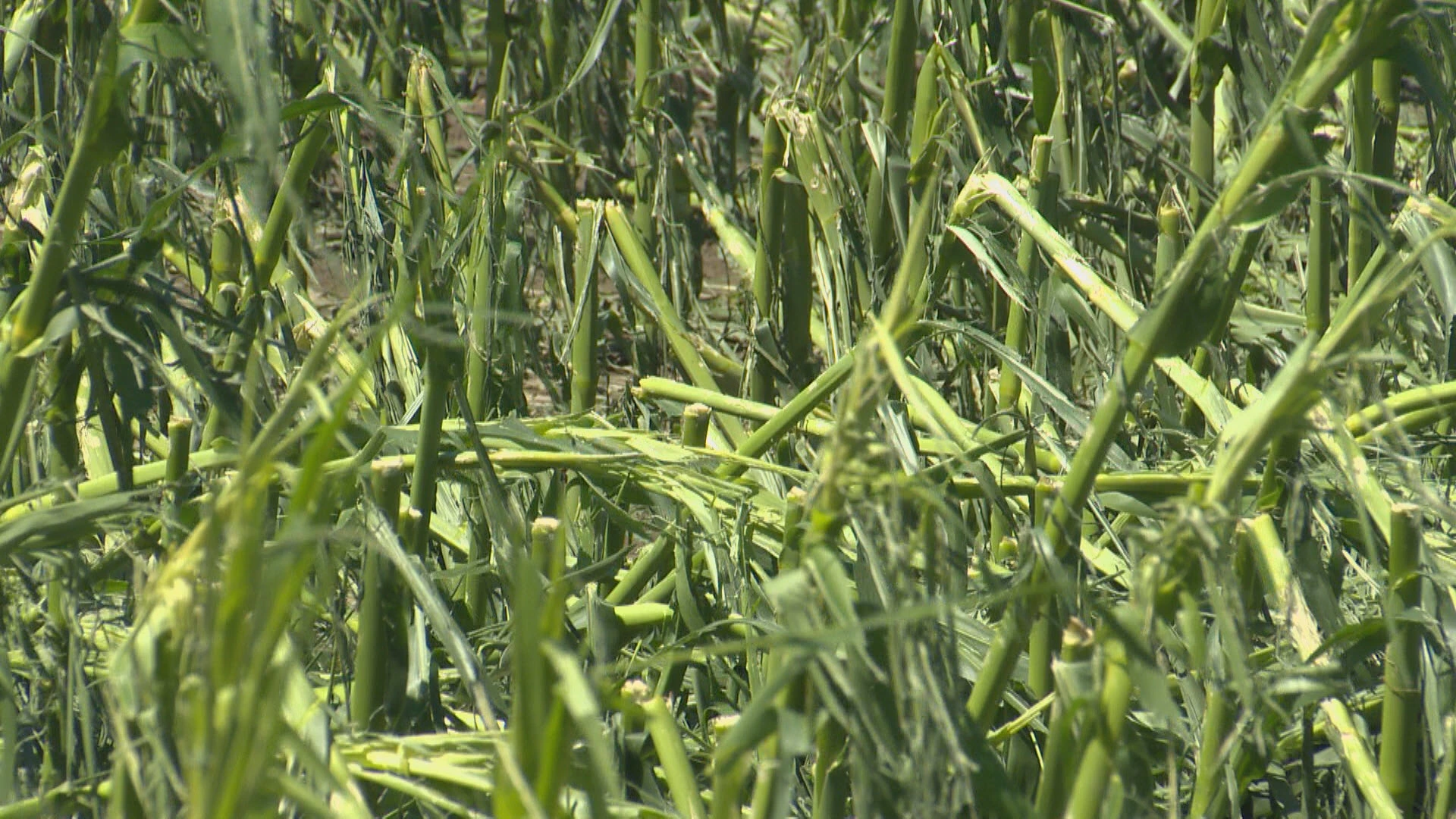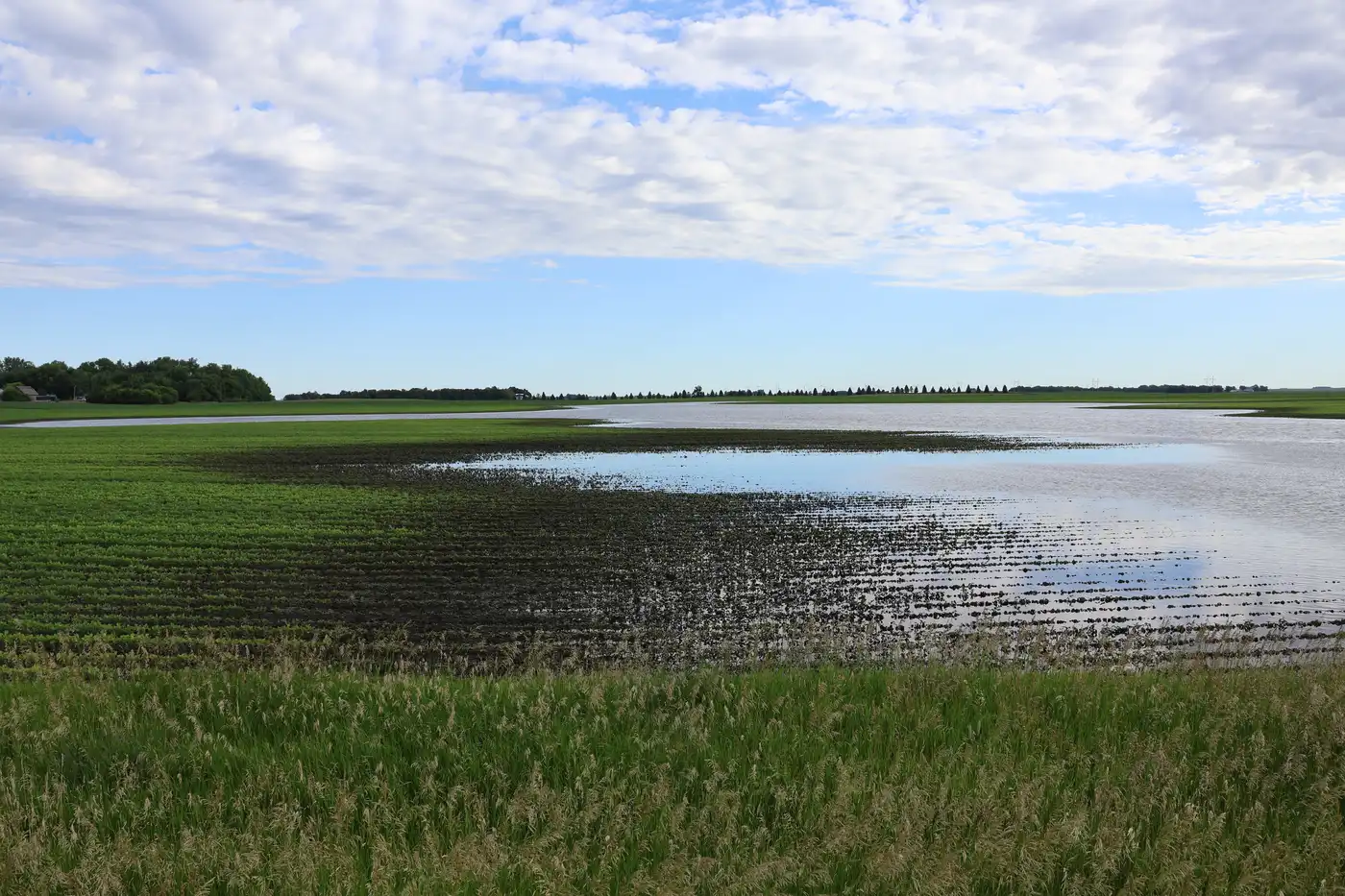
The Wildlife Damage Compensation Program compensates agricultural producers for wildlife damage to eligible unharvested crops, stacked hay, stacked greenfeed, as well as silage and haylage in pits and tubes.
Producers wishing to participate in the program are not required to have AFSC insurance to qualify for a claim. Producers do need to have an insurable interest in the crop that is damaged; cash rent landlords are not eligible. For eligible crops, other than stacked hay or stacked greenfeed, the producer’s crop needs to be located and was damaged in Alberta.
All costs for this program are paid by the federal and provincial governments; producers pay no premium or administration cost except for the appraisal fee. A non-refundable appraisal fee of $25 per inspection type is required for each section of land or portion thereof on which the damage has occurred.
What’s new for 2023
Bear Damage to Hives has been added as an eligible loss under the Wildlife Damage Compensation Program as a three-year pilot project. Compensation for eligible claims includes losses for honey, bee hives (colonies) and bee hive equipment. Producers will need to report damage, including a self-assessment report with photographic evidence, within 48 hours or 2 business days of discovery.
What was new in 2022
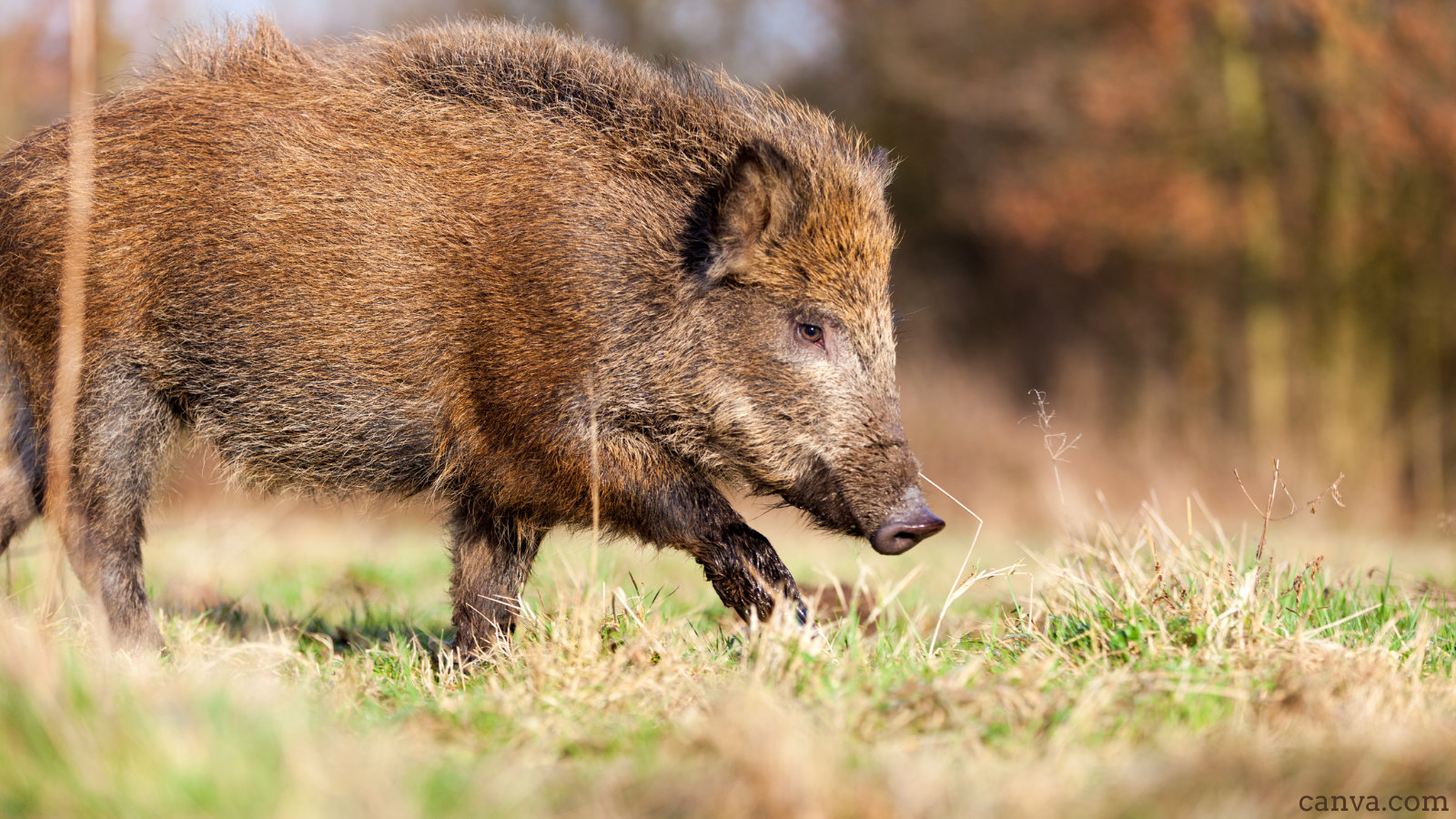
Wild boar at-large were added to the list of eligible species to the Wildlife Damage Compensation Program. Unlike other wildlife damage, producers are not allowed to hunt or allow others access to hunt wild boars on their property. Instead, to be eligible for a payment, producers allow Provincial Wild Boar Specialists with Agriculture and Irrigation access to their property for the implementation of mitigation strategies for the control of wild boars at-large on their property.
Wildlife Damage Compensation Program for Perennial Crops
General Information
The Wildlife Damage Compensation Program compensates agricultural producers for wildlife damage to eligible unharvested hay crops caused by ungulates, upland game birds, waterfowl, and wild boar at-large.
AFSC also compensates for wildlife damage to harvested perennial crops stored as stacked hay and haylage in pits and tubes caused by ungulates or wild boar at-large.

For wildlife damage caused by wild boar at-large, producers must not hunt or trap the wild boar on their property including the section where the damage has occurred and each section of the same producer that borders the damaged section. As well, producers must not permit access for other persons to hunt or trap wild boar on the same properties. The producer must permit the provincial Wild Boar Specialist access to their property to conduct wild boar eradication.
What is Eligible for a Claim
Unharvested perennial crops: all unharvested hay crops that can be insured under AFSC’s Hay Insurance or Export Timothy Hay Insurance programs are eligible for compensation under this program. Swath grazing and bale grazing acres are eligible for compensation up to October 31.
Stacked hay and haylage in pits and tubes: are not insurable under any of AFSC’s insurance programs but are eligible for a claim under this program.
The following crops are not eligible:
- grazing land or native pasture;
- acres of damaged crop that has been harvested prior to inspection;
- where it is determined that the damage occurred after the majority of the crops in the same vicinity were harvested;
- acreage of crop that was seeded on land considered unsuitable for crop production.
Payment
Unharvested hay: In order to be compensated under the program, there must be at least 10 per cent wildlife damage and a minimum of $100 calculated loss per crop. Damaged hay crops cannot be cut until after they have been inspected, as wildlife claims cannot be adjusted from representative strips.
Compensation is based on the percentage of damage multiplied by the commercial value of the crop. Commercial value is determined by the intended use of the crop and the yield and grade of the crop as follows:
- Damaged crops with production-based insurance will use the insured’s yield from the Harvested Production Report (HPR) or the determined yield;
- Damaged crops without production-based insurance will use an area average yield for the crop.
The yield is multiplied by the highest price, including the Variable Price Benefit, used for production-based insurance that year.
For AFSC perennial crop insurance clients, the wildlife claim will be deducted from any insurance payments.
Damage caused by wild boar at-large: to initiate a wildlife claim a producer must notify the provincial Wild Boar Specialist who will provide the producer with appropriate recommendations to prevent further damage prior to a claim being paid.
If a producer has a second claim, the minimum recommendations from the Wild Boar Specialist during the first claim visit must have been implemented in order to be eligible for a claim. If the recommendations have not been followed, no claim will be paid.
Damage to stacked hay and haylage in pits and tubes: to initiate a wildlife claim a producer must first contact a provincial Fish and Wildlife Officer who will provide the producer with appropriate recommendations to prevent further damage prior to a claim being paid.
If a producer has a second claim, the minimum recommendations from the Fish and Wildlife Officer during the first claim visit must have been implemented in order to be eligible for a full claim. If the recommendations have not been followed, the producer is only eligible to receive 50 per cent of the claim amount.
On third and subsequent claims, if minimum recommendations are not followed, no claim will be paid.
Claims filed for stacked hay, and haylage in pits and tubes over the winter will not be finalized until all damage has ceased and the total damage can be determined.
The maximum compensation for stacked hay and haylage in pits and tubes under the Wildlife Damage Compensation Program is $5,000 per inspection.
Client Responsibilities
Unharvested hay: Insured and uninsured producers are required to file all Wildlife claims online via AFSC Connect. AFSC requires at least 72 hours notice prior to harvest to allow AFSC time to arrange to have an adjuster perform an on-farm inspection.
Producers should check their fields to identify the damaged areas prior to filing a claim and are expected to take the adjuster to the damaged fields when AFSC completes the damage assessment.
Damage caused by wild boar at-large: Producers are responsible to notify the provincial Wild Boar Specialist and AFSC as soon as possible after first noticing damage to request an inspection and receive more detailed information.
Damage to stacked hay and haylage in pits and tubes: Producers are responsible to notify Fish and Wildlife and AFSC as soon as possible after first noticing damage to request an inspection and receive more detailed information.
Wildlife Damage Compensation Program for Annual Crops
General Information
The Wildlife Damage Compensation Program compensates agricultural producers for wildlife damage to eligible unharvested annual crops, wildlife-excreta contaminated crops, stacked greenfeed, silage in pits and tubes, and hives.

For wildlife damage caused by wild boar, producers must not hunt or trap the wild boar on their property including the section where the damage has occurred and each section of the same producer that borders the damaged section. As well, producers must not permit access for other persons to hunt or trap wild boar on the same properties. The producer must permit the provincial Wild Boar Specialist access to their property to conduct wild boar eradication.
What is Eligible for a Claim
Unharvested annual and wildlife-excreta contaminated crops: this program applies to all commercially grown cereal, oilseed, special and other crops that can be insured under AFSC’s annual crop insurance and Straight Hail Insurance programs. Swath grazing, bale grazing and corn grazing are eligible for compensation up to October 31.
Silage in pits and tubes, and stacked greenfeed: are not insurable under any of AFSC’s insurance programs but are eligible for a claim under this program. Compensation is provided for damage caused by ungulates and wild boar at-large.
Hives: hives that are designated for honey production during the period of May 1 to October 31. Compensation is provided for damage caused by bears.
The following crops are not eligible:
- acreage of damaged crop that has been harvested prior to inspection;
- where it is determined that the crop was seeded too late to reasonably expect normal yields;
- where it is determined that the damage occurred after the majority of the crops in the same vicinity were harvested;
- volunteer crops;
- acreage of crop that was seeded on land considered unsuitable for crop production;
- hives used for pollination and leaf cutter bees.
Payment
Unharvested annual crops: In order to be compensated under WDCP, there must be at least 10 per cent wildlife damage and a minimum of $100 calculated loss per crop. Damaged crops must not be harvested until after they have been inspected, as wildlife claims are not made from representative strips or swaths.
Compensation is based on the percentage of damage multiplied by the commercial value of the crop. Commercial value is determined by the intended use of the crop and the yield and grade of the crop as follows:
- Damaged crops with production-based insurance will use the insured’s yield from the Harvested Production Report (HPR) or the determined yield;
- Damaged crops without production-based insurance will use an area average yield for the crop.
The yield is multiplied by the grade factor (the value of the crop in the field relative to the designated grade, when applicable) and the highest price, including the Variable Price Benefit, used for production-based insurance that year. Clients with wildlife claims on damaged crops may be eligible for higher rates of compensation provided the eligibility criteria for the higher coverage under crop insurance is met; example: malt barley or organic.
For unharvested crops, the WDCP claims are deducted from any production-based insurance payments.
Wildlife-excreta-contaminated crops: Compensation is provided to producers who have incurred cleaning costs and/or market value loss for crops contaminated with wildlife excreta. In order to be compensated there must be at least a $100 calculated loss.
Producers must not have sold, disposed of or cleaned the crop prior to initiating the claim; otherwise their request for inspection will be rejected. For further details on compensation for cleaning costs and market loss value, producers can contact AFSC, or visit www.AFSC.ca.
Damage caused by wild boar at-large: to initiate a wildlife claim a producer must notify the provincial Wild Boar Specialist who will provide the producer with appropriate recommendations to prevent further damage prior to a claim being paid.
If a producer has a second claim, the minimum recommendations from the Wild Boar Specialist during the first claim visit must have been implemented in order to be eligible for a full claim. If the recommendations have not been followed, no claim will be paid.
Silage in pits and tubes, and stacked greenfeed: to initiate a wildlife claim a producer must first contact a provincial Fish and Wildlife Officer will provide the producer with appropriate recommendations to prevent further damage prior to a claim being paid.
If a producer has a second claim, the minimum recommendations for the Fish and Wildlife Officer during the first claim visit must have been implemented in order to be eligible for a full claim. If the recommendations have not been followed, the producer is only eligible to receive 50 per cent of the claim amount.
On third and subsequent claims, if minimum recommendations are not followed, no claim will be paid.
Claims filed for stacked greenfeed and silage in pits and tubes over the winter will not be finalized until all damage has ceased and the total damage can be determined.
Maximum compensation for wildlife damage for silage in pits and tubes is $5,000 per inspection.
Bear damage to hives: in order to be compensated under WDCP, there must be a minimum of $100 calculated loss.
If a producer has a second claim on a hive yard, the hive yard must have electric fencing in place as a mitigation strategy to be eligible for a full claim. If electric fencing is not erected, the producer is only eligible to receive 50 per cent of the claim amount.
On third and subsequent claims, if electric fencing is not erected, no claim will be paid.
For bear damage to hives, honey losses paid under the WDCP are deducted from any production-based insurance payments.
Client Responsibilities
Unharvested annual crops: Insured and uninsured producers are required to file all Wildlife claims online via AFSC Connect with the exception of excreta damage to an unharvested crop. AFSC requires at least 72 hours’ notice prior to harvest to allow AFSC time to arrange to have an adjuster perform an on-farm inspection.
Producers should check their fields to identify the damaged areas prior to filing their claims and are expected to take the adjuster to the damaged fields for AFSC to complete the damage assessment.
Wildlife-excreta contaminated crops: Producers must contact AFSC as soon as possible after first noticing excreta contamination and request an inspection. To be eligible for a payment, the grain or crop must not be cleaned, disposed of or sold prior to AFSC completing an initial on farm inspection.
Damage caused by wild boar at-large: Producers are responsible to notify the provincial Wild Boar Specialist and AFSC as soon as possible after first noticing damage to request an inspection and receive more detailed information.
Silage in pits and tubes, stacked greenfeed: Producers are responsible to notify Fish and Wildlife and AFSC as soon as possible after first noticing damage to request an inspection and receive more detailed information.
Bear damage to hives: Producers must contact AFSC and file a self-assessment report with photographic evidence within 48 hours, or 2 business days, of discovery of damage. To be eligible for a payment, the damages must not be cleaned up prior to AFSC confirming the site can be cleaned up.
Source - https://afsc.ca