The European Commission presented its proposal for a support measure worth €51.7 million to directly support Greek and Slovenian farmers affected by natural disasters. Coming from the agricultural reserve 2024, €43.1 million will be allocated to Greece and €8.6 million to Slovenia.
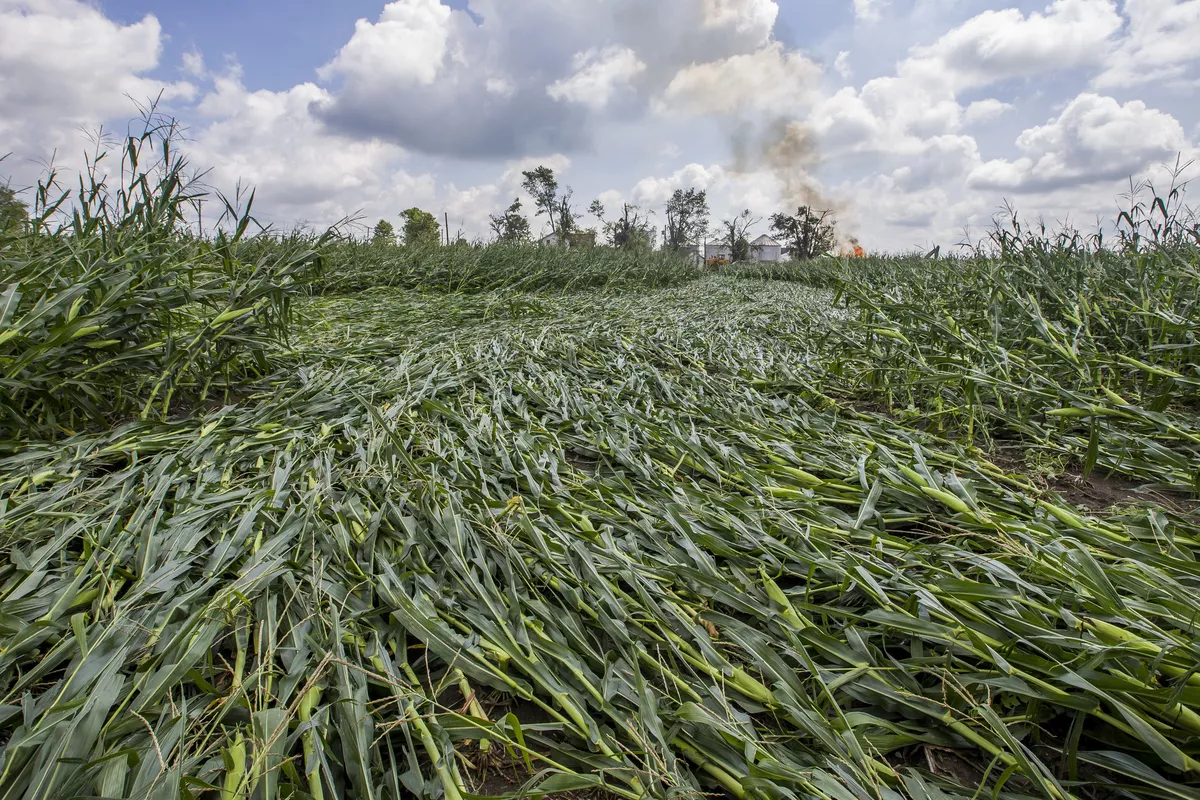
In August, Slovenia recorded extraordinary amounts of rainfall and torrential storms that resulted in landslides and floodings. Meanwhile, throughout August and September, Greece faced unprecedented wildfires, followed by severe floodings, severely affecting the agricultural landscape in the impacted regions.
The significant damages caused by those events to agricultural producers and the resulting loss of income for the affected farmers in Greece and Slovenia endanger the economic viability of agricultural holdings.
The amounts presented today, take into account the assessments of agricultural damage by Slovenia and Greece, along with the respective weight of these two countries in the EU's agricultural sector, on the basis of their shares of CAP direct payments. Additionally, the need to keep sufficient resources available within the agricultural reserve to address potential crises in the remaining months of 2023 and in 2024 was also considered.
The national authorities of Greece and Slovenia will directly distribute the aid to farmers to compensate for economic losses, with payments expected to be made by 31 May 2024. Both countries will have to notify the Commission about the implementation details including the criteria for aid calculation, the intended impact of the measure, its
evaluation, and actions taken to avoid distortion of competition and overcompensation. The two countries can complement this EU support up to 200% with national funds.
The Commission's draft measure, including the principles and methodology for granting support, will be discussed in a transparent way with Member States, who will vote on the implementing Regulation at a meeting of the Committee for the Common Organisation of Agricultural Markets on 30 November. If approved, it will be adopted and enter into force rapidly so that Greek and Slovenian national administrations can implement it without delay.
In June 2023, the European Commission already allocated €15.8 million and €1.2 million to Greece and Slovenia respectively. These funds came from the agricultural reserve 2023, which aims to support Member States affected by adverse climatic events and macroeconomic challenges in the period up to 31 January 2024.
Supporting Slovenia and Greece in climate change adaptation and risk prevention is a key priority of the 2014-2020 and 2021-2027 Cohesion Policy programmes. For Slovenia, over €92 million was committed to flood protection in the 2014-2020 programmes and following a recent programme amendment, funds were re-allocated to the purchase of equipment for a rapid response to the floods. The Slovenian authorities have committed an additional €109 million to flood risk investments in the 2021-2027 programmes.
For the period 2014–2020, Greece earmarked €325 million for investments related to climate change adaptation measures and risks, and in the current programming period, earmarked an additional €727 million specifically for the prevention and management of flood risks.
Member States can also apply for funds through the European Union Solidarity Fund (EUSF) based on a damage assessment submitted within 12 weeks of the date of the first damage. Both Slovenia and Greece submitted their applications for EUSF support, which are currently being assessed by the Commission.
Background
The Common Agricultural Policy (CAP) 2023-2027 includes an agricultural reserve of at least €450 million per year to cope with market disruptions or exceptional events affecting production or distribution. The agricultural reserve 2023 was allocated in full to the benefit of all Member States who have experienced crises of different nature and magnitudes. Since the 2024 agricultural financial year started on 16 October 2023, support measures funded by the agricultural reserve 2024 can already be tabled.
In addition to funds from the agricultural reserve, the CAP provides several possibilities to help farmers affected by natural disasters. Direct payments represent a permanent safety net. Funds from rural development can also be used to restore damaged agricultural assets and production potential. For Greece, €57 million of Union contribution are currently available to support restoration of agricultural potential and around € 40 million for restoration of forests. Moreover, the Greek CAP Strategic Plan 2023-2027 includes €100 million for the prevention and restoration of forests damaged by forest fires, natural disasters and catastrophic events. Greece is expected to submit an amendment which aims, among others, to increase risk management tools supported by CAP funding.
The Slovenian CAP Strategic Plan 2023-2027 and its Rural Development Programme 2014-2022 also contain interventions for rehabilitation and restoration of forests following natural disasters and adverse climatic events, as well as investments in restoration of the production potential in permanent plantations after the natural disasters and catastrophic events.
The Commission stands ready to assess and approve as quickly as possible any amendments to their CAP Strategic Plans that Greece and Slovenia would consider submitting.
Source - https://ec.europa.eu