Despite Slow Start, Big Soybean Crop Coming in Brazil

18.02.2025 381 views

Don Roose of U.S. Commodities took a recent trip to South America and saw firsthand what the crop conditions looked like. Given the size of South America’s growing area, there’s a variety of conditions ranging from too wet to very dry in parts of Brazil and Argentina.

It’s a big country, from Brazil down to Argentina, so you have everything, I would say, probably as big an issue as the dryness in southern Brazil and in northern Argentina – which is a hot, dry pattern there may be stabilizing, but we’ll see – it’s the weather in the north. To put it in perspective, the roads are not the nice plush roads that we have here – gravel. There are a lot of dirt roads, and those roads, when it rains, get muddy. So, that is an issue.”

He says soybean harvest was recently slowed down by the wet weather.

“The harvest slowed down greatly because of that, but picking up momentum now, and the producers there, I would say, probably are somewhere around 15 percent, maybe a little bit more, of the farms have storage, and so, there’s a great need for banks right now, silo bags, and kind of a shortage of those bags at present. It looks like the early yields were a little bit poor but are starting to pick up, improving now. It looks like we’re going to get some drier forecasts going forward and maybe some rain in southern Brazil and Northern Argentina. So, I would say the harvest weather is improving.”

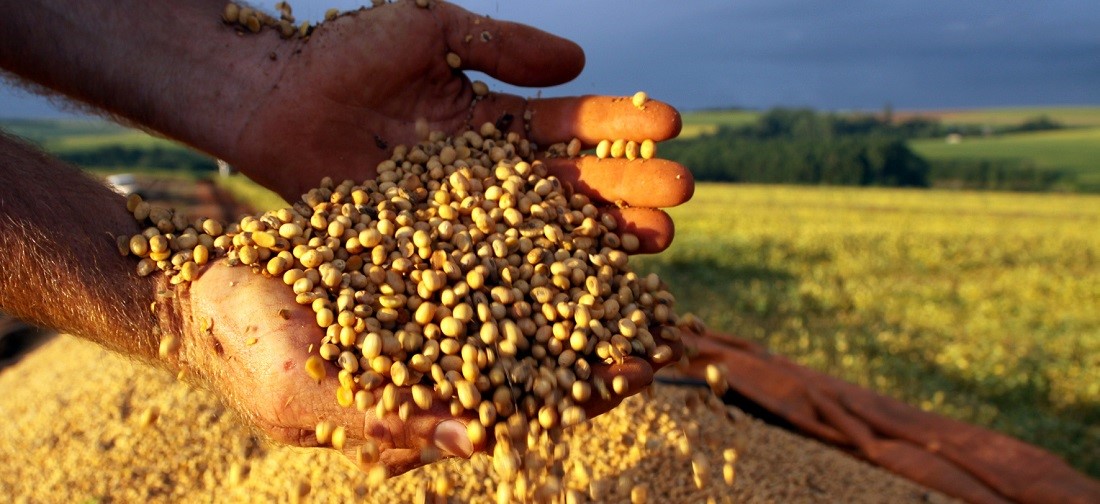
While harvest started slowly, it’s still going to be a big crop.

“You talk about yields, there’s a lot of 60-to-70-bushel yields, you know, is what you’re looking at. So, it’s not like your 40-bushel yields, but the bottom line, I think you’re still talking about a soybean crop that is 170 million metric tons in Brazil. Well, that’s a 6.2-billion-bushel crop.”


Source - https://www.sfntoday.com

01.10.2026

India - Kitchen budget in Mumbai takes a hit as veggie prices rise amid crop loss, low supply

Vegetable prices in Mumbai have risen sharply after Ganeshotsav and with the onset of Pitrupaksha, as erratic monsoon conditions, crop damage and lower arrivals tightened supplies, said traders. 

01.10.2026

Togo Plans Pilot Agricultural Insurance Scheme for Young Farmers and Entrepreneurs

Togo’s PAJEC entrepreneurship program plans to launch a pilot agricultural insurance scheme. The government has issued a call for expressions of interest to select a provider to design and roll out the scheme.

01.10.2026

India - Soybean prices recover as crop damage offsets pressure from rising arrivals

Indias soybean prices recovered sharply w-o-w on 30 September 2026 despite a rapid increase in new-crop arrivals, as concerns over crop damage and lower production estimates have offset pressure from increased supplies. 

01.10.2026

USA - Fruit growers face Nov. 20 crop insurance deadline

Northeast fruit growers have until Nov. 20 to purchase or update crop insurance for the 2027 crop year, according to Crop Growers, a crop insurance provider owned by Farm Credit East.

01.10.2026

IFPA releases statement on largest Cyclospora outbreak in U.S. history

The International Fresh Produce Association (IFPA) has called for greater collaboration between industry and public health authorities as the United States experiences what it describes as the largest Cyclospora outbreak on record.

01.10.2026

Ukraine introduces new rules for GM crops and produce

Ukraine's new law regulating genetically modified organisms (GMOs) and GMO products comes into force on September 16, introducing clearer requirements for the registration, cultivation, traceability, and labelling of GM crops.

30.09.2026

Spain - Fruit supplier targets 30-45% growth with year-round supply strategy

Senda Fruits is heading into another edition of Fruit Attraction with a clear objective: to expand its market presence and aim to meet the needs of its customers all year round. 

30.09.2026

Corn Stocks Shock U.S. Market as USDA Finds 2.1 Billion Bushels in Storage

USDA found 2.095 billion bushels of old-crop corn in storage, far above trade expectations and adding new pressure to U.S. grain markets.