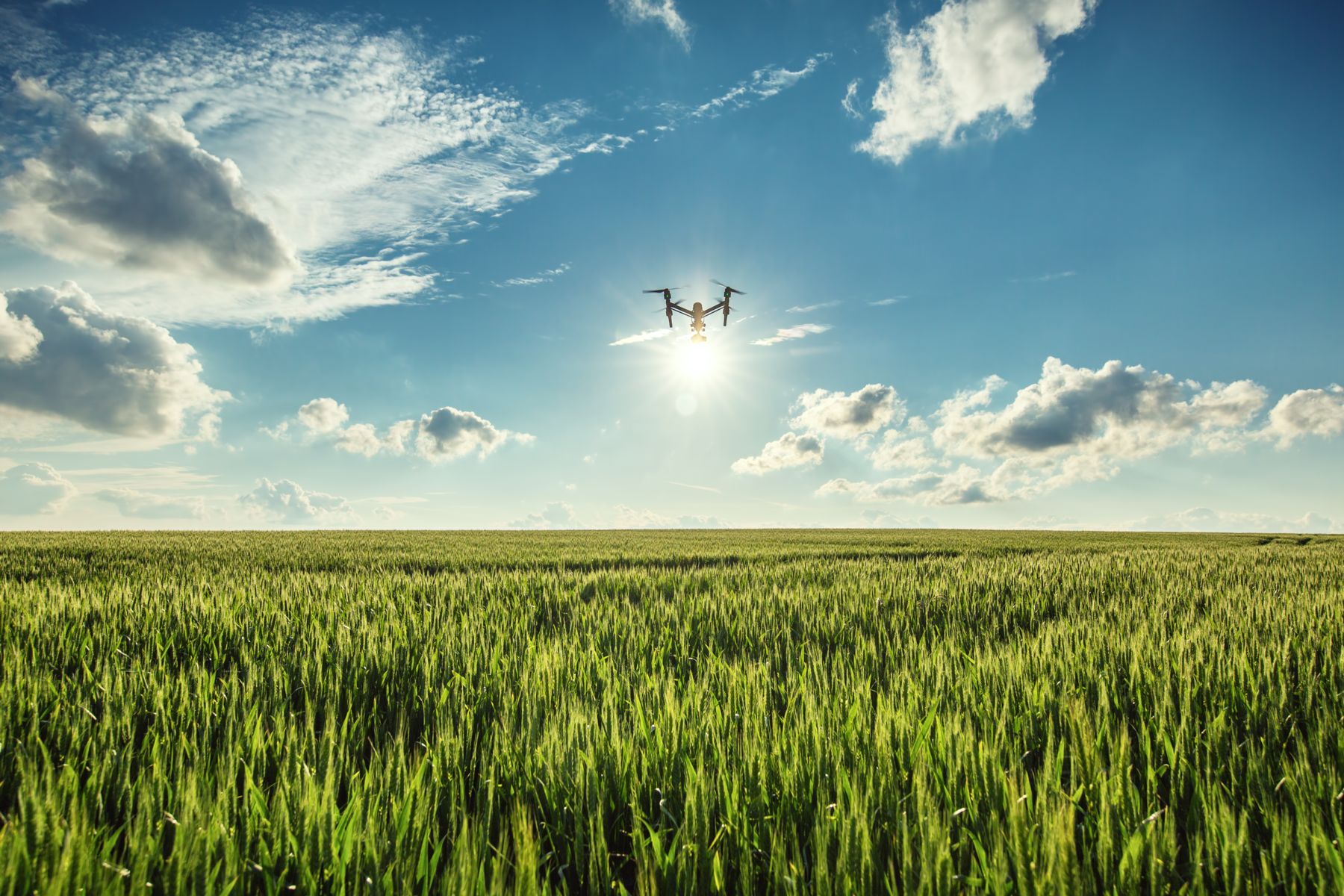
Farmers, airport operators, pipeline operators and others looking to shoo away unwanted avian pests are turning to a suite of new high-tech tools, including drones designed to look like threatening hawks and lasers meant to humanely disperse crop-eating or airplane-threatening flocks.
Why it matters: Birds are a major economic threat to farmers — some of whom use anti-bird netting that can unintentionally trap or harm birds — a hazard for aircraft, and a nuisance to industrial sites.
- The spread of avian flu, meanwhile, is giving some farmers and others new cause to keep wild birds at bay.
Driving the news: The Drone Bird Company has developed a fleet of partially 3D-printed drones that look like birds of prey, and are meant to scare away unwanted smaller birds.
- While some of the company's models have flapping wings to simulate predators' movements, further testing revealed that they simply needed to match predators' speed and silhouette to be effective.
- The company's birds can fly autonomously, but CEO Jan-Willem van den Eijkel says flying them manually is more effective — and users can even corral flocks in the desired direction.
- "If you really want to chase birds — if you're just loitering, it's not enough, because the birds will know, 'okay, what's he doing?'" he says.
Case study: The company was recently hired by a blueberry farmer in Germany who lost about half of his 240 acre crop to starlings. The loss dropped to about 5% after using the company's drone.
- "We were flying for him because he wasn't sure it was really worth his time and money," says van den Eijkel. "So I said, 'okay, we'll do this as a service for you.' But it's not scalable for me because I need too many pilots, et cetera."
- "So I made the bird really user friendly. I teach people to fly in three to four days, and then they can fly themselves."
Yes, but: Some airport managers are still skittish about flying a drone around their runways, opting instead for air cannons and other anti-bird measures.
The intrigue: Bird-shaped drones could also be useful as military or espionage tools — harkening back to the days of wartime carrier pigeons.
- The company's bigger birds "can carry a payload, like a thermal camera and RGB camera," says van den Eijkel. "And we use this as an unobtrusive espionage [device] ... basically because there is no [radar] signature."
- "You operate at an altitude of like 500 feet. So if you would look up, you really have to stare at it for a long time to pick it out."
Meanwhile: Companies such as Bird Control Group and Bird-X have also developed high-tech lasers meant to annoy birds until they leave the area.
The bottom line: The era of the high-tech, 21st century scarecrow is here.
Source - https://www.axios.com