GS Engineering & Construction announced Friday that it has completed the construction of Korea‘s first land-based smart salmon farm, the Busan Smart Aquaculture Cluster, marking the start of full-scale operations to provide domestically farmed salmon.
The completion ceremony, held in Busan’s Gijang-gun, was attended by GS E&C CEO Huh Yoon-hong and public officials from the Ministry of Oceans and Fisheries and the Busan Metropolitan Government. Some 150 attendees toured around the state-of-the-art facilities.
“The completion of the Busan Smart Aquaculture Cluster will contribute to the sustainable growth of Korea’s fisheries industry by expanding the adoption of smart aquaculture technology and enhancing expertise and competitiveness in marine-specific plant operations,” Huh said.
The smart aquaculture project in Busan began in 2019 with government support, receiving both national and municipal funding.
In July 2020, GS E&C signed a business agreement with the Busan Metropolitan Government to develop the cluster. GS E&C has since participated as a private investor through its subsidiary, Eco Aquafarm, established the same year.
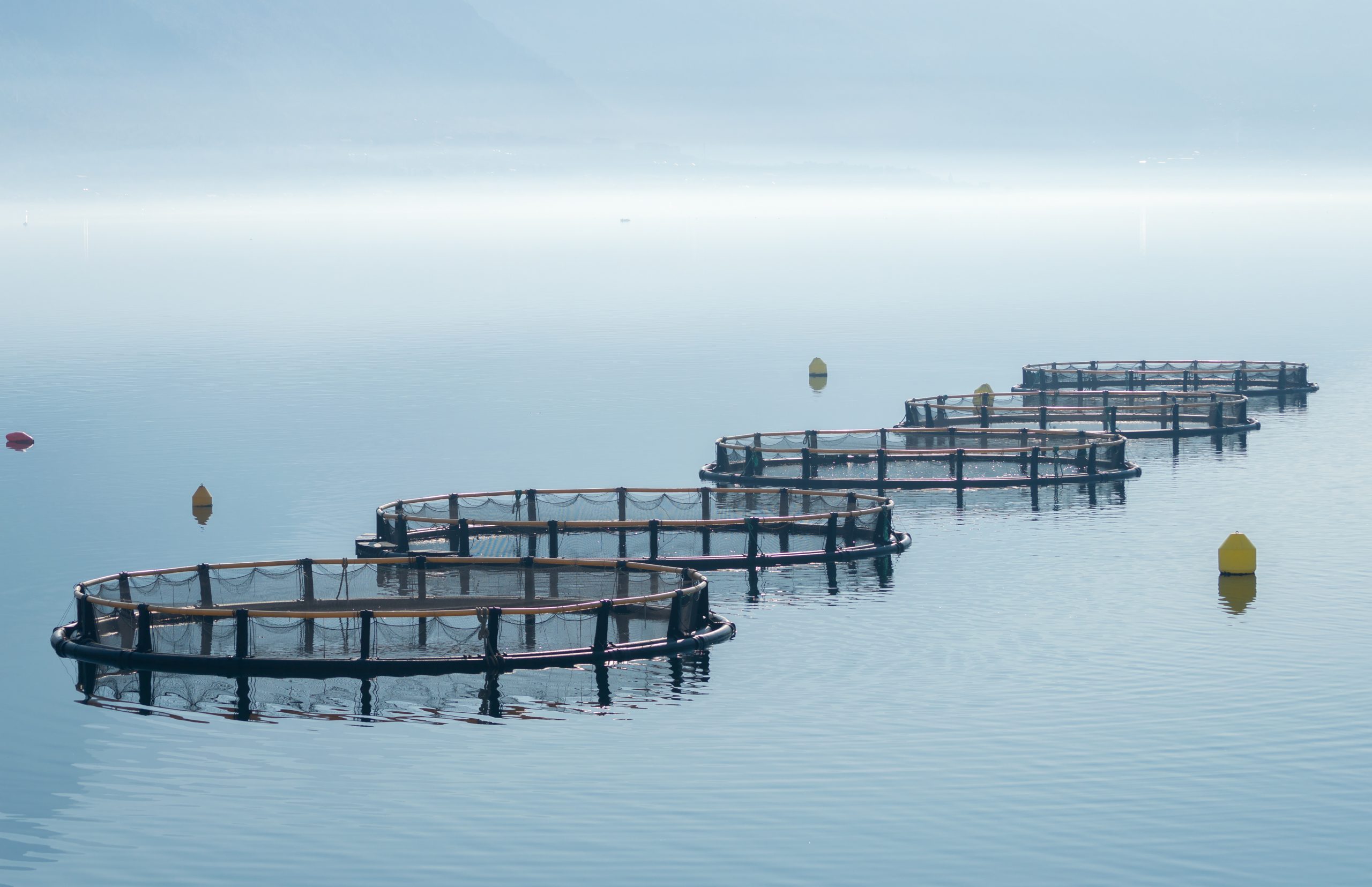
The cluster’s standout feature is its environmentally friendly water treatment system, which employs Korea’s first Recirculating Aquaculture System. Unlike traditional offshore methods, this closed-loop system allows salmon farming to take place on land.
RAS draws groundwater or seawater into land-based aquaculture facilities and uses advanced water treatment technology to remove contaminants and purify the water for salmon cultivation. The used water is then retreated before being discharged back into the ocean. Such a system enables the reuse of up to 99 percent of the water, significantly enhancing environmental sustainability.
By adopting RAS, GS E&C expects to produce clean salmon, free from issues like the microplastics, heavy metals and viruses often associated with traditional offshore farming.
The completion of this facility marks a breakthrough in Korea‘s aquaculture industry by enabling domestic production of Atlantic salmon, a species that has previously been entirely imported.
Located within the Fisheries Science Research Institute at Pukyong National University in Gijang-gun, the Busan Smart Aquaculture Cluster has the capacity to produce up to 500 metric tons of salmon annually. The facility has already begun raising Atlantic salmon, with eggs introduced in two phases in July and November this year. The salmon will undergo a cultivation period of some two years, with full-scale shipments planned to start in the fourth quarter of 2026.
Source - https://www.theinvestor.co.kr