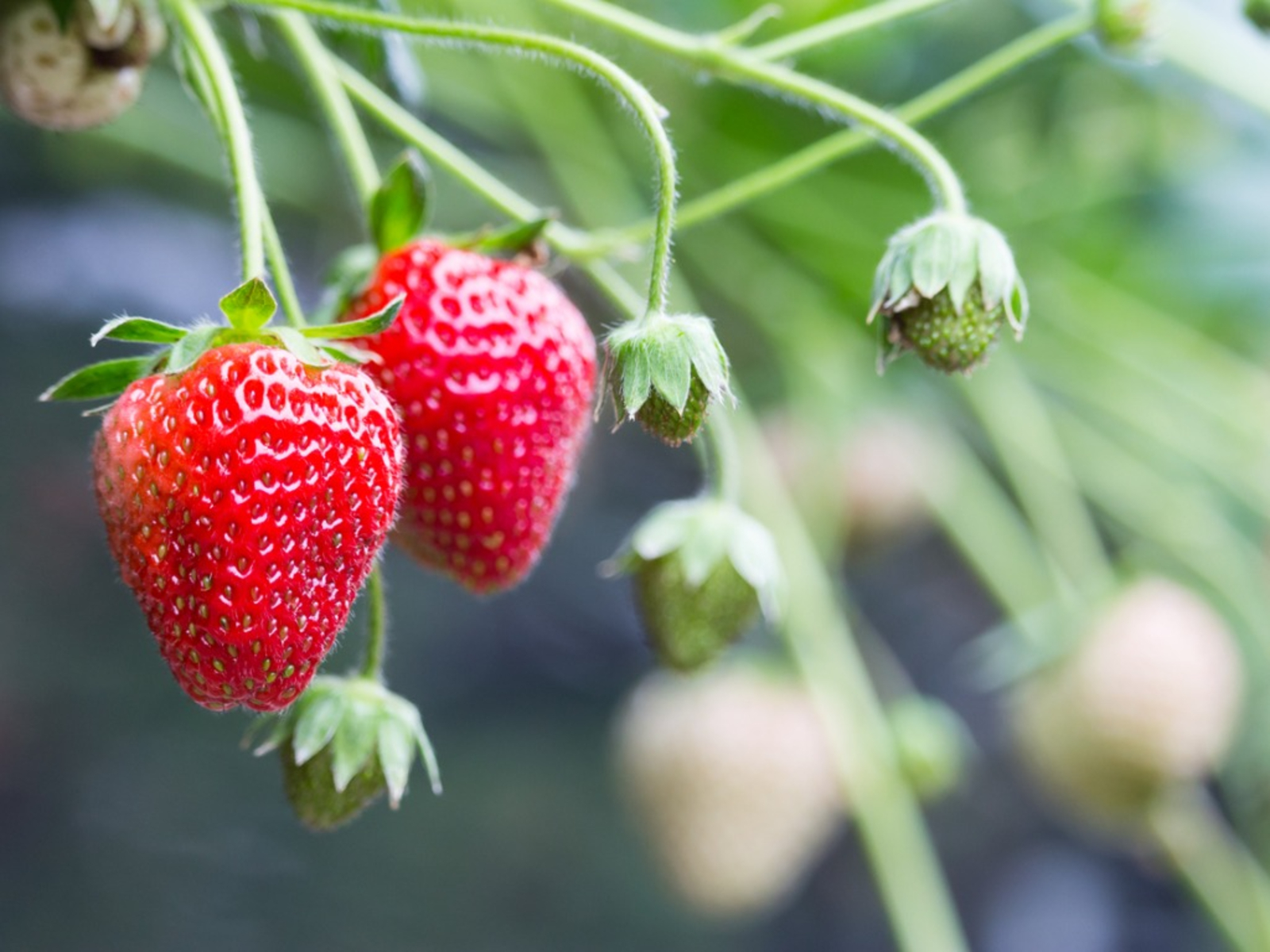
At Heiner Rothkopf's modern greenhouse facility in Euskirchen, regional strawberries grow and thrive from April until November. In this interview, he talks about this year's harvest, which will be remembered as particularly challenging, and about the longer-term prospects of protected cultivation.
Since the end of August, they have been in what is known as the fall harvest, with the associated planting taking place in mid-July. "The drought has also had a noticeable effect on our crops, which is why we have to expect a weaker autumn harvest. I do not rule out crop losses of up to 30 percent at the moment," Rothkopf states.
The Falco and Elsanta varieties are predominantly cultivated in heated greenhouses, while the remontant variety Florentina and, from 2023, Lady Emma are grown in unheated facilities. "With Florentina, the heat has brought the plants to an earlier standstill, which is why we will have to end the season earlier in the unheated greenhouses."
Energy supply secured until 2024
In protected cultivation, in particular, people are looking with concern at the rapidly rising energy prices. Rothkopf: "Thank goodness we concluded a new energy contract that lasts until 2024 just in time, which is why the energy supply is now secured for the time being."
Nevertheless, the Euskirchen farmer also sees the situation extremely critically. "Particularly in the first half of the season, i.e., May and June, strawberry prices were at times catastrophic, which was clearly due to the oversupply of both domestic and Dutch batches. This abundant supply situation occurs every year, but such an extreme drop in prices as this year has not been seen before in this form. From July, the market has been able to recover somewhat, which is why we are now observing a satisfactory price level with good, stable volume offtake."
The use of beneficial insects, such as bumblebees and predatory mites, ensures a sustainable cultivation process. This means that chemical pest control and plant protection agents can be dispensed with.
Marketing-wise, the domestic greenhouse strawberries will find their way to consumers through various sales channels, Rothkopf continues. "About 40-50 percent goes to our largest customer, Früchte Rosenbaum, which offers the produce under the regional concept 'Rosenbaum Regional' in regional food retail markets. A quarter is marketed through our own strawberry stands, and the rest goes directly to food retailers. Regardless of the sales channel, we have noticed that sales are increasingly concentrated on the weekend. This is particularly noticeable during the May holidays; especially during an extended weekend, business sometimes goes crazy, and we can hardly keep up with the harvest and fruit logistics. In that respect, the marketing of the autumn strawberries is a little more even."
From growing field lettuce and tomatoes to greenhouse strawberries
The Rothkopf family has a long history of growing vegetables. Initially, they cultivated tomatoes and lamb's lettuce in a greenhouse, and in 2012 they gradually switched the business to strawberries. For six years now, they have been exclusively involved in the cultivation of greenhouse strawberries.
"Although we only grow one crop these days, the risk is manageable because the volume is continuously draining and the energy consumption in strawberry cultivation is much lower compared to lamb's lettuce and tomatoes."
Source - https://www.freshplaza.com