On February 27 Federal Agriculture and Agri-Food Minister Marie-Claude Bibeau and Saskatchewan Agriculture Minister David Marit announced details of the 2023 Crop Insurance Program.
“Through improvements to the Crop Insurance Program, Saskatchewan farmers continue to get coverage they can count on,” said Bibeau. “We encourage farmers to use risk management tools to help them minimize the economic effects of production losses caused by natural hazards.”
"As we look forward to the 2023 growing season, I want to acknowledge the drive and resilience Saskatchewan farmers and ranchers continue to show year after year," Marit said. "We had some rough years and while last year was a step forward, there were still very dry areas in the West side of the province and Crop Insurance responded with quick action on claims. That is why it's important for producers to evaluate their current risk management options and ensure they have the right coverage for their farm."
Saskatchewan Crop Insurance Corporation (SCIC) continues to provide Saskatchewan producers with higher Crop Insurance coverage. The average coverage for 2023 is at a record-high level of $446 per acre, due to increased commodity prices and yield coverage. With this increased coverage and higher insured prices, the average total premium is $14.79 per acre, an increase from $12.05 in 2022.
Starting in 2023, Crop Insurance customers will see an Individual Premium calculated for each crop they insure. Premiums are individualized based on a producer's personal claim history compared to the area risk zone. This adjustment (increase or decrease) from the base premium rate is calculated for each customer, and independently for each insured crop. This means, a producer's claim on one crop does not impact their premium for a different crop. Premium Discounts and Surcharges previously used in the Crop Insurance Program are discontinued.
“It’s always good to review the program to ensure it continues to serve farmers and remains efficient,” SaskCanola Chair Keith Fournier said. “It is important for farmers to open their insurance packages, review their information and learn about their coverage options.”
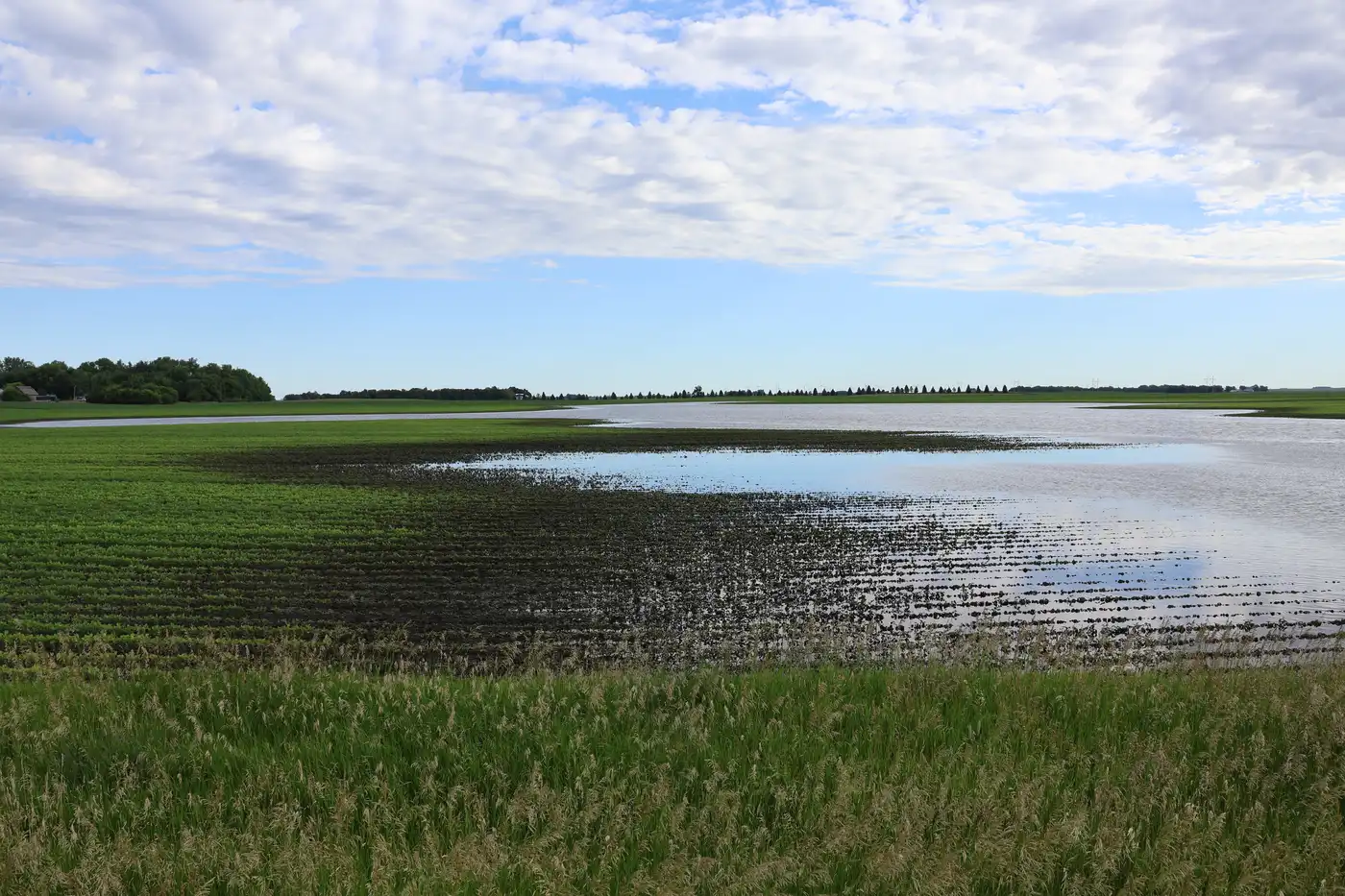
Also effective for 2023, SCIC is increasing the maximum dollar coverage levels of the Unseeded Acreage feature. While the minimum coverage remains the same at $50 per acre, additional Unseeded Acreage coverage levels are increasing to $75, $100 and $125 per acre. Unseeded Acreage coverage, included with all multi-peril Crop Insurance coverage, helps offset costs associated with summer fallow acres too wet to seed due to excessive spring moisture.
“We appreciate the ongoing commitment to Saskatchewan agriculture,” Saskatchewan Rural Municipality Association (SARM) President Ray Orb said. “The increases to unseeded acres coverage stands out as an example of SCIC listening and incorporating the concerns of our members.”
March 31, 2023, is the deadline to apply, reinstate, cancel or make changes to Crop Insurance contracts. Producers must also select insured crops and coverage levels by this date. If no changes are made, a producer's coverage will remain the same as last year. To make changes or discuss the different features and coverage levels, producers can contact their local SCIC office or call 1-888-935-0000.
While Crop Insurance provides coverage from seeding through harvest, AgriStability provides further coverage against uncontrollable events like rising input costs or falling commodity prices. For the 2023 program year, the AgriStability compensation rate will increase from 70 per cent to 80 per cent to better support farmers in times of need. This allows AgriStability to be more responsive when a farm experiences a large margin decline, providing additional compensation to address the operation's financial shortfall.
SCIC offers a full suite of business risk management programs, including AgriStability, Crop Insurance and Livestock Price Insurance and the Wildlife Damage Compensation and Prevention Program, to help mitigate risk for Saskatchewan producers.
Crop Insurance is a federal-provincial-territorial Business Risk Management program under the Canadian Agricultural Partnership. Under Crop Insurance, premiums for most programs are shared 40 per cent by participating producers, 36 per cent by the Government of Canada and 24 per cent by the Government of Saskatchewan. Administrative expenses are fully funded by governments, 60 per cent by Canada and 40 per cent by Saskatchewan.
Source - https://www.saskatchewan.ca