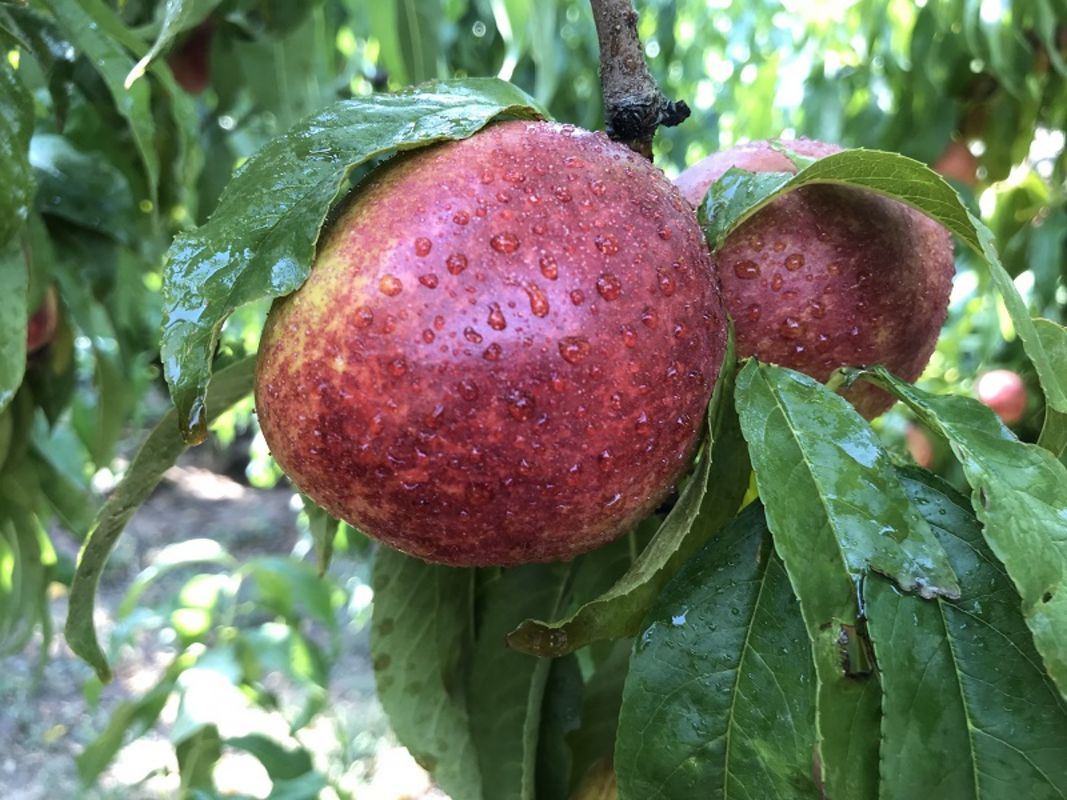
Unease marks this year's season kickoff for Greek organic stone fruit, as Sophoclis Michaelides, CEO of Bio-Ilios Ltd, based in Tübingen, reports. "The continuous rain complicates the harvest of early varieties in Greek cultivation areas, resulting in not as abundant quantities. Meanwhile, Spain is pressing the market with large quantities of produce."
Since mid-May, apricots, peaches, and nectarines from Greek organic production have been gradually hitting the market. "Greece is generally not as prominent in the early segment. The focus in recent years has been more on mid and late marketing. From mid-June, we therefore expect better and larger stone fruits," says Michaelides, who is currently marketing predominantly small-sized stone fruits of calibers B and C.
In the past decade, numerous new varieties were introduced, especially in the early segment. This tendency is a thorn in the side for the experienced importer: "A quality peach like 'Red Heaven' is increasingly being overshadowed. The trend is even more pronounced with apricots. Unfortunately, the focus is not so much on taste and shelf life, but mainly on the fruit's appearance," observes Michaelides. Generally, more white-fleshed stone fruits are cultivated in Greece. "Previously, white-fleshed varieties were significantly more expensive than yellow-fleshed fruits in sales. This price discrepancy has significantly decreased over the years, although white-fleshed varieties still predominate overall."
Given the current market situation, suppliers are forced to offer discounts in the stone fruit category. Michaelides: "In my opinion, however, this is not a sensible and especially not a sustainable solution. If we want to continue enjoying Greek organic fruit in the future, it would be more sensible to pay the producer a stable, good price. We must not forget that production costs, such as for labor, fertilization, but also packaging materials and logistics, have also risen significantly in Greece. Unfortunately, there is sometimes a lack of appreciation for the producer's work."
Decline in demand for organic fruits
Overall, Bio-Ilios looks back on the past year with mixed feelings. "We too have had to accept a demand decline of 5-10 percent due to inflation. However, the situation needs to be viewed differently: We had a very strong citrus campaign in winter 22/23 with high demand for Valencia juice oranges, as well as Washington and Navelina eating oranges of Greek origin. The past season, on the other hand, ended much earlier. Thus, each year brings certain challenges with individual products, so that revenues more or less balance out in the end."
Source - https://www.freshplaza.com