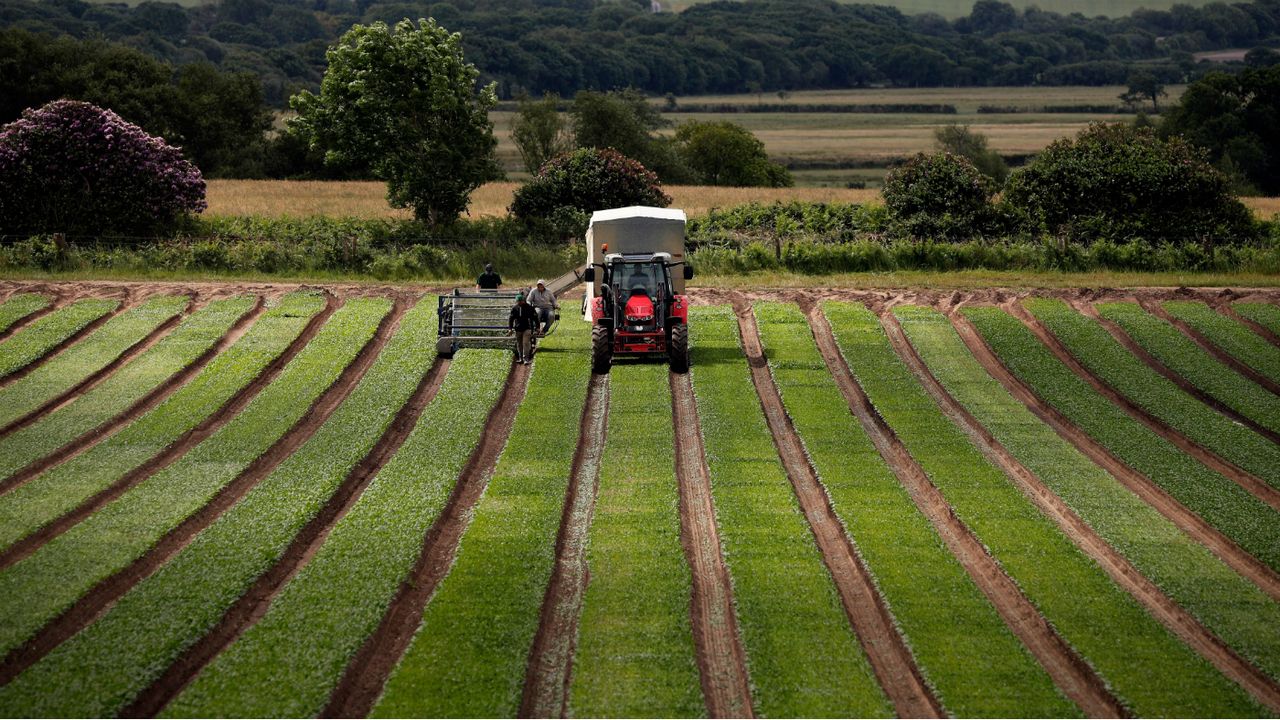
Heat and drought have 'significant influence' on food security and agricultural production

13.01.2023 633 views

Heat and drought are the utmost limiting abiotic factors that pose a major threat to food security and agricultural production, and are exacerbated by "extreme and rapid" climate change, according to a new paper in CABI Reviews.

The team of international scientists suggests that it is critical to understand the biochemical, ecological and physiological responses of plants to the stresses of heat and drought in order for more practical solutions and management.

They state that plant responses to these challenges may be divided into three categories: phenological, physiological and biochemical.

Lead researcher Dr. Aqarab Husnain Gondal, of the University of Agriculture Faisalabad, Pakistan, argues that due to physical damages, biological disruptions and biochemical abnormalities, sub-optimal water supplies and unusual temperatures negatively affect crop development and yields.

Supported by colleagues from Yarmouk University, Jordan, the National University of Huancavelica, Peru, and the Citrus Research Institute Sagodha, Dr. Gondal says a distinctive aspect of the phenomenon is comparing fundamental behavior with abiotic stresses.

The scientists, referring to a study examining data from research published between 1980 and 2015, state that drought has reduced wheat and maize yields by up to 40% around the world. They also highlight that projections suggest that for every degree Celsius rise in temperature, this would result in a 6% loss in global wheat yields.

Dr. Gondal said, "This review gives a thorough description of the adaptation of plants towards heat and drought stress with a particular emphasis on identifying similarities and variations. Abiotic stresses are reducing crop yield all around the world. Heat and drought stress causes plants to respond in a variety of ways—the most notable of which is by altering their development and morphology.

"While the capacity of plants to withstand these pressures differs significantly across species, it is worthy to note that recent advances have been achieved in limiting the adverse consequences—either through the use of genetic methods or by the induction of stress tolerance."

The scientists maintain that despite the fact that heat and drought stress may have a negative impact on the plant's growth and development, reproductive growth is the most affected.

Anthesis or grain filling stress may have a major impact on crop production if it is mild while damage to the photosynthetic machinery, oxidative stress and membrane instability are also caused by these forces, they say.

Source - https://phys.org

26.01.2026

EU streamlines farm rules, promising €215m savings for agriculture

The European Commission has adopted nine new legal acts to cut administrative requirements under the EU’s Common Agricultural Policy (CAP), including changes it said could save farmers across the bloc up to €215 million a year.

26.01.2026

Uzbekistan, Canada Discuss Joint Agricultural Research

Uzbek Minister of Agriculture Ibrokhim Abdurakhmonov has held a working meeting with Ben Bradshaw, Assistant Vice-President for International Cooperation at the University of Guelph (Canada), to discuss prospects for joint scientific research.

26.01.2026

Chile declares agricultural emergency in Ñuble and Biobío due to fires

To respond to the forest fire emergency in the Ñuble Region, the Minister of Agriculture and local liaison, Ignacia Fernández, along with INDAP national director Santiago Rojas and regional presidential delegate Rodrigo García Hurtado, announced on Wednesday the declaration of an agricultural emergency across the entire region.

26.01.2026

Canada - Satellite-based system replacing Forage Rainfall Insurance Program in 2026

Saskatchewan is using satellites to measure soil moisture as part of its insurance coverage for the province’s livestock sector.

26.01.2026

Philippines - Record PCIC budget to cover insurance for 2.93 million farmers

State crop insurer Philippine Crop Insurance. Corp (PCIC) plans to insure almost three million farmers this year after its budget increased by 45 percent.

26.01.2026

Australia - Queensland growers call for payroll tax relief after disasters

Queensland fruit and vegetable growers continue to raise concerns about the impact of payroll tax on farm businesses, particularly those with seasonal labour requirements. Industry representatives say existing payroll tax settings do not reflect the operating realities of horticulture, especially during periods of disruption caused by extreme weather events.

25.01.2026

Guyana - Hundreds of Region Five rice farmers to receive historic crop insurance payout

Distribution of the certificates began yesterday at the Mahaica, Mahaicony, Abary (MMA) office at Onverwagt, where farmers gathered to formally receive documentation confirming their coverage under the historic UPL Crop Insurance Scheme.

25.01.2026

Canada - Saskatchewan announces $4.5M for livestock research and modernizes forage rainfall insurance for producers

Saskatchewan’s livestock producers will benefit from new research funding and a major update to a key insurance program, Provincial Agriculture Minister David Marit announced Wednesday.