With the increasing unpredictability and severity of the weather, agriculture across the world has become fraught with risks. Old solutions have become unfeasible and current solutions do not provide enough protection. Asia Insurance Review spoke to Canopius’ Mr Deng Yu about how the (re)insurance industry can advance agriculture insurance.
The acceleration of climate change has had both positive and negative impacts on agriculture insurance. On the one hand, it promotes the adoption of insurance as people recognise the adverse effects that come with the rising frequency and severity of weather-related events. At the same time, it can undermine the financial viability and sustainability of the (re)insurers that offer these products and services.
“For instance, several governments have formed partnerships with the private insurance sector by offering premium subsidies which boost the affordability and rating adequacy of such insurance,” said Canopius head of agriculture reinsurance Deng Yu. “However, large losses from more frequent extreme weather conditions could still make it financially unviable for (re)insurers to continue operating in this line.”
Dealing with unpredictable weather
Climate change has caused weather events to become more extreme and more unpredictable. While insurers have managed to curtail most of the volatility through modelling and improved detection tools, nature still tests existing systems.
“The risks and challenges faced ultimately come down to the volatility and variability of critical metrics like temperature and rainfall, and how they affect outcomes like crop yield. Even if temperature and rainfall over a given period, such as during a crop’s growing season, appear to be in line with historical averages, extreme swings in temperature and rainfall can severely affect crop survival and growth,” said Mr Deng.
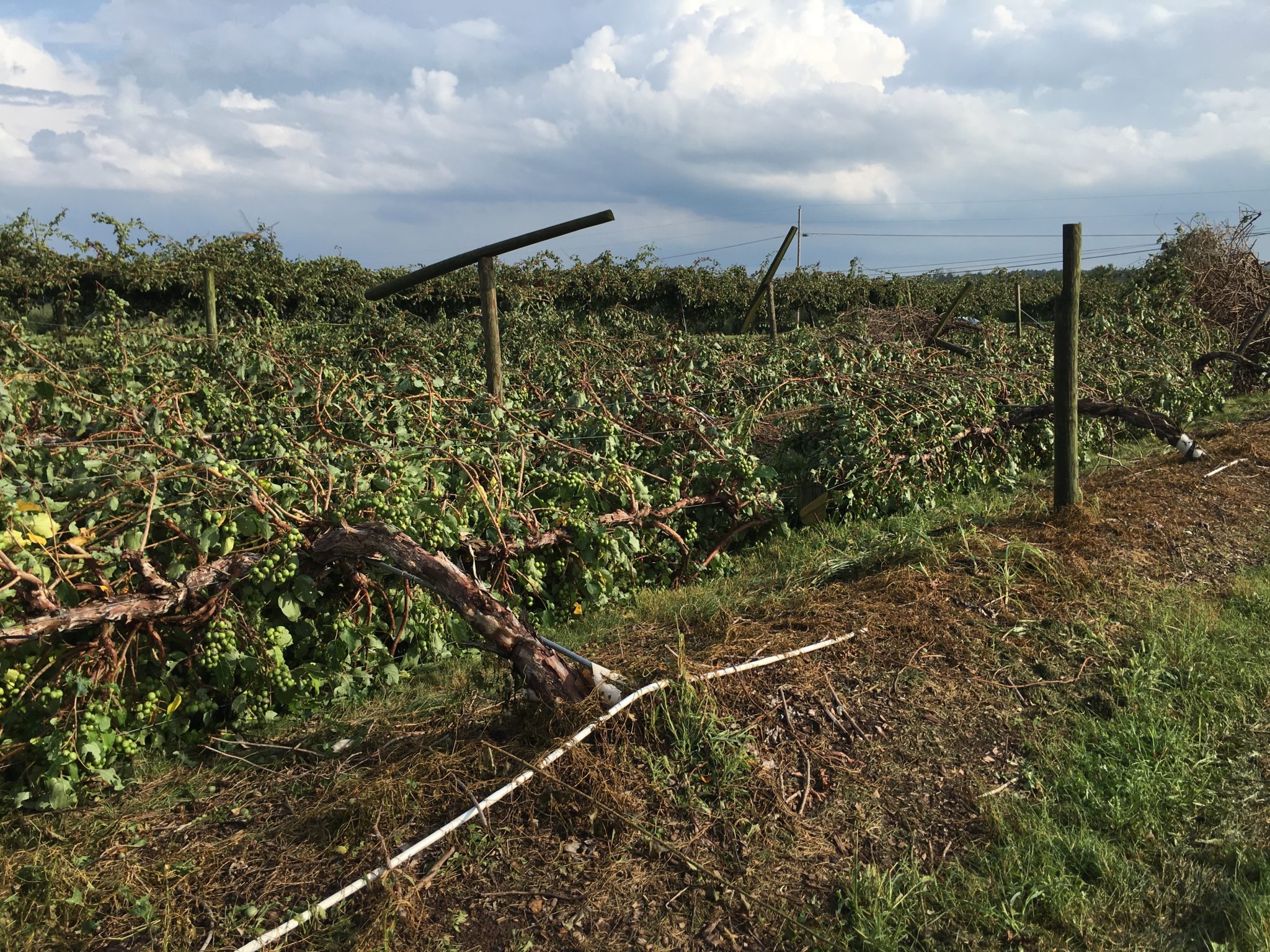
For example, if a particular crop receives four months of rainfall in just a few days, it would be disastrous because there would be a period of prolonged drought and the extreme amount of rainfall could result in flash floods that would wash away the crops, resulting in a total loss.
In colder regions, there are more occurrences of warmer and earlier springs, which may cause plants to bloom and grow new shoots earlier than usual. If this is followed by a cold snap, the resulting frost could cause systemic losses over an entire region or country.
Even with current technology, it can be very difficult to come up with projections on the growing season of around four months and agricultural insurance with any degree of confidence. “Everything has to be in combination and biological balance within that four-month period to make a successful crop,” he said.
To improve their predictions and assessments of risk, insurers can simulate more scenarios and ask themselves more ‘what-if’ questions to stress-test the impact of weather factors and agricultural science on crop yield. They can then overlay the insurance policy onto such simulated scenario outcomes to see what kind of results it can produce.
Another approach is to use time-series methods like exponential smoothing, which looks at historical records of weather and crop yield, to assign increasingly more weight to newer records and more recent observations. As new data comes in every year, older historical records gradually attract less weight and are eventually phased out.
The parametric solution
At the same time, parametric insurance can be a useful tool to address the volatility, but it needs to account for some other factors.
“If we take the frost example above, there will be a notable difference in temperatures between parts of the region at higher and lower elevations. At lower altitudes, temperatures will be warmer while the climate at higher altitudes, which is intrinsically cooler, will have a higher tolerance to early warmth. Parameters measured by weather stations that are unable to recognise differences such as this would not be a good proxy for realistic farming conditions,” he said.
That said, parametric insurance is a good tool for covering a homogenous area, but it still faces the same challenge of indemnity-based insurance – large economic losses of the insured could undermine the financial viability of such a service offering.
In addition, the possibility of anti-selection by farmers who know the land and climate around them well from their many years of experience, could also have a further negative impact on the loss ratios of (re)insurers.
Specialist solutions
The industry has been waving the flag of parametric insurance as a good way to solve agriculture difficulties, but it still suffers from the financial sustainability issues when large claims have to be paid out.
This, according to Mr Deng, is where specialist (re)insurers can provide a solution. Specialists can collaborate with governments through public-private partnerships (PPP) to introduce better farming practices to reduce agriculture risks and offer risk adjusted rating considerations.
“For example, cover crops can be added to a crop rotation between seasons and cash crops, providing seasonal green cover with benefits such as improving soil moisture holding capacity, nutrient cycling and weed suppression. In the spring, cover crops can be tilled, adding organic matter to the soil, to reduce the likelihood of unfavourable outcomes like soil erosion and surface runoff,” he said.
Practices like this, however, require a certain amount of buy-in or investment from farmers. Traditionally, after farmers harvest what they need, they immediately till (or slash-and-burn in some places) everything else and then go on holiday until it is time to start sowing for the next season.
“With cover crop, the farmers need to stay on the farm, plant the cover crop and provide a minimum level of care for it, and in the next spring, till those into the soil to prepare for new crops. For them, this is added cost and work,” he said.
Government-organised initiatives, ideally introduced on a multi-year basis, can also provide certain incentives to convince farmers to adopt more environmentally friendly or sustainable farming practices.
In the end, these could be reflected in terms of insurance rating differentiations – if there is a reduced risk, the policyholder would demand a rate reduction and the insurance provider will have to assess the risk reduction.
Reaching out to the farmer
While government programmes are a good solution, not every country has such programmes in place, leaving many smallholder farmers at risk.
“Insurance companies can potentially provide proof-of-concept of products and services in countries currently without extensive crop insurance and organise pilot projects with small groups. These days, there are a lot of NGOs interested in such projects which they can present to governments as an option they can develop and scale up,” said Mr Deng.
Insurers will also have to conduct a feasibility study to test the viability. The efficiency of the traditional insurance distribution model will differ greatly from one country to the next.
For example, in Australia, one farm averages between 1,000 to 2,000 hectares – if an insurer gets one policy signed, it is worthwhile because one policy generates enough premium to cover the distribution cost.
In Southeast Asian countries, however, average land is about one hectare or even less than that, so an insurer would need to have around 1,000 policies to get the same amount of premium; and the cost associated with distribution, loss assessments, claims disbursement when multiplied by 1,000 makes it a very inefficient model.
Scaling up with technology
As always, one of the best solutions to the myriad problems is technology. The right kind of technology can be an enabler to raise the efficiency and effectiveness of the work in the agriculture insurance space and it is upon the insurance sector to harness the maximum benefits of technology in the value chain.
For example, mobile applications are easily scalable, and this is particularly useful for reducing distribution costs in servicing a large network of small farms. Technology can also enhance user satisfaction and convenience by overcoming the logistical constraints associated with traditional paper-based processes, such as policy signing and claims payment.
“The use of technology and new data sources can also narrow knowledge gaps and enhance the accuracy of risk assessment and projections, by recognising location-specific differences in factors like a farm’s elevation and topographical positions,” he said.