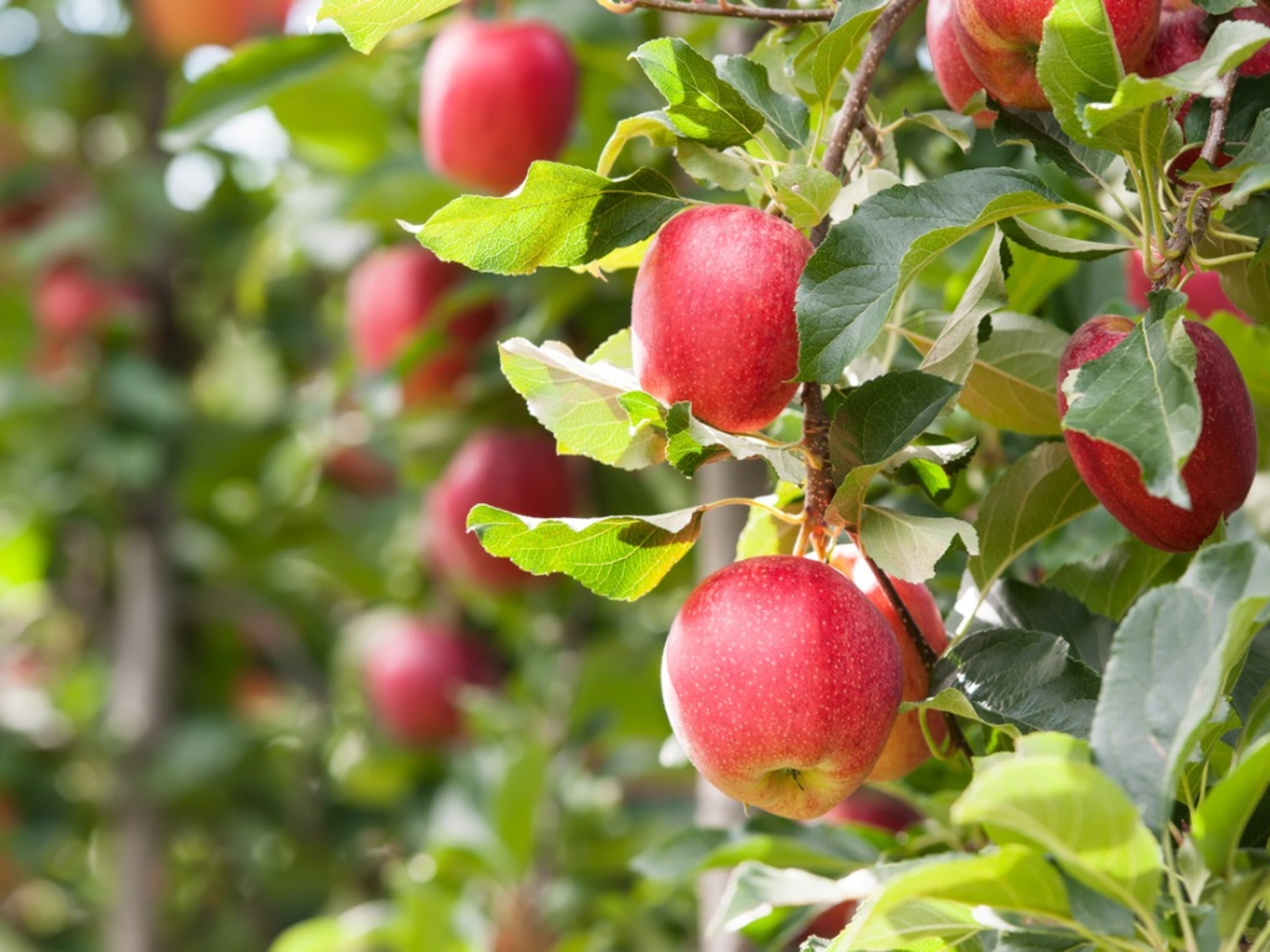
Hungarian apple growers are fighting for their very survival due to the detrimental effect of changing and severe weather challenges. The coming apple harvest is expected to be the weakest of the last decade. Preliminary estimates show Hungary's apple harvest will at best only between 300,000 and 350,000 tons, and might even go down to 50% less than last year's 520,000 tons.
Péter Kelemen, Managing Director of FruitVeB Hungarian Fruit and Vegetable Interprofessional Organization and Product Council, sounded the warning at Tuesdays Apple Professional Forum held in the town of Újfehértó. He addressed the apple industry where the causes, possible solutions and approaches to lessen the impact was discussed.
“If the commercial situation stays as it is today I’m afraid in a few years’ time many growers will stop farming. We last harvested a similarly weak crop due to drastic frost damage in 2007 (214,000 tons) and then in 2011 (300,000 tons). There will probably be between 100 000 to 120 000 tons of fresh apples harvested, which might be just enough for domestic consumption. However, with only 170 000 to 190 000 for apple juice concentrate there will be a huge shortage and it is a big challenge.”
Explaining the effect of the weather on the apple trees Kelemen says multiple factors are at play. “Over the last 90 days, since 20 May until today, we are lacking around 130-150 mm of rainfall in the major apple growing areas. This has a negative effect on the crop. It causes serious fruit drop close to harvest. We see smaller fruit sizes, especially in non-irrigated orchards putting plants into danger. There was weak flowering in many orchards with some frost at night. This also places into question the long term feasibility of growing apples.”
Some of the solutions available to apple growers are very expensive. “There’s two types of production, one for the fresh market, with more high tech orchards for those companies willing to stay in business they need to create high density with frost protection and hail nets. That is the only way to grow apples nowadays. This is a very investment- intensive way of growing. We estimate one hectare will cost between €60 000-€70 000. Two, growing apples for the processing industry is very difficult due to the lower prices it is hard to earn money on this. One piece of advice: the only way to grow apples for apple juice concentrate is to have a dedicated orchard for this by having fully mechanised growing. Then a producer might be able to cut down costs to a level to contain some level of margin compared to cost. Despite having very effective orchards with mechanisation they can still have a negative effect from spring frost damage. This is a huge problem,” explains Kelemen.
“If the commercial product stays as it is today I’m afraid in a few years many growers will be forced to stop growing. In every season there is some kind of adverse weather condition that you need to fight. In one season it is spring frost, in another maybe too high or in another maybe unusual rainfall. Every season there is a weather problem we need to fight. These kinds of weather events present more risk for the farmer. The only way to decrease the risk is by investing in technology as a means to protect yourself. However, this is only possible for fruit intended for fresh consumption. If you are growing for processing it’s even more challenging and you need a good solution. This is not only a problem for apple growers in Hungary, but these are challenges for growers across Europe,” concludes Kelemen.
Source - https://www.freshplaza.com