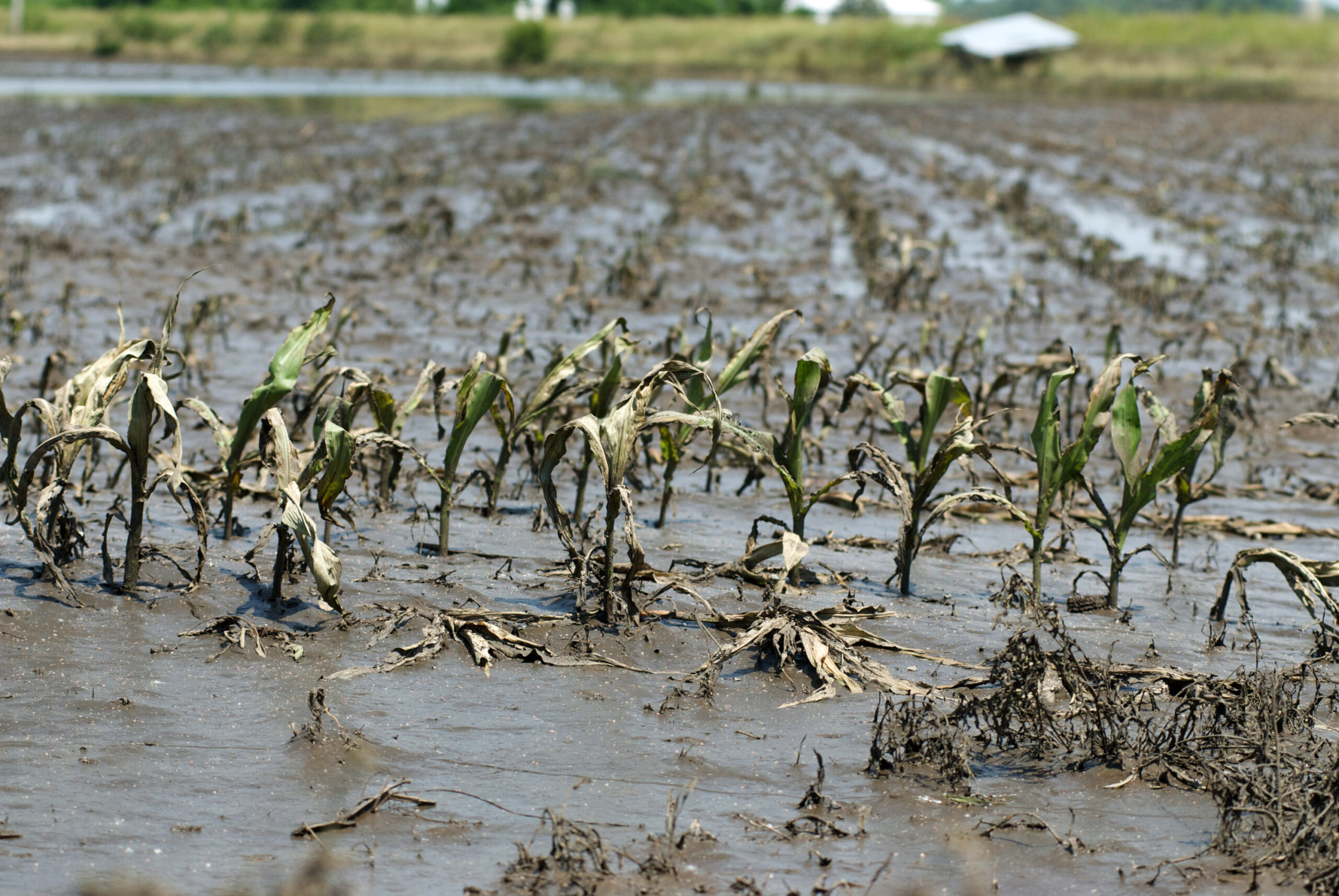
Inter-ministerial central teams have been deputed to Assam, Meghalaya, Telangana, Maharashtra, and Gujarat for assessment of crop damage due to recent heavy rains and floods, agriculture minister Narendra Singh Tomar informed Parliament on Tuesday.
Tomar, in his written reply to the Lok Sabha, said six states -- Arunachal Pradesh, Assam, Karnataka, Meghalaya, Nagaland, and Sikkim -- have estimated 2,43,208 hectares of damage to crop area due to floods as of July 12, this year.
''So far, in 2022-23 the Ministry of Home Affairs has constituted/deputed Inter-Ministerial Central Teams (MCTs) to the states of Assam, Meghalaya, Telangana, Maharashtra, and Gujarat for assessment of damage on the ground,'' Tomar said.
An IMCT is constituted and deputed for an on-the-spot assessment of damage and the requirement of funds for relief operations.
The report of the IMCT is considered by the Sub Committee of the National Executive Committee (SC-NEC). Thereafter, the High-Level Committee (HLC) approves the final quantum of financial assistance, he added.
Asked if the Centre plans to waive farmers' loans in affected districts, the minister said, ''No'' and added his ministry, however, is implementing 'Pradhan Mantri Fasal Bima Yojana' since Kharif 2016, along with 'Restructured Weather Based Crop Insurance Scheme' to provide comprehensive risk cover in the event of crop damage due to natural calamities and preventable risks and provide financial support to the insured farmers against their notified insurance coverage.
However, these insurance schemes are voluntary, he added.
On measures taken to change cropping patterns to help mitigate climate changes, the minister said the Indian Council of Agricultural Research (ICAR) has developed Direct Seeded Rice (DSR) as an alternative to the traditional transplanting method and it has been demonstrated on a large scale in the farmers' fields.
In addition, horticulture, oilseeds, maize, etc. are being promoted as crop diversification measures. ICAR has also identified alternate and efficient cropping systems for crop diversification across different agro-climatic conditions to overcome the impact of climate change.
Further, the agriculture ministry is implementing the Crop Diversification Programme (CDP) in the Original Green Revolution States i.e. Haryana, Punjab, and Uttar Pradesh (western part) from 2013-14 to divert the area of a water-intensive paddy crop to alternative crops like pulses, oilseeds, coarse cereals, Nutri-cereals, and cotton, he added.
Source - https://www.devdiscourse.com