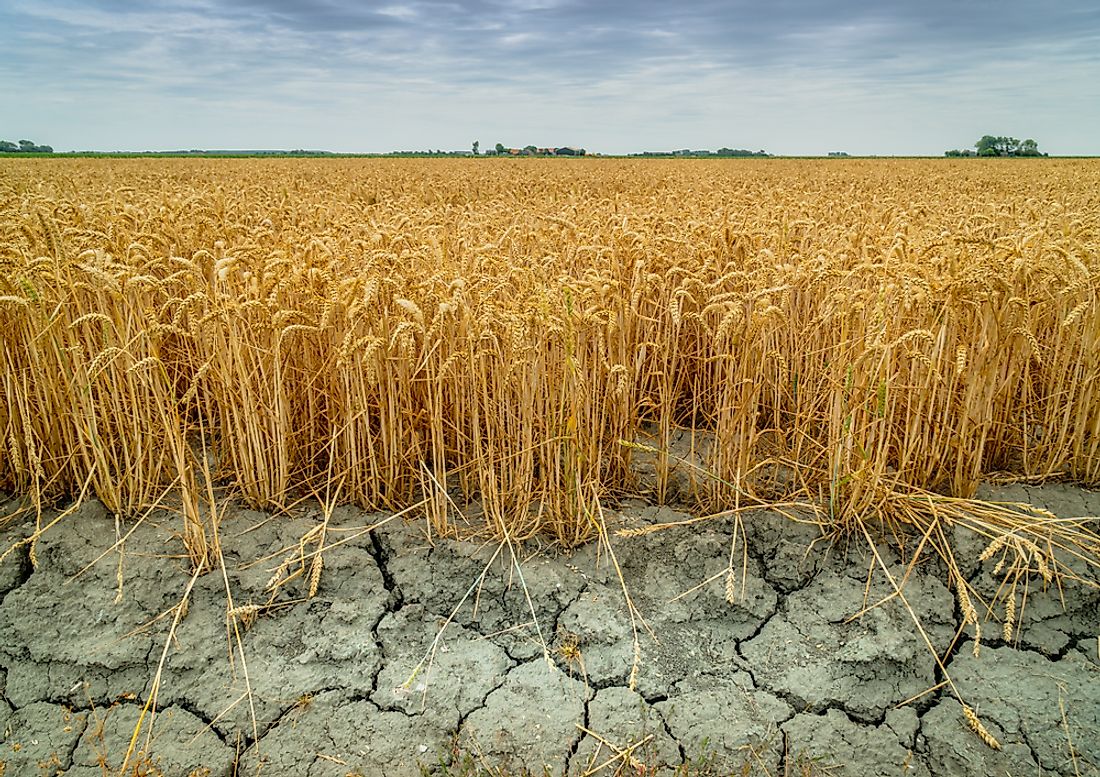
Heatwave conditions since the middle of March have caused significant damage to the standing wheat crop, especially in Punjab, Haryana, Rajasthan and Uttar Pradesh, all major producers of the staple cereal.
Early estimate says that the crop damage would be of the order of 15-20 million tonne, meaning wheat output in 2021-22 crop year (July-June) would be around 96-98 million tonne (mt), against the second advance estimate of 111.32 mt. Last year’s rabi wheat production was a record 109.59 mt.
Summer crops such as pulses, coarse cereals, oilseeds, vegetables and fruits have also been hit by the heatwaves across most parts of north India and western parts of the country. Estimates of the losses of these crops can be made only later. That water levels at reservoirs are higher than year-ago levels is a respite.
While record high temperatures were witnessed in March and April, the India Meteorological Department (IMD) has predicted that the heatwaves would continue during May, especially in the north-west region. Advisories have been sent to farmers to ensure frequent irrigation for saving fruits and vegetables such as mango, guava, lemon, tomato, chilli, brinjal and okra. “Heatwave could affect agriculture by lowering yields of several standing crops in Punjab, Haryana and west Uttar Pradesh”, an IMD official said.
“Crops in more than 60% of wheat-grown areas, especially in Punjab, Haryana, Rajasthan and parts of Uttar Pradesh and Madhya Pradesh have been hit by heatwaves,” a scientist with a leading research institute, said. Wheat, the second-biggest cereal crop after rice was sown in 33.64 million hectare (mh) this year, against 31.61 mh in the previous year.
The third advance estimate of wheat production by the agriculture ministry is expected to be released this month.
Day temperatures should ideally be in the early 30 degrees Celsius when the wheat kernel accumulates starch and nutrients. In the second half of March and early April, temperature rose to 40 degrees Celsius in Punjab and Haryana, increasing the shrivelled grain in the wheat crop from the usual level of around 5% to 10-20%. Farmers are bringing in shrivelled grains beyond the Food Corporation of India prescribed maximum permissible limit of 6% to mandis in these two states.
In Gujarat, summer crops have been sown in a record 1.03 mh area this season. Farmers are, however, facing the issue of saving the crops, especially groundnut, sesame (til), sugarcane and paddy which require water in large quantities. The state government has stopped supplying water for irrigation from its 207 major reservoirs to ensure availability of drinking water.
According to agriculture ministry data, summer crops — pulses (moong and urad), oilseeds (groundnut, sunflower and sesame), coarse cereals (jowar, bajra and ragi) and paddy have been sown in an area of 7 mh this year, up 7% on year.
In its latest advisory to states, the IMD asked them to irrigate crops regularly at the interval of 4-5 days to avoid water stress.
Meanwhile, according to the Central Water Commission data, the water storage level in key 140 reservoirs was 108% of the level a year ago and at 128% of the average in the last ten years.
The IMD, in its first forecast last month, had stated that India will receive ‘normal’ southwest monsoon (June-September) at 99% of the benchmark long period average (LPA). The second forecast of the monsoon, prior to its arrival over Kerala coast, will be released by middle of this month.
Source - https://www.financialexpress.com