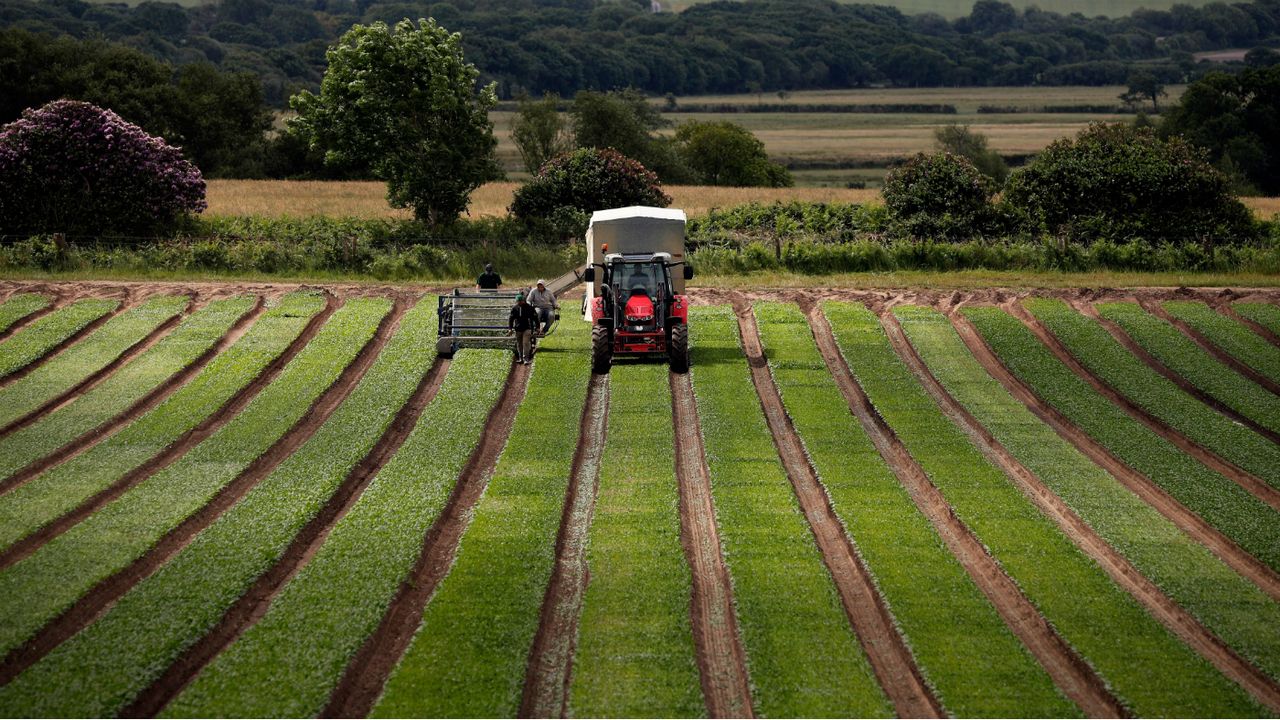
Erratic monsoon rains have severely impacted planting of paddy, the main kharif crop, shows data released by the agriculture ministry Friday. The area planted under paddy, a staple grown and consumed across India, is 13 per cent less this year compared to the last.
India is the second largest producer of rice in the world after China, and the top exporter with 40 per cent share in the global rice trade. It is, however, a water intensive crop, conventionally grown by flooding fields.
Lower planting of the primary staple this year is concentrated in the states of West Bengal — the largest producer — alongside Uttar Pradesh, Bihar, Jharkhand and Telangana, according to the government data. Further, lower plantings have been reported from other leading producers, Chhattisgarh and Odisha.
As on 29 July, the area under paddy cultivation is lagging by a staggering 3.7 million hectares in these seven states, compared to the area planted by this time last year. The area deficit is close to a tenth of the Kharif rice acreage of 39.7 million hectares for the entire country.
At an average yield of 2.6 tons per hectare, lower plantings have put close to 10 million tonnes of production at stake.
Data from the India Meteorological Department show that till 29 July, monsoon showers have been above-normal — 9 per cent more than the long period average — at an aggregate level, but lagging behind in major rice producing states dependent on rains.
So far, rainfall deficiency is at a worrying 47 per cent in southern Bengal, 41 per cent in Bihar, 52 per cent in eastern Uttar Pradesh, and 50 per cent in Jharkhand. Meanwhile, Telangana, another top rice producer, is battling severe floods and the possibility of extensive crop loss.
Parched fields
“This is the worst rain we have seen in close to a decade. Many farmers in my neighborhood are planning to grow vegetables instead. Others are worried about rice yields and the impact late sowing may have on winter crops like mustard (in the next crop season),” said Jagabandhu Mandal, a farmer from Nadia district in West Bengal.
Forty-three-year-old Chittranjan Kumar from Madhepura district in Bihar had a more sordid story to tell.
“I transplanted paddy a few weeks back, but the fields have cracked due to lack of water. When I irrigate the crop using a diesel pump set in the morning, the fields dry up by evening. As the crop is not submerged in water, the fields are infested with weed and I am expecting half of normal yields,” Kumar told ThePrint over phone.
Kumar added that the drought has pushed wholesale prices by about Rs 250 per quintal in a matter of days. The state government has announced a subsidy on diesel for irrigating crop fields, but an assistance of Rs 600 per acre is not enough to save the crop, he said.
A close look at the paddy planting situation shows how precarious the situation is, said S. Chandrasekaran, a Delhi based agriculture trade analyst. “It’s like in a one-day cricket match where thirty (out of fifty) overs are bowled and your team is seven wickets down. India plants close to 40 million hectares with rice in the Kharif season and just 23 million hectares have been covered so far,” he said.
Chandrasekaran added that apart from uneven rains which impacted planting, the area usually under paddy cultivation has also shifted to cotton in states like Telangana, Tamil Nadu and Gujarat, due to high prices of the natural fibre. In addition, states like Haryana and Chhattisgarh have been pushing farmers, over the past few years, to move away from paddy in a bid to conserve water.
Cereal inflation
While India has large public stocks of rice, over three times the norms, lower production in the ongoing Kharif crop season could lead to export curbs, experts warned. That would come on top of an export ban on wheat announced mid-May, after a freak heatwave singed the winter harvest.
Data from the consumer affairs ministry show that after wheat, rice prices are climbing higher. Retail rice prices surged 25 per cent over the past year (as on 29 July) in Kolkata, 11.4 per cent in Ranchi and 5.5 per cent in Chennai.
High rice prices in Kolkata, the state capital of West Bengal, is indicative of robust export demand from neighboring Bangladesh, a large buyer of Indian non-basmati rice.
India has targeted to produce 112 million tonnes of rice in the ongoing Kharif crop season spanning June-October. India’s annual rice production, including the winter harvest, was at 130 million tonnes in 2021-22.
In 2021-22, India exported over 21 million tonnes of rice worth Rs 72,000 crores.
Source - https://theprint.in