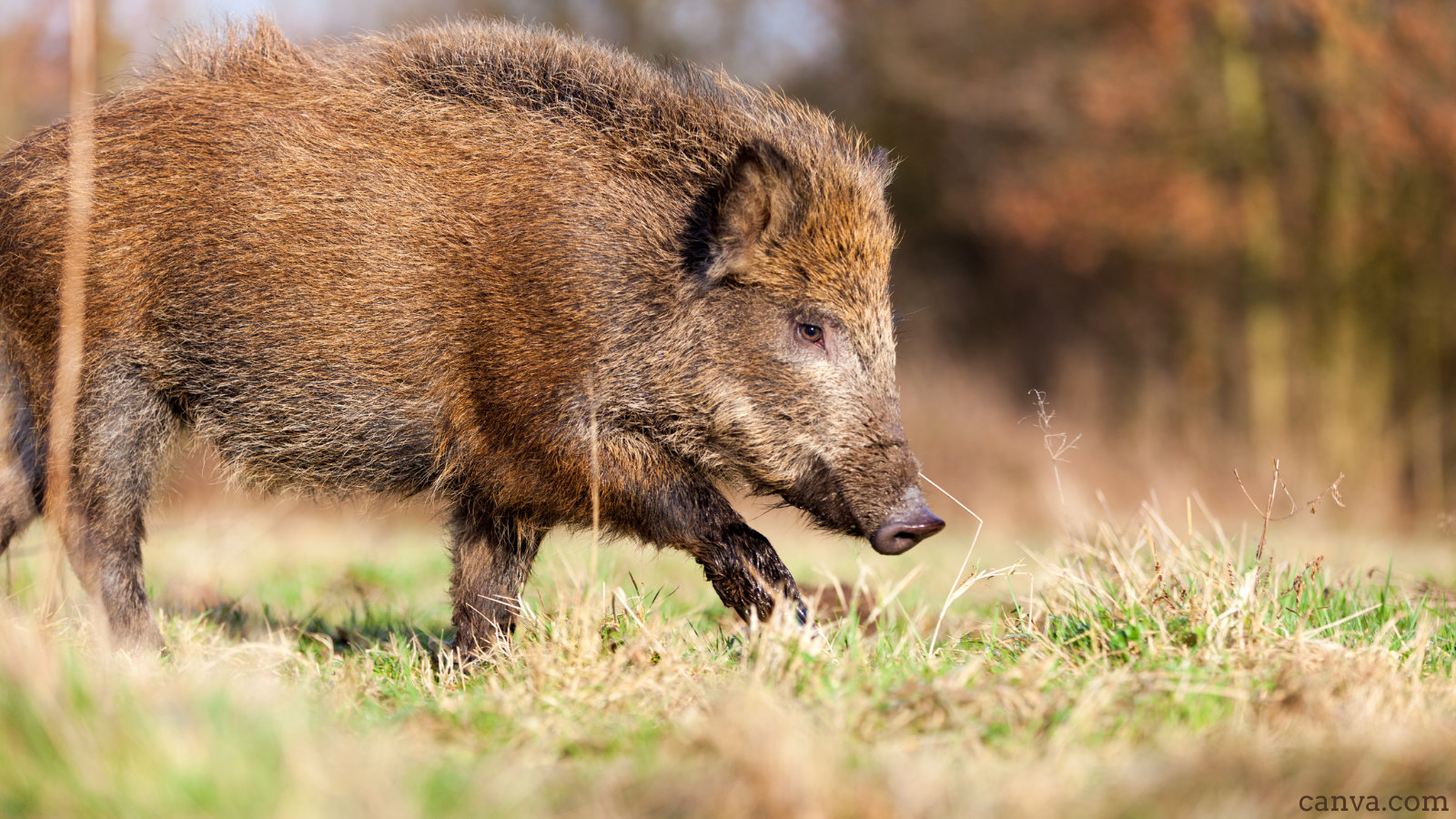
“It was around seven in the evening. During a routine inspection in my field, I discovered a herd of seven-eight wild boars. They were big, some 2.5-3 feet in height. I was scared to chase them down as boars are known to attack people. The next morning, I found that they have raided the crops on an area of around 1.5 bigha land,” narrated Bablu Bora, a farmer from Godhoria Basti village in Sonitpur district, Assam.
While the people here have lived in proximity to wild animals for centuries, the last few years have witnessed substantial agricultural loss owing to crop raids by wild boars and elephants. The area comes under the jurisdiction of Borgang territorial range under the Biswanath Wildlife Division, which lies in the floodplains of Brahmaputra and includes the entire sixth addition of Kaziranga National Park (KNP). The river covers more than half of the total area here.
Land erosion has also displaced many villages in the region. Sahadev Tamang, another farmer, has now settled in Godhoria Basti after losing his land to erosion. “We were from Gonaitapu village, where we had sufficient land. However, almost all of it was lost to erosion. Now, we are managing here on just one bigha of land. Crops such as rice are difficult to grow in such a small parcel of land. So, we try to grow tea here,” he said. Crop raids by wild boars and elephants have also compelled many farmers in the area to stop cultivating profitable crops like kosu (taro) and mitha alu (sweet potato).
Babuli Hazarika, a resident of the Baruah Pathar village was the Honorary Wildlife Warden of Biswanath district till December 2022 (After the recent move by the Assam government to merge four districts – Biswanath, Hojai, Bajali and Tamulpur – the area now comes under Sonitpur district). He says that crop raiding by wildlife has become a serious issue in many villages near the sixth addition of KNP. “Animals often don’t have enough food inside the forest and venture out in the village to feed on our crops. Till 2016, the forest department used to pay Rs. 4,000 for every bighadestroyed but 2017 onwards, they have stopped paying a compensation. I try to help the affected people fill the prescribed form and apply for compensation, but in the last five years nobody has received any money.”
Farmers are also wary of wild boars for their aggressive nature, something Hazarika can vouch for. “Six years ago, my son was attacked by a wild boar which sliced his right hand,” he said.
Negative interactions with wild boars and elephants
Parimal Mandal from the village of Thalipukhuri grows taro on seven bigha land with his brothers and neighbours. While many farmers in his village have stopped growing taro and sweet potato, the Mandal family still persists with the crop. Standing at the edge of his field and pointing at the damage caused by wild boars the previous night, he says, “During harvest season, we guard our fields by taking turns. We are able to manage because our family has enough human resources. It will be impossible for someone who is doing it all alone.”
We take a walk with Mandal through his field and find the land dug up by wild boars on a stretch of around half a kilometre. Wild boars are also called Assam tractors in the region for their ability to dig up the soil like a tractor. Where the sign of boars ends, we find fresh droppings of elephants. “We have reached Ganesh Baba’s para (the elephants’ area),” Mandal smiles.
He opines that more than taro, elephants are fond of rice and other vegetables like potato. He adds that he continues to persist with harvesting taro despite the threat of boars since it is a profitable crop.
“On one bigha land, we can grow 4,000 gatha (a local unit of measurement) of kosu. Now, one gatha equals one kilogram and so even if we manage to sell our produce for Rs.30 per kg, we can get Rs. 1,20,000 per bigha. And at times, we can sell it for even Rs. 40-50 per kg. However, attacks from wild boar causes huge losses for us. Last year, boars destroyed 2,000 gatha kosu out of the 6,000 gatha we grew. This is why many people have now given up growing taro, even though they get good prices for their produce in the market.”
Chakrapani Roy, Range Officer of the Borgung range under whose jurisdiction the area comes, admits that there is an issue of wild boars raiding crops in the villages near sixth addition. “Not just wild boars, we also get a lot of cases of elephants venturing inside the villages. However, we have only 17 frontline staff under this range and with such limited human resource, it is almost impossible to address this problem.”
Hazarika suggests that the forest department consider training the youth in the villages around KNP to stand as guards. “As the forest department is short on staff, they can recruit trained youth from the villages and provide them with necessary items such as boots and torches. In this way, they can ensure greater participation from the villager residents too.”
While the forest department along with the NGO World Wide Fund for Nature India, installed electric fences to keep away elephants, they are not much of a deterrent against boars as they can easily slide beneath the fences, the farmers stated.
A retired forest guard who was posted in the Borgung range suggests a novel technique to address crop raids by wild boars. “They can’t stand the smell of dry chilli. So, if we burn dry chillies, it can drive the animals away from the area. It can be tried by the department once on a trial basis,” he said.
In some other areas like Rangsali, Roumari and Barajuli, there is always a looming threat of tigers which prey on domestic livestock. Hazarika says that residents commonly lose their land to erosion, while those with land struggle with crop raids by wild boars.
“They have now started grazing cows and buffaloes. They take their livestock to the chars (riverine sandbars) for grazing, which are also resting and breeding grounds for tigers. Though they bring back their livestock before dusk, these cattle become easy prey. In fact, a few months back, one person was attacked by a tiger in Bebejia village but fortunately, he survived. They get compensation if the tiger kills cattle in villages but even that amount is negligible. A cow from a good breed costs Rs. 70,000 but the compensation is only Rs. 4,000 when a cow is killed by a tiger.”
He says that the lack of timely compensation antagonises people against the forest department. “Now, even if someone makes a small hut, it will cost Rs. 70,000 -80,000. When that house is demolished by an elephant, the compensation is a meagre Rs. 4,000-5,000. This is why, sometimes village residents refuse to cooperate with the forest officials.”
The limits of exploring tourism
KNP is one of the most well-known tourist spots of Assam, bringing immense revenue to the government. However, much of that revenue fails to trickle down to the people who inhabit the fringe villages of the park. While some of the villages in the south bank of Brahmaputra, mainly in Nagaon and Golaghat district, have received the benefit of tourism, villages in the north bank, such as Sonitpur are yet to experience the same.
Pranjal Gogoi, Range Officer, Gamiri, who is assigned to the sixth addition of KNP tells Mongabay-India, “An IAS officer while being posted as the Sub Divisional Officer took the initiative to turn Gohpur into a conservation reserve and boost tourism here. The forest department conducted a survey with WWF India, and meetings were also held with the village residents. There were plans to start cruises on the Brahmaputra, starting from Biswanath Ghat. However, the plan ultimately fell through when the official got transferred. One problem we faced here was because of the terrain. As this is not a grassland, animal sighting becomes difficult. This area comprises many sandbars. So, it is difficult to navigate this terrain on a vehicle. Even our patrolling is done more on boats than jeeps here.”
Hazarika, who was a part of these meetings with the forest department and the NGO says that apart from its biodiversity, this area also holds tremendous cultural and historical importance. “Gamiri was a very busy port during the British era where ships from abroad used to dock. The famous freedom fighter Kanaklata Baruah who was martyred during the Quit India Movement in 1942 was born here in Biswanath district. Also, cultural icon Dr. Jyotiprasad Agarwala shot portions of Joymoti, the first Assamese language feature film in this region.”
Source - https://india.mongabay.com