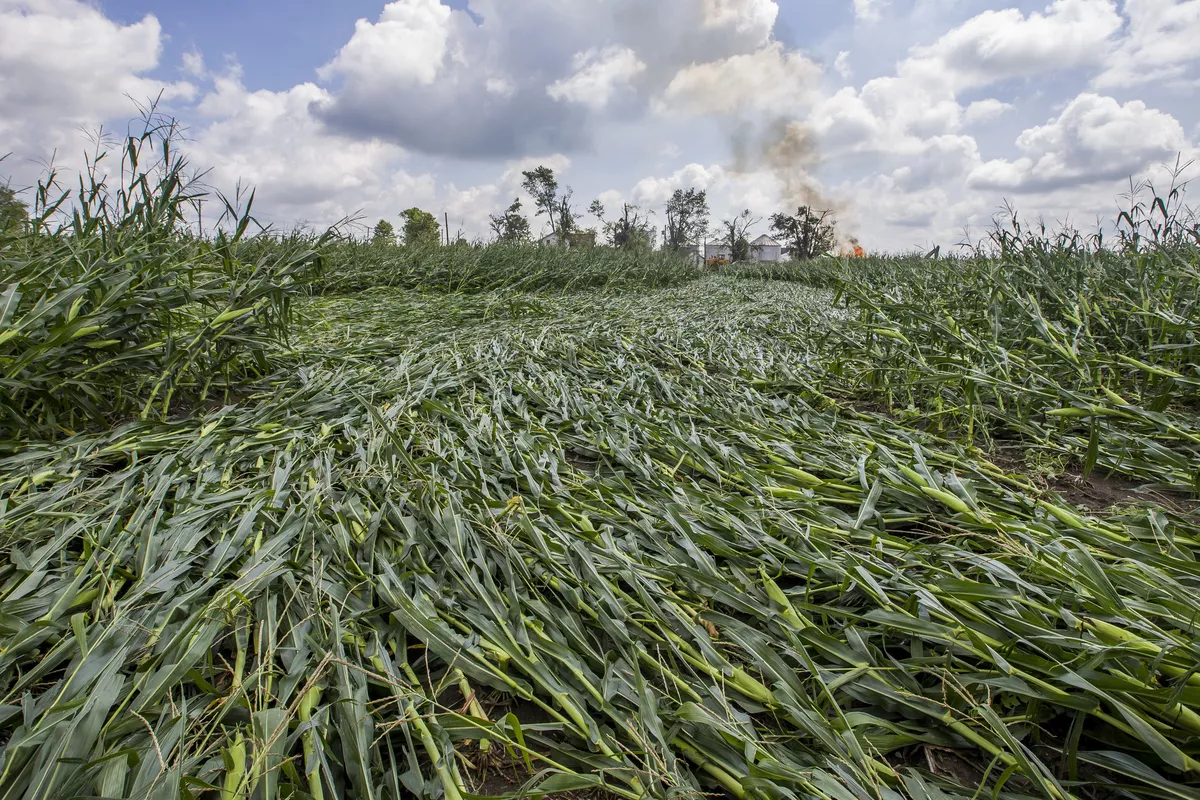
"The flood triggered by rains on July 9 not only destroyed our hard work for the year but also destroyed our land in a way we have never seen before. The deluge brought an overwhelming amount of sand, debris and stones, damaging the crops grown on our 12 bighas. A thick layer of almost one-foot-high debris now covers our once fertile land," says Rishabh Saklani, a farmer from Sidhpur panchayat in Dharampur block of Mandi district in Himachal Pradesh.
This year, parts of North India have witnessed incessant rainfall, disrupting normal life and causing devastation in its wake. Several roads were blocked and many people were stranded because of the landslides triggered due to heavy rains.
Himachal Pradesh Chief Minister Sukhvinder Singh Sukhu has sought about Rs 8,000 crore from the Centre to rebuild the state after the devastation due to floods.
Saklani, one of the many farmers of the state who are dealing with the aftermath of the floods, tells 101Reporters, “My family of 12 depends on the crops for livelihood and sustenance. Usually, the yearly production of food grain and vegetable is at least enough for us to survive. But I have lost all my crops due to the rain and I have suffered a loss of around Rs 1.5 lakh, not to mention the money spent on cultivating the crop.”
“To make the land arable again I will have to clear this debris. This is not a task that can be managed with human strength alone. We will have to hire machines, and it is going to cost me an additional Rs 2.5 lakh, I am concerned about how will I get the money,” he adds.
Saklani explains that excavators will be needed to remove the coating of silt, debris and stone, which can be rented for Rs 2,000-2,500 per hour.
“It will take around a week to clear the land. We also have to reconstruct the concrete retaining walls and repair the fence around the farm which is put in place to protect the land from stray animals. This is all added expense,” he explains.
Saklani cultivates maize, paddy, ragi, potato and seasonal vegetables on his land.
According to government estimates, around 9.4 lakh farmers have been affected in the state.
Agricultural expert and farmer Padma Shri Nekram Sharma notes, "The accumulation of debris in the fields following the river inundation will detrimentally impact the soil's fertility. The longer farmers wait to remove the debris the more the nutrient quality of soil will be affected, further increasing the cost of cultivation in the next crop cycle."
Nisha Kumari, a farmer from Syoh village in Mandi district — which is situated on the banks of the Beas River — shares a similar story.
“My four bigha land is filled with debris, there is sand, plastic, wood and construction material. There are places where chunks of the top layer of soil have been washed away due to the powerful current of the flood water. Whatever is left behind has depleted the soil’s fertility. The land’s productivity will not be the same even after we remove the debris. We have never witnessed floods of this magnitude before…” she says.
Kumari says that she is uncertain how she will recover from the devastating impact of the floods.
Indiscriminate development in sensitive hill districts to blame for the disaster
According to the India Meteorological Department data, Himachal Pradesh received 249.6mm of average rainfall between July 1 and July 12— registering a 70% excess against the normal average of 76.6mm, officials say.
The state has seen unplanned infrastructure development — many new highways have been constructed, old clay houses have been upgraded to concrete houses, new hotels have come up, and there has also been illegal construction and encroachment of riverbed which aggravated the flooding in the states, says Environmentalist and a Fellow at Impact and Policy Research Institute, Tikender Panwar.
Panwar is also the former deputy mayor of Shimla.
“Continuous construction on riverbeds over the years is a big concern and exposes the malpractices of governments. The encroachment of riverbeds not only makes the area prone to natural disasters but also increases the intensity of the destruction."
In Kullu, Manali and Mandi we saw that the construction on riverbeds was blocking the natural course of the river and water flow. The floods and flash floods washed away these constructions and hence they landed on the agricultural fields. During flooding, the debris flowed with the water and because of the high density, the waste had the strength to uproot everything that fell along its path. This is a wake-up call. We need to rethink where we are going and what kind of development do we want?" he warns.
Environmentalist Ashwani Sharma expressed apprehension over the disorderly and unscientific construction practices taking place in the mountains. “During the recent floods, we saw there was a substantial presence of construction material carried along with the floodwaters. This influx of construction material has significantly exacerbated the extent of the damage caused. It is necessary for the state government to thoroughly reassess and formulate regulations about construction activities in mountainous regions,” he told 101Reporters.
Rebuilding the devastated hills
According to data compiled by Himachal Pradesh Agriculture Department, at least 1,571 hectares of arable land in Mandi district have been affected due to the floods. Expanding the perspective to the entire state, the downpour in the state has caused damage to an extensive area of 1,30,518 hectares. When accounting for the additional impact on crops, the agricultural sector of the state has incurred a loss of Rs 167 crore during the monsoon season.
Himachal Pradesh agriculture secretary Rakesh Kanwar says, “Officials are on the ground to compile a comprehensive report. Affected farmers will receive compensation per the government’s established regulations.”
A preliminary assessment has been completed by the State Disaster Management Authority.
The state government has increased the compensation to be released to the farmers. Earlier farmers were provided Rs 1,400 per bigha for losses incurred due to silting, which has been increased to Rs 5,000 per bigha. The compensation for crop loss has gone up from Rs 300-500 per bigha to Rs 2,000 per bigha. The compensation on land washed away due to flood will be Rs 10,000 compared to Rs 3,600 provided earlier.
According to a state government notification, the compensation will be provided by Himachal Pradesh through the State Disaster Response Fund.
“We are appealing to the government to provide compensation to the affected farmers soon,” Deputy Sarpanch of Sidhpur panchayat Lekhraj Palsara says.
According to Palsara, in his panchayat around 40 farming families have been affected by the disaster.
“The estimation of loss is being done by the agriculture department along with the local village revenue officer. The compensation will be disbursed by the state government based on the assessment report filed by the officials. The whole process may take up to six months,” he adds.
However, according to Sanyukt Kisan Morcha co-convener Sanjay Chauhan, this substantial increase will not benefit the farmers.
“This enhanced compensation will offer little help to the farmers whose lands have been completely lost to the flood’s devastation; not to mention that usually the compensation amount is released very late.
"The farmers should be given compensation within a fixed time frame keeping in mind the next cropping season," he lamented.
"In addition, the government has to come up with ways to ensure that this does not happen again. The government should ban illegal constructions and take serious action against the offenders.”
Source - https://weather.com