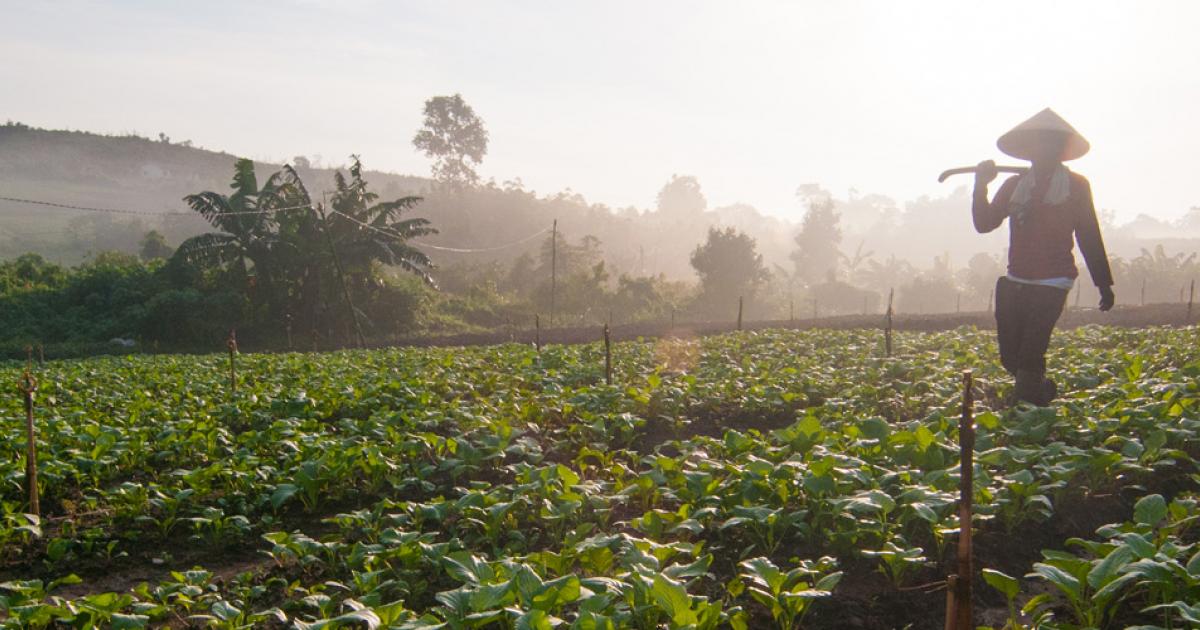
It’s 40 degrees Celsius at Mohan Kumar’s wheat field, but he’s unfazed. “Garmi se pareshan nahi hain (the heat doesn’t worry me)”, says the 47-year-old, who farms 52 acres – 12 acres of his own and 40 leased – at Khera Patauda village of Haryana’s Jhajjar district and tehsil.
The reason: Kumar’s entire wheat on 30 acres – the remaining 22 acres planted under mustard – was sown early, between October 8 and November 1. It could, therefore, escape the sudden spike in temperatures from the second half of March, which scientists fear may impact grain yields in many wheat-growing areas of India.
Maximum temperatures in Jhajjar crossed 35 degrees on March 15, 38 degrees on March 20 and 40 degrees by the month-end. But when we visited Kumar Monday afternoon, he had already harvested his crop on all but 3 acres. “I should get 65 man per acre (26 quintals; one man is 40 kg) from this plot. My average yields on the rest were 55 man (22 quintals/acre). But that was due to waterlogging from too much rains in January and not heat,” he points out.
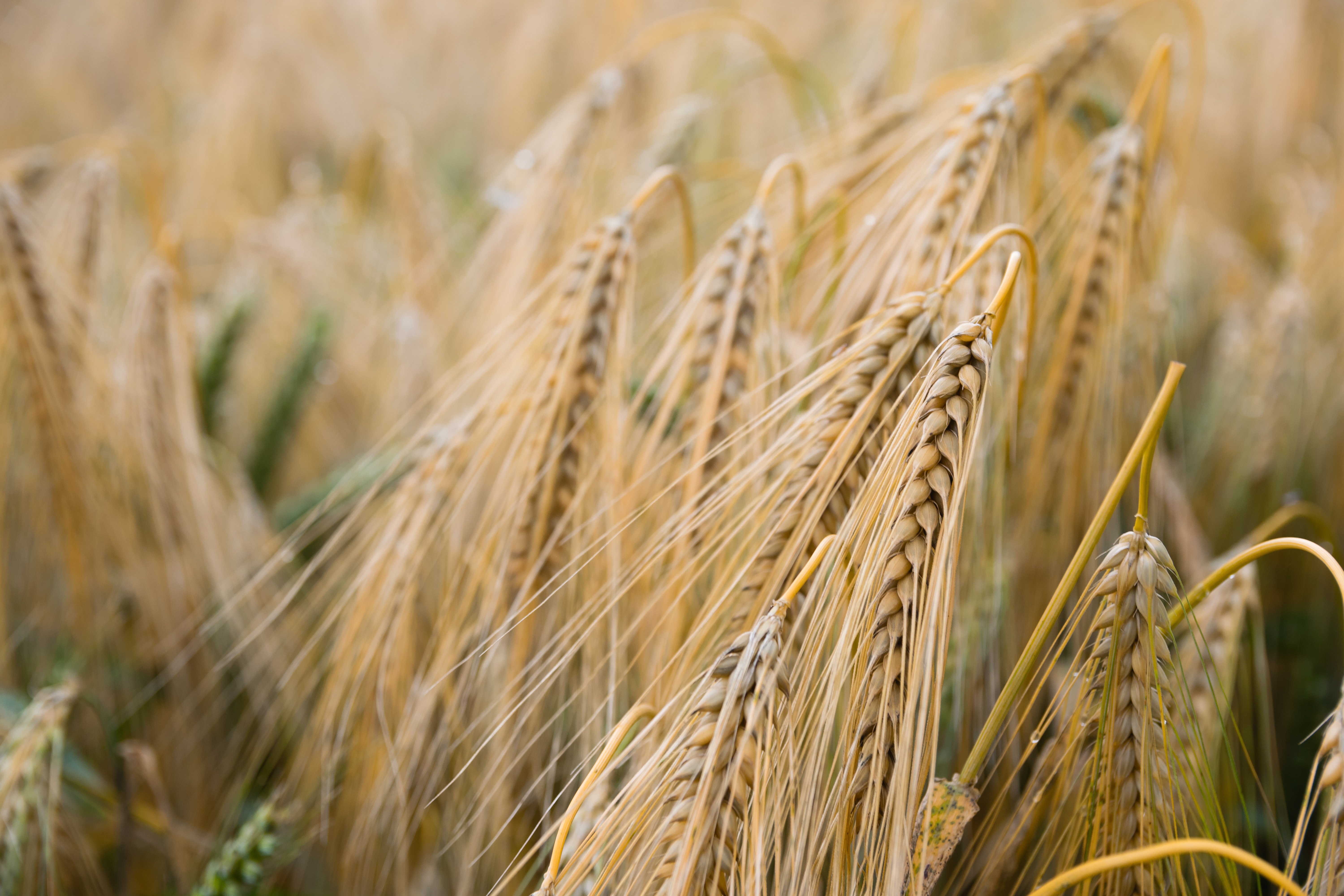
A typical 140-145 days wheat crop takes 90-100 days for flowering. That’s when the “baali” (earheads bearing the flowers) fully emerge from the tillers (stems that grow from the parent shoot). Pollination (transfer of pollen from the male anther to the female stigma part of the same flower) also takes place by this time, which is followed by about 25 days of early kernel formation (“milk” stage) and another 15 days or more of grain-filling (“dough”). Day temperatures should ideally be in the early-thirty degrees range during dough stage, when the kernel accumulates starch and nutrients.
For the wheat sown on time – before November 15 – yield losses from the soaring mercury are seen to be minimal, as flowering would have been over by mid-February. Much of grain-filling, too, would have been completed when temperatures really surged after around March 20. The losses would be even less for the crop sown early, by the first week of November.
Mohan Kumar planted 15 acres under HDCSW-18, an early-sown wheat variety, between October 8 and October 25. He planted an equal area under another variety WH-1142 from October 25 to November 1. And he has managed to harvest over 22 quintals yields per acre – above the 19-20 quintals normal year average for Haryana and Punjab – even with all-India average maximum temperatures this March being the highest ever recorded for the month in 122 years, according to a Met Department statement on April 2.
“The crop in Punjab, Haryana, Madhya Pradesh and Rajasthan, which is largely timely or early sown, may not be affected much. The problem would be with the moderately late (mid- to end-November) to late (December onwards) sown wheat in most parts of Uttar Pradesh and Bihar,” said Rajbir Yadav, head of the Indian Agricultural Research Institute’s division of genetics. In UP, farmers usually plant wheat around December after harvesting their “ratoon” season sugarcane. This crop is now in grain-filling stage when maximum temperatures in Hardoi and Shahjahanpur are at 41-42 degrees.
Yadav is the chief breeder of HDCSW-18, a high-yielding variety suitable for sowing from the second week of October. Normal wheat varieties cannot be sown before early-November, as the crop tends to prematurely flower 10-15 days earlier.
HDCSW-18 has a mild “vernalisation requirement” or the need for a certain minimum period of low winter temperatures for initiation of flowering. If it is sown on October 15, flowering and pollination will take an extra 10 days: 100-110 days, instead of 90-100. But even that’s over by late-January or early-February, giving a longer window for grain-filling. The general thumb rule is that every extra day during grain-filling stage confers an additional wheat yield of 40-50 kg per hectare.
HDCSW-18 is also amenable for zero-tillage agriculture: Farmers harvesting paddy in early to mid-October can sow this wheat the same day – directly with the leftover stubble on the field using a Happy Seeder.
But terminal heat stress – high March temperatures forcing premature ripening and drying of wheat grains – isn’t the only issue facing farmers. Kumar’s mustard yields have also averaged only 15 man or 6 quintals per acre this time, as against 22 man (8.8 quintals) last year. The cause: Excess rains in January when the crop was in late flowering stage.
“January was bad for mustard and March for wheat,” noted Pawan Kumar Chauhan, who has grown the two crops on 9.5 acres and 3.5 acres, respectively. This farmer from Jatauli in Gurgaon district’s Pataudi tehsil harvested only 17-18 man of mustard per acre this March, compared to last time’s 24-25 man. The only consolation is that he has realised a higher price for his crop – Rs 6,400-6,400 per quintal versus Rs 5,200-5,300 last March-April – at the local Hailymandi market.
As things stand, the Union Agriculture Ministry may have to revise downward its all-time-high production estimates of 111.32 million tonnes (mt) for wheat and, maybe, also the 11.46 mt for rapeseed-mustard.
Source - https://indianexpress.com