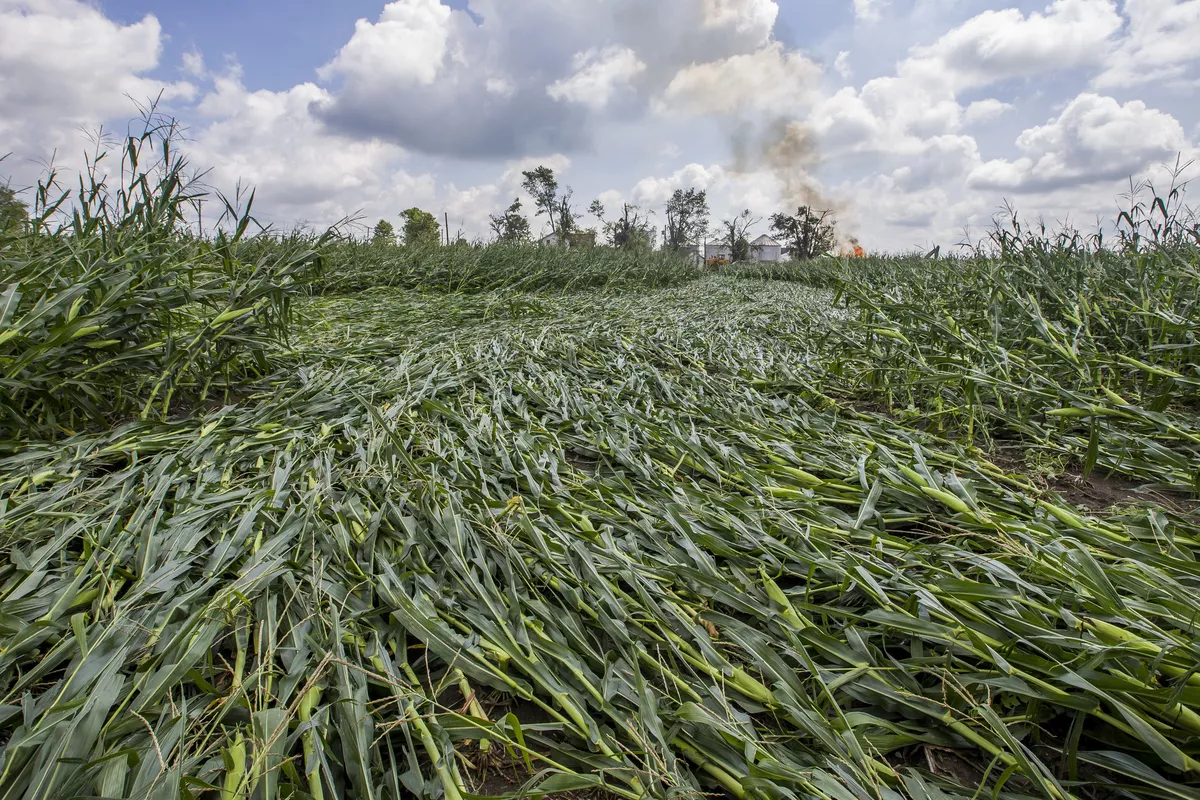
India is one of the global players in the agricultural industry. Despite this, the market deals with crop protection as a major challenge that impacts the demand-supply chain. While at one end, farmers lose a significant portion of their income due to crop damage; at the other end, a major section of the population suffers due to shortage of food. But with technological advancements transforming the agricultural industry, new trends in crop management and protection are emerging. These innovations will not only benefit the farmers but help the country reach closer to its goal of attaining food security and fighting malnutrition.
The need for crop protection
Protecting the crops continues to be a roadblock for the farmers. The reasons for this are varied. Firstly, the available landmass is diminishing due to rapid urbanization. Secondly, food insecurity is a serious threat with the population increasing exponentially. And last but not least, global warming and sudden climatic changes significantly impact agricultural activities leading to the loss of crops. Hence, crop protection is now the topmost priority of both farmers and the government.
The Innovations in crop protection
The constantly evolving industry scenario, especially climate changes, and geo-political scenarios, has pushed the emergence of new trends in crop management and protection. The development of new products and the adoption of innovative strategies are being encouraged to facilitate advancements in agriculture. The long-term objective is to reduce crop damage and maintain its yield so that there is enough to feed the population.
Leveraging new-age technologies
Today, disruptive solutions created with the help of technology have a major role to play in crop protection. For instance, drones are gradually becoming vital in crop protection for tasks like crop monitoring, pest and disease management, and precision spraying. Even AI-enabled predictive models are also used to predict crop yield and identify pest outbreaks. Solutions like these and many more help farmers take appropriate and timely actions to protect their farms.
Using bio-pesticides
The usage of bio-pesticides and bio-stimulants is being promoted as these are natural products that protect crops from pests and diseases. They are gaining in popularity due to their reduced contribution to environmental damage and their ability to improve crop yield.
Inoculants
This is a technique wherein microorganisms are added to the soil to boost crop yield and soil health. This method serves as the best natural practice as no chemicals are added to the crops. Additionally, they even help increase plant resistance to pests and diseases.
The usage of crop protection chemicals
With the need for high agricultural output, crop protection chemicals are one of the feasible solutions. They are designed to protect the produce from insects, diseases, and weeds. They significantly decrease crop output losses and help maintain healthy yields. This is a reason why their demand is increasing exponentially. Today, a reliable food supply chain cannot work efficiently in the absence of crop protection products.
The global crop protection chemical industry is growing rapidly and is expected to reach 74.1 billion by 2025. The APAC region, especially India, is a key market as it is the largest consumer of crop protection chemicals, owing to its large agricultural base. It is optimally leveraging its extensive R&D facilities and new-age technologies to create advanced solutions that are compliant with global standards and are also safe and effective.
To sum up
Various reports project that we have only 50-60 years of harvest remaining for consumption. Nearly 841.4 million people will be hungry globally by 2030 if crops are not protected from further damage. With the rising demand for food grains, unstable climatic conditions, and food insecurity at its prime, we need concrete solutions to prevent the loss of crops.
Crop protection and management are critical for establishing food security and ensuring sustainability and productivity in agriculture. Hence, our focus should be on developing and introducing innovative and sustainable farming solutions that can cater to the needs of the farmers with small landholding size, and limited resources and know-how available to them. Additionally, we need more effective and targeted products that can address specific pests and diseases for different types of crops.
All in all, with a balance of traditional practices and modern approaches, we can seamlessly address the issue of crop protection and management. This way, we can save not only our present but even ensure food security for future generations.
Source - https://www.en.krishakjagat.org