

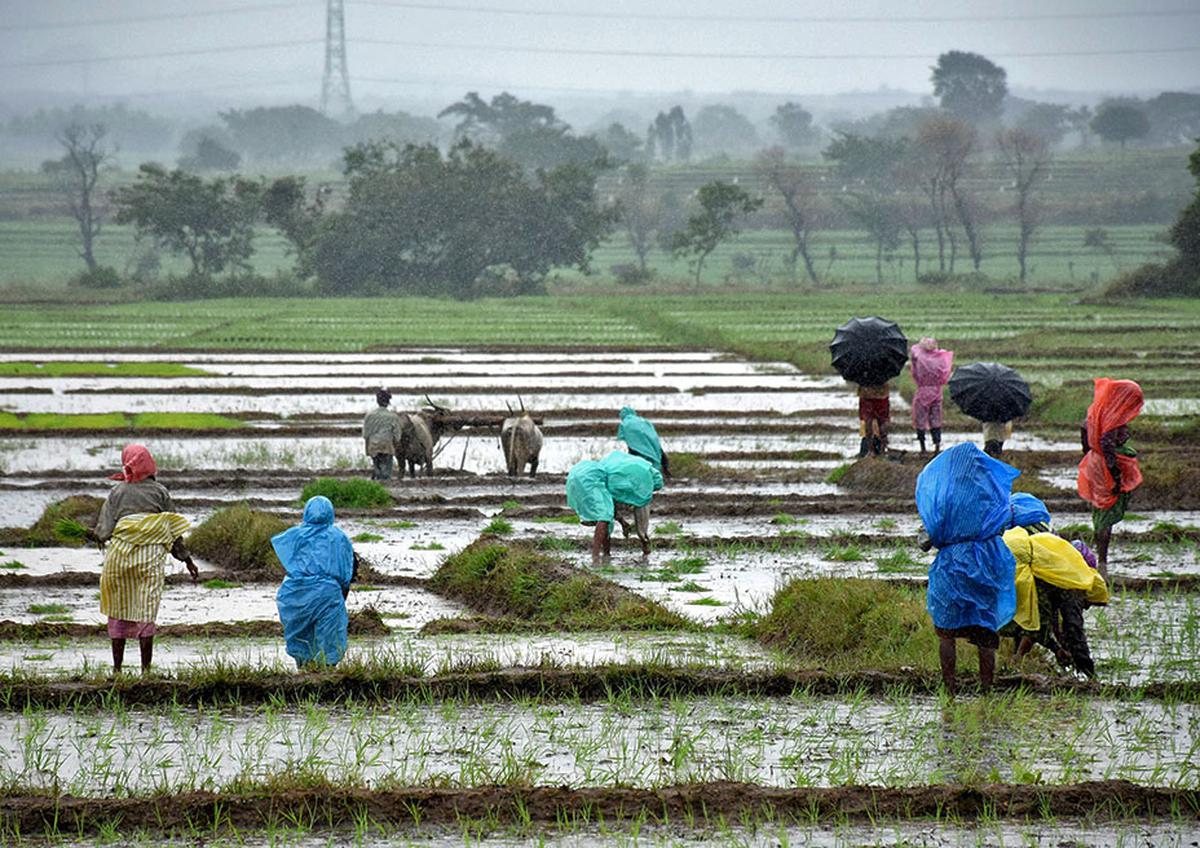
Chamarajanagar district has experienced unprecedented rains this year and this has left the farming community in distress. Against a normal of 320 mm between June and September, Chamarajanagar received 510 mm of rains this year.
The district and surrounding regions in south Karnataka which received rains in excess of normal during South West monsoon, (June to September) have also reported above normal rains during October considered to be the post-monsoon season.
While Mysuru district received 653 mm of rains from June to September against a normal of 419 mm, it has received 238 mm of rainfall against a normal of 142 mm between October 1 and 30, according to Karnataka State Natural Disaster Monitoring Centre (KSNDMC).
The trend is similar in other districts of the region and has a bearing on agricultural output, according to officials. Chamarajanagar district has experienced unprecedented rains this year and this has left the farming community in distress. Against a normal of 320 mm between June and September, Chamarajanagar received 510 mm of rains this year. But, rains showed no signs of abating and during October the district received 227 mm of rainfall against a normal of 160 mm.
The scenario was the worst in case of Mandya which received 730 mm of rainfall against a normal of 316 mm between June and September. But, in the post-monsoon period between October 1 and 30, the district has received 291 mm of rainfall against a normal of 152 mm.
The cumulative effect of excess rains is being felt by the farming community who are experiencing crop loss in varying degree.
Mr. Kurubur Shanthakumar, president, Karnataka Sugarcane Cultivators Association said that farmers follow a set template of agricultural activities like preparing the field, sowing and harvesting based on rainfall pattern. But, since the last few years, this pattern has become erratic with excessive rains all through an agricultural season and hence they are unable to plan and are suffering crop loss, he added.
Crops like cotton, ragi, jowar, various types of cereals have been affected and only paddy – which is a water intensive crop – has not been affected. As a result farmers foresee a steep decline in agricultural output leading to price rise in the near future, said Mr. Shanthakumar.
He said not only Mysuru and surrounding regions but the entire Karnataka and parts of the country was experiencing this variation in rainfall pattern due to the impact of climate change and hence the long-term affect
The rainfall has helped sugarcane which is also a water-intensive crop. But, with the government failing to announce a higher Fair and Remunerative Price given the high cost of production, farmers are unable to take benefit of a bumper harvest, according to Shanthakumar.
Meanwhile, the district administrations across Mysuru, Mandya and Chamarajanagar have conducted a few review meetings to assess the rain damage and officials have been instructed to disburse compensation on a priority basis. Besides, the officials have been instructed to complete the crop damage assessment so as to fix the extent of loss.
Source - https://www.thehindu.com










