Though the rains have come much to the cheers of all, it will take a long time for the tea bush to recover from the adverse weather conditions.
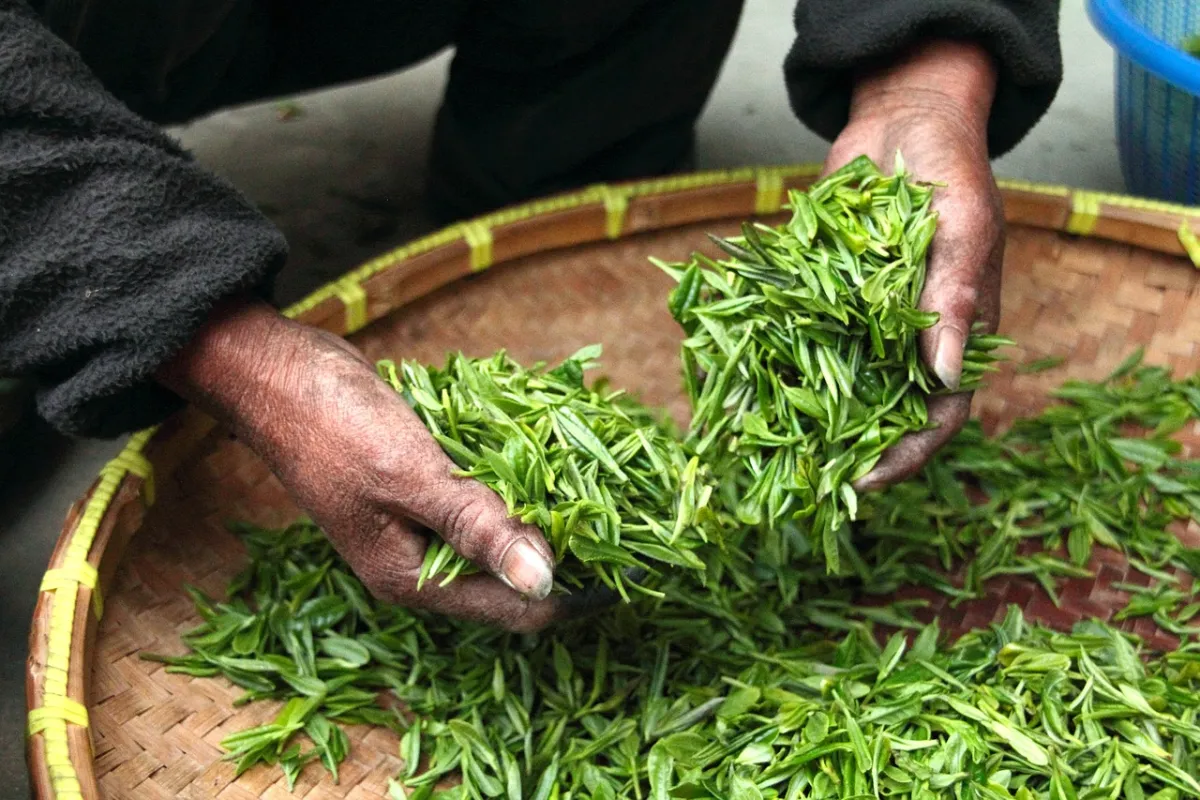
Adverse weather conditions due to inadequate rainfall in tea growing areas of Assam will result in an estimated 50-60% crop loss which will make cash flows difficult for tea producers.
"For May, 50-60% crop loss is expected due to adverse weather conditions. The crop harvest of the tea estates has been badly affected due to the prevailing moisture stress conditions resulting in stunted growth, wilting, defoliation, and die back of branches in varying degrees which has even led to withdrawal of plucking temporarily in some tea estates" Dr. Rupanjali Deb Baruah, Scientist, Climate and GIS at Tocklai Tea Research Institute told EastMojo.
But what has added more worry is the Indian Meteorological Department's updated Long Range Forecast Outlook for the Southwest Monsoon Rainfall Season (June-September)2024 which says that the Northeast will have below normal rainfall(<94% of Long Period Average).
Tea production, in both quality and quantity, is highly sensitive to climate conditions. Factors such as variations in temperature and rainfall patterns, extreme weather events, including heavy rainfall and drought, and shifts in the distribution of pests and diseases, all significantly impact tea cultivation.
A minimum day length of 11 hours 15 minutes is essential for the regeneration of tea shoots which is termed as the “critical day length” for flushing of tea. Temperatures above 30 degrees C and below 13 degrees C are harmful to the growth of the tea bush. Maximum growth of new roots occurs when the top 30 cm soil profile remains between 170-250 C in winter.
Data shows in 2021, the average maximum temperature was found to be the highest ever recorded average maximum temperature in Tocklai since 1923 while in the year 2022, the temperature that prevailed during March was 31.3 C which is higher than the long-term normal (27.40 C) by 3.6 C and also highest ever recorded temperature in March since 1923. A comparison of monthly maximum temperature data for the year 2022 with long-term normal shows that in almost every month (except February, April, and June) maximum temperature was higher than the long-term normal. The average maximum temperature in the year 2022 was 29.4 C which is higher than the long-term normal (28.3 C) by 1.10 Degrees C.
"We are optimistic that if good rain is received in the coming days then by mid-June situation may take a good turn but again it also depends on the severity of damage. In places where complete defoliation has occurred, it will take time but where maintenance foliage is good enough then it will take a week to 10 days to recover. Pests/diseases would be the additional biotic factor that needs to be addressed at the appropriate time to get an early recovery" Rupanjali Baruah said.
Tea planters say cash flows are down this year due to a lower percentage of dust tea sales.
So far as the impact on the second flush is concerned for which Assam tea is known, Rupanjali said it is certain that it will be impacting the second flush in terms of reduced crop production as it is already the second flush period.
Assam tea is generally known for its second flush which comes in May-June and is characterised by its boldness and robustness. It is valued for its rich taste and bright liquors.
"Scorching doesn't recover so quickly. The bush will now need to build up reserves before it flushes" a tea planter said, adding that the attack by pests can never be made up.
"An adequate and well-distributed rainfall is a suitable climatic factor for optimum growth of tea. It has been estimated that one-hectare standing of mature tea plants requires 10 tonnes of water per day, which is equivalent to 2.5 mm rainfall" Rupanjali says.
Though it is well documented that tea grows well within 13-30 degrees Celsius, in the recent past it has been observed that the number of days with temperature exceeding 35 degrees Celsius is increasing, confirming that climate change is a reality.
To investigate the response of tea cultivars to rising temperatures, an experiment has been initiated by Tocklai wherein a few heat-tolerant cultivars were selected for the study.
The development and creation of water bodies are presumed to help in the moderation of an estate microclimate. A study was initiated by Tocklai with the motive to study the impact of rainwater harvesting on the microclimate of an area. The study area chosen for this objective is the Borbhetta tea estate located in the South Bank region of Assam. Initial results of the study showed that humid conditions are maintained near the pond and it decreases gradually away from the pond.
A study on the effectiveness of drip irrigation was carried out at Tocklai, South Bank region of Assam, India, and in Dooars, North Bengal, India. Results of the study showed reduced water and fertilizer requirements by 25% as well as the cost.
"Adaptation and mitigation are the two ways to address climate change and it is important to understand the difference between the two. The term climate change adaptation involves modifying our decisions, activities, and ways of thinking to adjust to the changing climate. Whereas, climate change mitigation is classed as any activity that reduces the emissions of greenhouse gases (the gases responsible for climate change). Through reducing emissions now, the future scale of climate change can be minimised" Rupanjali says.
In the context of climate adaptation, the Tocklai Tea Research Institute has recommended certain guidelines to minimize the impacts of climate change on tea.
The guidelines include the selection of suitable cultivars, Soil improvement which includes Integrated nutrient management, application of Organic manure, mulching, compost, and vermicompost, etc, environment management like Integrated Pest Management, Shade and Shelter Belt management, improvement of other management practices like proper drainage, irrigation at the appropriate time, rainwater harvesting and conservation and creation of water bodies etc.
Source - https://www.eastmojo.com