The weather office has warned of fresh hailstorms and thunderstorms over parts of east and north India this weekend, raising concern for standing rabi crops already close to harvest. For farmers covered under the Pradhan Mantri Fasal Bima Yojana, these hours are critical, because crop‑damage claims stay valid only if losses are reported within seventy‑two hours of the event.
The India Meteorological Department’s latest bulletins point to isolated hail over East Madhya Pradesh, Vidarbha and Chhattisgarh around March 18–19, along with thunderstorms, lightning and gusty winds across several north Indian plains. Such short, violent spells can flatten wheat, chana, mustard or vegetables in minutes, yet the window for informing insurers remains very narrow under PMFBY rules.
IMD hailstorm alert and likely impact on standing crops
According to IMD’s all‑India weather forecast issued on March 16, hailstorm activity is likely at isolated locations in East Madhya Pradesh on March 19, and in Vidarbha and Chhattisgarh on March 18. The same system is expected to trigger thunderstorms with lightning and gusty winds over adjoining east and north Indian states, threatening lodged crops, fruit orchards and vegetable fields.
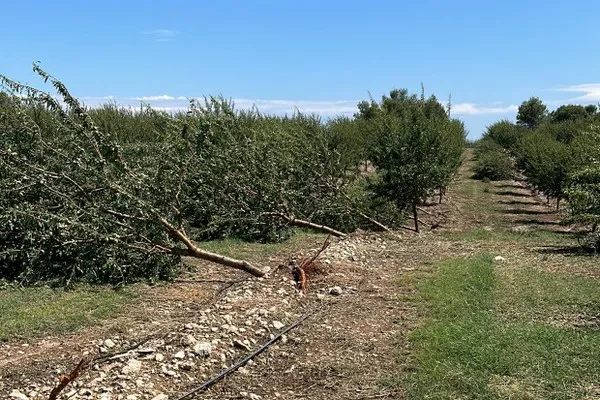
Farm experts point out that late‑season hail is especially damaging because crop value is highest just before harvest and plants are heavier. Even a thin hail band can shred wheat ears or knock off mango inflorescence. For farmers already facing input cost pressures, the ability to activate insurance quickly often decides whether the season ends in survival or deeper indebtedness.
What PMFBY’s seventy‑two hour intimation rule actually requires
Under the revamped operational guidelines of Pradhan Mantri Fasal Bima Yojana, insured farmers must give “immediate intimation (within seventy‑two hours)” of any localised calamity such as hailstorm, landslide, inundation or cloudburst. The rule applies whether the farmer is a loanee automatically enrolled through a bank, or a non‑loanee who has paid premium directly through a Common Service Centre.
Guidelines clarify that intimation can be made through multiple channels, but preference is given to the official Crop Insurance mobile app and the centralised toll‑free helpline linked to the Krishi Rakshak Portal. Delayed reporting can lead to rejection of individual claims on the ground of late intimation, as insurers argue they could not verify damage on time once crops were salvaged or harvested.
Where and how to report crop loss within the deadline
PMFBY rules allow farmers to report losses within seventy‑two hours through the Crop Insurance app, the dedicated central toll‑free number 14447, the concerned insurance company’s call centre, their bank branch, or local agriculture or revenue officials such as Gram Sevaks. Officials must then forward the report to the insurance company within forty‑eight hours for assessment.
The Agriculture Ministry’s Krishi Rakshak helpline on 14447, launched alongside the Sarathi portal, registers complaints and queries related to crop insurance and issues a ticket number via SMS. In parallel, the Kisan Call Centre number 1800‑180‑1551 offers basic guidance on schemes, while many insurers, including HDFC ERGO and SBI General, host PMFBY‑specific toll‑free numbers on their websites.
Guidelines clarify that intimation can be made through multiple channels, but preference is given to the official Crop Insurance mobile app and the centralised toll‑free helpline linked to the Krishi Rakshak Portal. Delayed reporting can lead to rejection of individual claims on the ground of late intimation, as insurers argue they could not verify damage on time once crops were salvaged or harvested.
Essential photo and document checklist for farmers
To support a hail or thunderstorm claim, PMFBY guidelines stress clear identification of the insured farmer, plot and crop. Intimation should mention the farmer’s name, survey number‑wise insured area, insured crop, application or registration number on the PMFBY portal, mobile number and linked bank account details. Farmers are also encouraged to use geo‑tagged photographs through the Crop Insurance app to speed verification.
| Requirement | What farmers should keep ready |
|---|---|
| Identity and bank | Aadhaar, passbook or KCC details, mobile number registered with PMFBY |
| Land and crop proof | Land records or lease papers, sowing receipt, PMFBY application or acknowledgement |
| Damage evidence | Time‑stamped, geo‑tagged photos and short videos of affected plots after the event |
Ground staff such as Gram Sevaks, patwaris and agriculture assistants remain the first physical contact point in many villages, helping farmers upload details or route forms to insurers. States like Uttar Pradesh have repeatedly reminded farmers that any delay beyond seventy‑two hours risks forfeiting compensation, even when premiums have been paid and weather damage is obvious.
With thunderstorms and hail forecast over sensitive crop belts through the weekend, prompt communication will matter as much as the weather itself for insured cultivators. Farmers are being advised to save key helpline numbers, keep land and bank documents accessible and record visual proof of damage before clearing fields, so that timely, well‑documented intimation under PMFBY can translate into faster, dispute‑free claim settlement.
Source - https://www.goodreturns.in