New technologies are changing how agricultural risk is measured, priced, and managed across Africa, enabling insurers to potentially reach millions of previously excluded smallholder farmers.
African insurers, governments, and research organizations are testing a new generation of crop and livestock insurance models designed to protect smallholder farmers from increasingly unpredictable weather.
The new systems combine satellite data, mobile technology, and farm-level verification tools, marking a shift from donor-led pilots toward scalable insurance markets across the continent. The momentum comes as climate shocks intensify across Africa’s agricultural regions, exposing structural vulnerabilities that extend beyond immediate crop losses.
According to Patricia Tembo, farm insurance is “increasingly being treated as a core business tool rather than a discretionary expense,” particularly in high-risk agricultural environments shaped by climate volatility and rising input costs.
“Insurance enables farmers to transfer risk rather than absorb catastrophic losses, helping ensure that a single shock does not wipe out an entire season’s investment,” she explained.
For a long time agricultural insurance uptake remained limited across many African markets, estimated at less than 1% of farmers, although some estimates suggest up to 3.5% in specific contexts. This leaves millions of smallholders, pastoralists, and agricultural enterprises exposed to climate shocks that can erase incomes and assets.
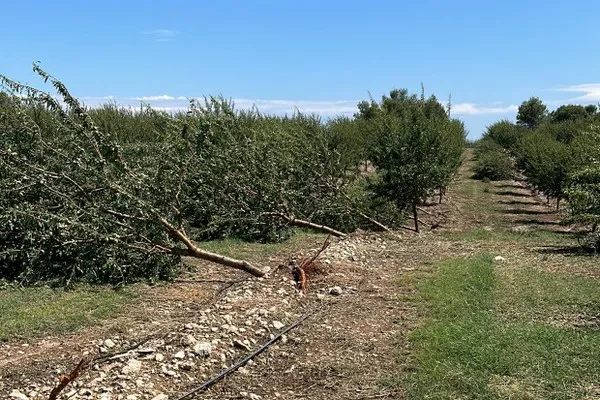
Droughts, floods, and erratic rainfall are increasingly wiping out harvests in a single season, but the impact goes deeper, shaping how farmers make decisions about investment, productivity, and risk.
Globally, nearly one in five people face a severe weather event they may struggle to recover from, but in Africa, the figure rises to two in five, according to researchers at the International Food Policy Research Institute.
Agriculture remains the backbone of many African economies, supporting livelihoods for more than half the continent’s population, yet much of this production is rain-fed and therefore highly exposed to climate variability.
According to the World Bank, extreme weather events are already threatening the livelihoods of hundreds of millions of Africans and posing growing risks to food security across the continent.
A new wave of technological and institutional innovation is now attempting to address these barriers, with researchers and insurers arguing that the next generation of insurance systems could dramatically expand coverage over the coming decade.
One of the most prominent developments is picture-based insurance, which allows farmers to submit smartphone images of their crops to verify losses at the farm level.
The model has been piloted in East Africa through collaboration between the International Food Policy Research Institute, the Kenya Agricultural and Livestock Research Organization, and agricultural insurer ACRE Africa.
Under the system, farmers take periodic photographs of their fields using a mobile application, enabling insurers to monitor crop development and assess damage remotely without relying on costly field visits.
According to the International Food Policy Research Institute, early trials in Kenya suggest that farmers trust picture-based insurance more than conventional index-based products because they can directly document crop conditions.
This approach addresses one of the most persistent challenges in agricultural insurance, known as basis risk, where payouts triggered by regional data fail to reflect actual losses experienced by individual farmers.
Under traditional index-based systems, a farmer may lose crops due to a localized drought yet receive no compensation if rainfall data from nearby weather stations does not meet payout thresholds.
Picture-based insurance reduces this mismatch by enabling direct verification of crop conditions, combining the scalability of index insurance with the accuracy of indemnity-based systems.
“We train the village extension service providers so that they can train other farmers from a farmer-to-farmer level,” according to George Kuria, the CEO of ACRE Africa.
The evolving market broadly reflects two core insurance models: indemnity-based products that compensate farmers for actual losses and parametric systems that trigger payouts when predefined weather or yield thresholds are reached.
According to Patricia Tembo, each model presents trade-offs between accuracy and cost, reinforcing the need for hybrid systems that balance scalability with reliable payouts.
Hybrid insurance models are also emerging to further reduce basis risk while maintaining cost efficiency.
These systems use satellite-based indicators such as rainfall or vegetation data to trigger payouts, while incorporating targeted audits or on-the-ground verification when losses appear inconsistent with index signals.
Some insurers are testing “gap” insurance structures, where farmers can request additional assessment if they believe payouts do not reflect actual damage, strengthening trust in the system.
Beyond verification technologies, product design itself is evolving to better match the realities of smallholder farming.
Insurance coupons, for example, allow farmers to purchase short-term, highly specific coverage tied to critical stages in the agricultural cycle.
Experts caution that product innovation alone is not sufficient, as farmers must also play a more active role in selecting appropriate cover.
According to Tembo, understanding farm-level risk exposure, production plans and asset values is critical to ensuring that insurance products are both effective and cost-efficient.
At the same time, informal risk-sharing networks are being explored as potential distribution channels.
“Community-based groups, which already pool resources to support members during crises, could be linked to formal insurance systems to expand reach while building on existing trust structures.”
Researchers also highlight the importance of gender-responsive insurance, noting that women farmers often face distinct climate risks and have less access to financial services, limiting their participation in conventional insurance schemes.
Designing products that address these disparities is increasingly seen as critical to achieving meaningful scale.
Advances in artificial intelligence are beginning to further reshape the sector.
Image recognition tools are improving the accuracy of crop-loss verification, while automated systems are helping insurers communicate more effectively with farmers, reducing misunderstandings that have historically undermined trust.
Institutional innovations are also playing a central role in scaling agricultural insurance beyond pilot programmes.
In Ethiopia, global insurtech Pula Advisors has supported the creation of a national Agricultural Insurance Consortium, bringing together insurers, government agencies and development partners to deliver index-based crop insurance at scale.
The programme aims to reach up to three million smallholder farmers, demonstrating how coordinated national platforms can overcome fragmentation in agricultural markets.
At the regional level, risk-pooling initiatives are also gaining traction.
In the Horn of Africa, the World Bank-backed DRIVE program aims to connect more than 1.6 million pastoralists across Djibouti, Ethiopia, Kenya, and Somalia to livestock insurance, highlighting the growing role of multi-country platforms in expanding coverage.
Sovereign risk solutions are emerging as a complementary layer within this evolving ecosystem.
The African Risk Capacity, a specialized agency of the African Union, provides parametric insurance to governments, enabling rapid financial responses when droughts or extreme weather events occur.
Under this model, countries receive payouts within weeks of a climate shock, allowing them to fund emergency interventions, including support for affected farmers, without waiting for humanitarian aid.
Ultimately, the challenge is not just to extend insurance to more farmers but to design systems that are simple, trusted, and aligned with the realities of smallholder agriculture.
According to Tembo, “The ultimate value of insurance lies in continuity, ensuring that after a climate shock, farmers are able to recover, reinvest, and sustain operations rather than exit production entirely.”
Source - https://www.financialfortunemedia.com/