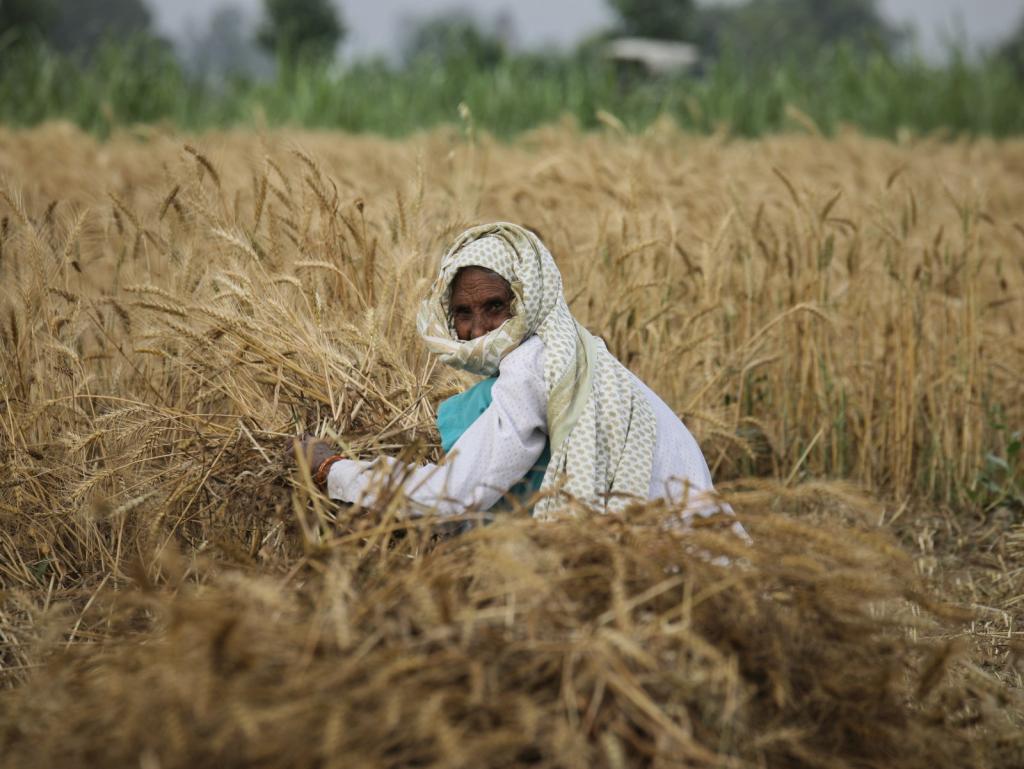
Indian rice farmer Ibrahim Shaikh says he looked up at the sky daily and prayed for unseasonal rains to stop. His prayers unanswered, he says he started harvesting the wet crop earlier this week.
"The crop was ready for harvesting 10 days back and twenty to thirty percent of the grains have been lost because of heavy rains. If I don't harvest now, I won't get anything," Shaikh said, as he dried harvested paddy on a plastic sheet in Kadadhe village, 110 km (70 miles) east of Mumbai.
The crop losses for Shaikh and farmers across the country mean that food prices, already at their highest in over two years, could stay elevated, instead of tapering after the harvest as they usually do. India's millions of rural poor will be particularly affected, hit by both the bad crop and the high prices.
Along with grains, the prices of vegetables, milk, pulses and edible oils, which account for over a quarter of the overall consumer price index, are rising and likely to remain high in coming months.
Economists say annual headline inflation will likely start easing from September's 7.41% peak because of a jump in the index in corresponding months last year, but price pressures on grains, vegetable and milk will persist.
Earlier this week, the Reserve Bank of India said headline inflation will ease from September levels albeit stubbornly and the fight against inflation will be "dogged and prolonged."
Besides keeping inflation high, higher food prices will be more of a burden in the countryside, where wages have not kept pace with inflation. Meanwhile, rising incomes and a boom in consumption in the towns and cities are driving overall growth to a forecast 7% in the current April-March fiscal year, the highest among major world economies.
A Reuters Oct 13-19 poll of economists said growth likely slowed in the July-September quarter, although it should come in at 6.9% for the full fiscal year.
According to a research report by Crisil, September inflation was at 8.1% for rural poor, defined as the bottom 20% of the population in terms of consumption. In urban areas, inflation for the wealthiest 20 percent segment was only 7.2%.
"Higher food inflation does tend to act as a regressive tax on the poor," said Yuvika Singhal, economist at QuantEco Research. "In a post pandemic world, it can stand to perpetuate the K-shaped economic recovery and widen income inequalities further."
Popat Pawar, who works on a farm in the Pune district of Maharashtra state, says he is getting work, but his employer is not ready to increase wages.
"Prices of everything from edible oils, vegetables to milk have gone up. It is not possible to run household expenses with the same amount of income," said 43-years-old Pawar, whose says his savings were exhausted last year when he was hospitalised with COVID-19.
Rice farmer Baban Pingle, in Kotharni village in Pune district, says he can't raise wages as his production costs have gone up with higher diesel and fertiliser prices. Besides, he also needs to spend more on buying essentials.
"We produce only rice. Everything else we have to buy. We are also feeling the pinch of inflation, and we don't know how much rice we can produce. The entire crop could be damaged because of the rains," Pingle said.
FREE FOOD SCHEME MAY NOT LAST
The prospect of stubbornly high inflation could force the central bank to increase rates further, possibly dampening growth.
The government, which is facing key state elections later this year, will be under pressure to respond to the rural distress.
Last month, India extended the world's biggest free food programme for the poor by three months to December but traders say the programme cannot be prolonged for much longer since food stocks are dwindling. Wheat stocks with state-run agencies have fallen to 22.7 million tonnes as on Oct. 1 from to 46.9 million tonnes a year ago.
However, government officials say stocks are adequate.
Limited supplies have lifted local wheat prices to a record high. Imports are not an option because of high prices overseas after the war in Ukraine.
Edible oil prices are also rebounding after a recent drop as heavy rains are disrupting palm oil output in key producing countries, while concerns are rising over sunflower oil supplies from the Black Sea region, said B.V. Mehta, executive director of the Solvent Extractors' Association.
Meanwhile, leading milk producers are raising prices as stocks of milk products are getting depleted because of robust exports of milk powder and butter, said B. B. Thombare, chairman of dairy company Natural Sugar and Allied Industries.
"Milk production is rising but prices are unlikely to come down because of thin stocks of milk products," he said.
Source - https://economictimes.indiatimes.com