Insurance payouts for cotton farms in Azerbaijan over past three years disclosed

15.10.2025 495 views

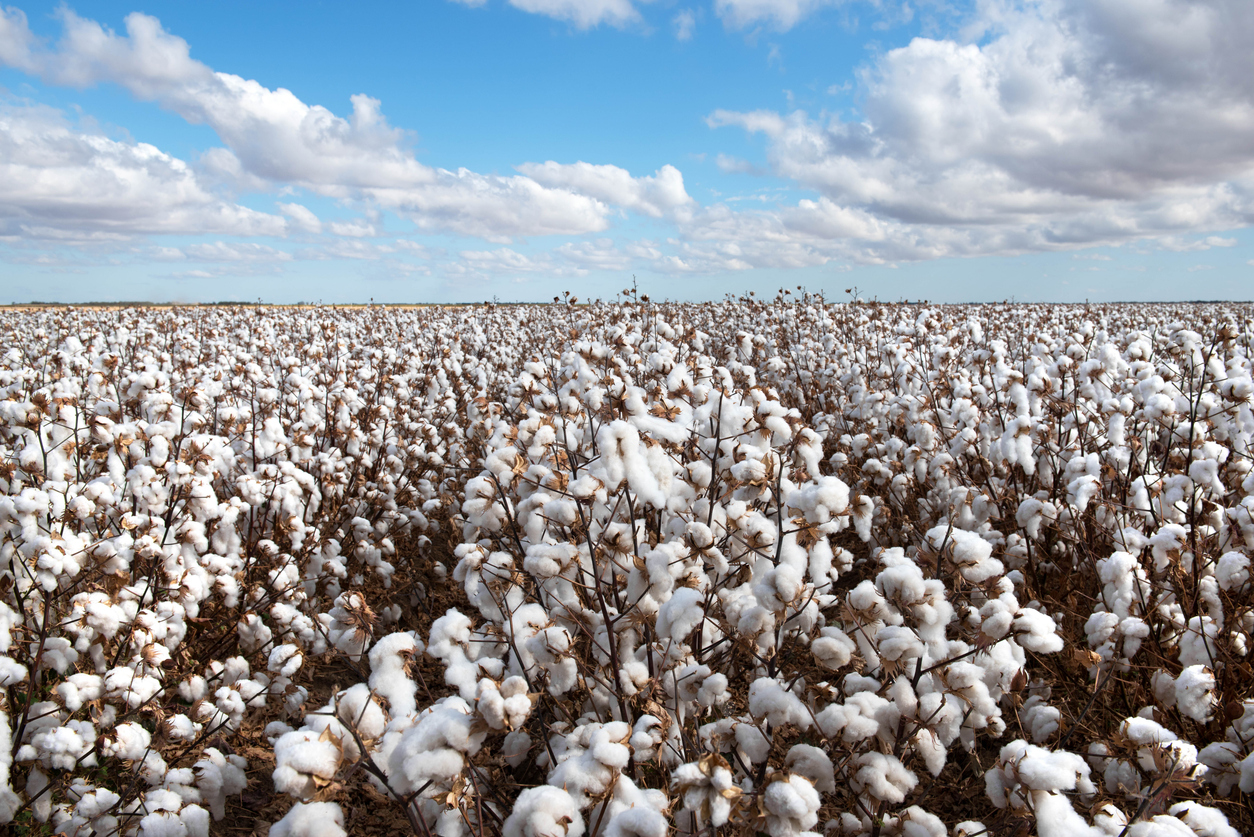
The volume of insurance payments made for cotton fields in Azerbaijan has exceeded 2.5 million manat ($1.47 million) in the last three years, Chairman of the Board of the Agricultural Insurance Fund Fuad Sadigov said.

He made the remark at the 2nd International Agricultural Innovation Forum, held on the third day of the 18th Azerbaijan International Agriculture Exhibition (Caspian Agro) and the 30th anniversary Azerbaijan International Food Industry Exhibition (InterFood Azerbaijan) in Baku.

The official noted that each year, the Agricultural Insurance Fund insures nearly 25,000 hectares of cotton fields.

"In the last three years, the volume of insurance payments made for cotton fields has exceeded 2.5 million manat. The insurance premiums collected from farmers amounted to a total of 1.5 million manat ($882,000).

In the preceding biennium, the aggregate quantum of indemnity disbursements for loss mitigation has culminated at 15 million manat (equivalent to $8.82 million). During the initial quadrimester of the current fiscal year, the transactional throughput surpassed 3 million manat, equating to approximately $1.76 million. These stipulations have been instituted in response to the indemnity disbursements from the preceding interval.

In 2025, the payments for damages will exceed last year's figures by at least two times," Sadigov added.

The agricultural insurance system in the Republic of Azerbaijan is founded on the principles of public-private collaboration, as stipulated by the law “On Agricultural Insurance.” The Agricultural Insurance Fund is a state-established non-commercial legal organization that administers insurance payouts by assuming risks. The Management Company is a cooperative insurer formed by insurance firms possessing a non-life license, facilitating the execution of insurance contracts. The agricultural insurance system is structured on the ideas of voluntary insurance.

Source - Trend News Agency

23.08.2026

USA - Pennsylvania Opens $10M Aid Program for Freeze-Hit Growers

Pennsylvania will open a $10 million disaster-relief program Aug. 24 for fruit growers facing an estimated $150 million to $200 million in losses from a spring freeze, Gov. Josh Shapiro reported Thursday during a visit to an Adams County orchard.

23.08.2026

A year of change in Polish agriculture

Minister Krajewski highlights support for farmers and stronger agricultural resilience.

23.08.2026

Nepal - Hunting permits issued to protect crops from wildlife in Arghakhanchi

Amid growing damage to crops and increasing human-wildlife conflict, a system allowing the legal hunting of certain wild animals has been introduced in Arghakhanchi.

23.08.2026

Spain - Barrachina highlights 35.3 million in agricultural insurance for 21,000 professionals in the field

The Generalitat allocates 35.3 million to agricultural insurance in the Valencian Community to support 21,000 farmers and ranchers against increasing risks.

23.08.2026

India - Sodiem locals seek FIR against WRD over paddy crop damage

The Siolim-Sodiem gram sabha on Sunday resolved to initiate criminal action against the Water Resources Department (WRD) over damage to ready-to-harvest paddy crops allegedly caused by leakage and seepage from the Tillari canal.

23.08.2026

India - Bhilwara farmers face crop loss as yellow mosaic virus hits pulses

Farmers in Bhilwara district are in distress due to an outbreak of yellow mosaic, commonly known as yellow disease, affecting their pulse crops. 

20.08.2026

Philippines - Farm damage from ‘habagat’ and serial storms hits ₱1.7B

The agricultural damage caused by the recent typhoons has soared to more than P1.7 billion, affecting over 50,000 farmers and fisherfolk, according to the Department of Agriculture (DA).

20.08.2026

India - Tech Guard For Farms: MIT Muzaffarpur Students Develop AI Device To Protect Crops From Nilgai

For years, farmers in Bihar have relied on scarecrows, fencing and constant vigilance to protect their crops from nilgai, wild animals and birds. But these measures often lose their effectiveness as animals gradually learn to ignore them.