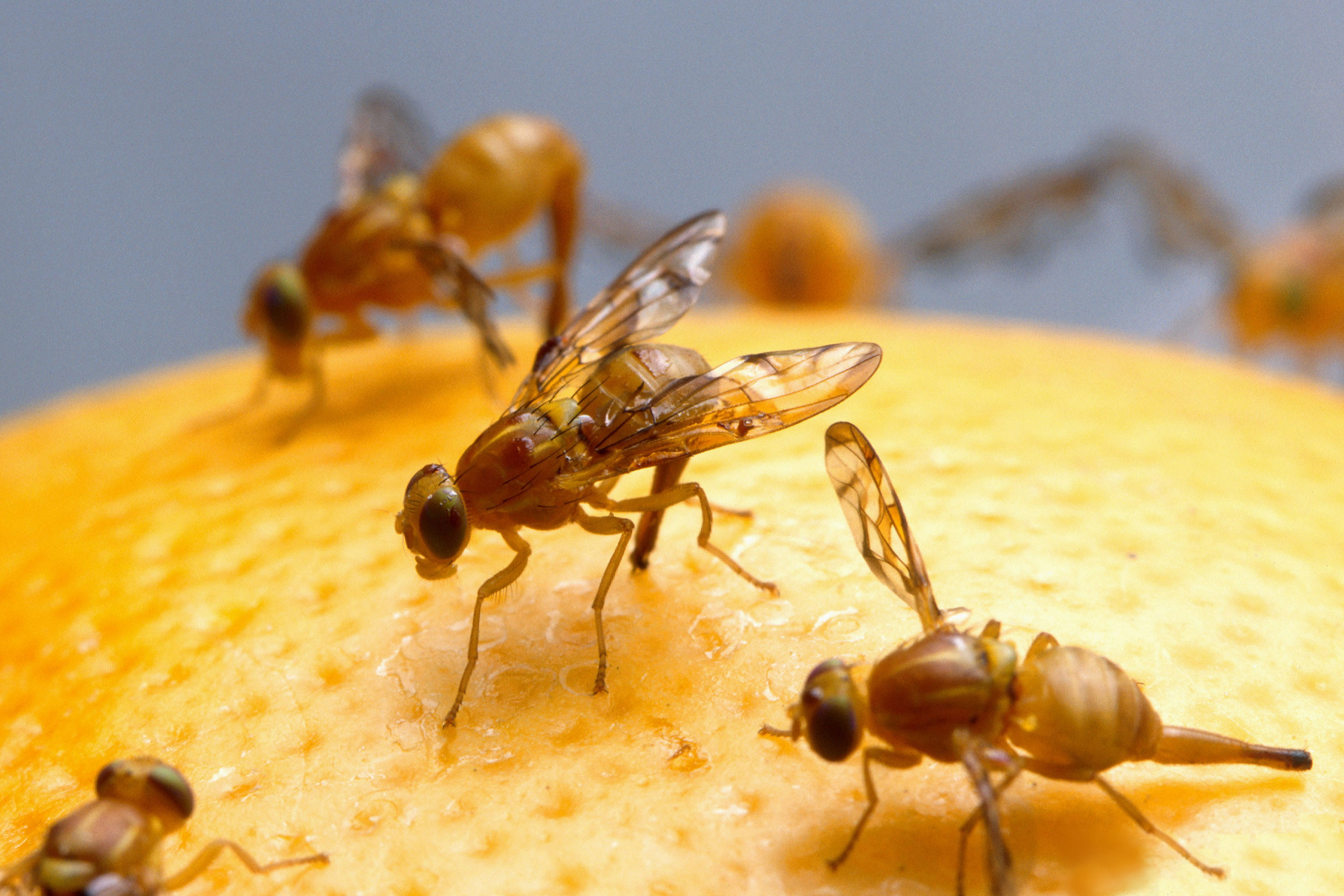
Bactrocera dorsalis or oriental fruit fly, which is included in the alerts of the list of priority organisms by the EU, has been found in some orchards in the province of Naples, Campania. So far, these appear to be the first findings on a regional and national scale, while at a European scale, other findings have been reported at some entry points in France on imported fruit.
"We found a number of specimens of Bactrocera dorsalis in 2018 for the first time, after which we began to carry out monitoring activities in the field, placing various traps for this parasitic insect. In 2019, there were only 4 findings, while in 2020 and 2021 none. This year, however, there have been copious findings of the species and the situation is becoming alarming. As of now, we have found just over 700 specimens in the area that falls between the municipalities of Palma Campania and San Gennaro Vesuviano, in the province of Naples," said Francesco Nugnes, a researcher at the Institute for the Sustainability of Plants of the CNR in Portici (Naples).
"We are assessing whether the species has been able to acclimatize and whether the colder temperatures of winter will block the the biological cycle of the alien species. B. dorsalis is native Asia, especially the sub-tropical zone of China, but it is known to its spread in the sub-Saharan belt of Africa and a recent shift of some populations to northern China, regions that have a climate similar to the Mediterranean. Among other things, climate change is not helping us, favoring the spread of the parasite."
Distinctive traits
"Although we talk about Bactrocera dorsalis, from a taxonomic point of view it is more correct to speak of the complex Bactrocera dorsalis, which includes a collection of several species. It is very difficult to recognize the oriental fruit fly from solely damage. Often the damage from the larvae of this alien species is confused with those of the well-known Mediterranean fruit fly Ceratitis capitata, therefore, to be sure that it is indeed B. dorsalis, laboratory tests must be carried out," explained Nugnes.
"Adults, on the other hand, can be distinguished as the following: the adult of C. capitata can measure 4 to 5 mm and has typical stripes on its wings, while B. dorsalis can range from 6 to 8 mm, has no stripes on the wings, and on the thorax has so-called yellow vitte (or stripes) while on the abdomen there is a typical T-shaped pattern. The presence of B. dorsalis can be confirmed by the use of traps activated with specific attractants."
Damage
"Bactrocera dorsalis is a polyphagous species. In fact, there are more than 400 host plants, ranging from fruit plants to vegetables. At fruit veraison, females of B. dorsalis lay eggs (more than one per fruit). It is estimated that one female adult can lay up to 3,000 eggs, from which will develop the larvae that, feeding on the fruit for their growth, will make them no longer marketable. The insect generates both direct damage such as early fruit dropout, as well as indirect damage with attacks by various pathogens such as fungi and molds."
How to control the alien species?
"We are trying to monitor the presence of Bactrocera dorsalis through the installation and control of traps, trying to see if the affected area has expanded. The Italian Ministry has been alerted and a crisis discussion table has been opened so that we can quickly figure out how to counter this new threat,” concluded Nugnes.
There are several solutions that have already been included in the plan of action drawn up by the Campania Region with a committee of experts. Many of the possible actions have already been put in place by the regional government.
Source - https://www.freshplaza.com