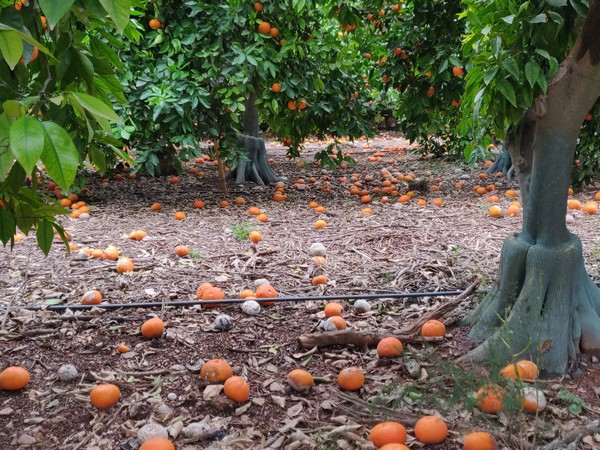
Italy - New findings reveal cause behind fruit drop in citrus

21.06.2024 386 views

There is some uplifting news for citrus growers who grapple with fruit drop. Eleven years of research conducted in the European Union have determined causes of citrus fruit drop. The results could help guide the citrus industry into the future. Fruit drop, in particular, was thought to be caused by physiological conditions and other pathogens, such as huanglongbing (HLB). However, research sponsored by the European Union and KeyPlex at the University of Torino in Italy has clearly identified Colletotrichum gloeosporioides and further fungal pathogens as playing a major role.

Since fruit drop causes significant crop loss in oranges, lemons, grapefruit, limes, and other types of citrus, it is a major concern for the industry. Dr. Vladimiro Guarnaccia, Associate Professor of Plant pathology at the University of Torino and a lead researcher on this project, will present the methods and results of his team’s two years of work at the third and final KeyPlex Citrus Symposium on July 25, 2024, at Seven Sebring Raceway Hotel in Sebring, FL. Most importantly, he will present solutions to aid citrus growers, such as agronomic practices and control methods based on his observations and preliminary tested conclusions.

“We started hypothesizing that Glomerella cingulata — the sexual phase of C. gloeosporioides — was the main cause of early fruit drop in citrus, not HLB, as has been long presumed,” says Gerald O’Connor, CEO of KeyPlex. “We scoured the world looking for information on this and came across Dr. Guarnaccia, who was already working on it at the University of Torino. We are excited to present the results of this groundbreaking research — the result of many years of work — that will help the citrus industry.”

Source - https://www.growingproduce.com

12.01.2026

South Africa - Farmers demand access to vaccines as foot-and-mouth disease devastates KZN

KwaZulu-Natal farmers and agricultural organisations are escalating pressure on the state over the uncontrolled spread of foot-and-mouth disease (FMD), warning that vaccine shortages and bureaucratic delays have left the province on the brink.

12.01.2026

Nepal - Ilam farmers hit by insurance gap

Although the government has prioritised agricultural insurance, there is virtually no crop insurance in Ilam. 

12.01.2026

Vietnam - Farmers devastated after harsh weather decimates crucial crops

Hundreds of farmers in the Quỳnh Thắng area of Nghệ An, Vietnam, have lost numerous pineapple crops due to prolonged rain and humidity. 

12.01.2026

Rwanda - Demand first, production second: How Afri Foods builds export-ready supply chains

Operating through a network of more than 500 smallholder farmers, Afri Foods is a young Rwandan agrifood exporter positioned at the intersection of gender inclusion and technology-enabled scaling. The company was founded in 2019 by Sakina Usengimana and currently focuses on avocados and chilies.

12.01.2026

Flowers bloom on cocoa trees ahead of Ivory Coast's mid-crop season

Mainly above-average rains last week in most of Ivory Coast’s main cocoa regions augur well for the development of the next April-to-September mid-crop, farmers said on Monday.

12.01.2026

Overlooked decline in grazing livestock brings risks and opportunities

For decades, researchers have focused on the problem of overgrazing, in which expanding herds of cattle and other livestock degrade grasslands, steppes and desert plains. But a new global study reveals that in large regions of the world, livestock numbers are substantially declining, not growing—a process the authors call destocking.

11.01.2026

USA - USDA’s Agricultural Research Service (ARS) helping wheat farmers fight a devastating crop disease

Researchers released a new spring wheat germplasm line with resistance to Fusarium head blight.

11.01.2026

Kenya - Government Mobilises Food and Livestock Relief for Mandera Amid Drought

The Government of Kenya has mobilised food and non-food essentials for urgent delivery to areas affected by food and nutrition shortages caused by adverse weather and low rainfall during the recently ended short rains.