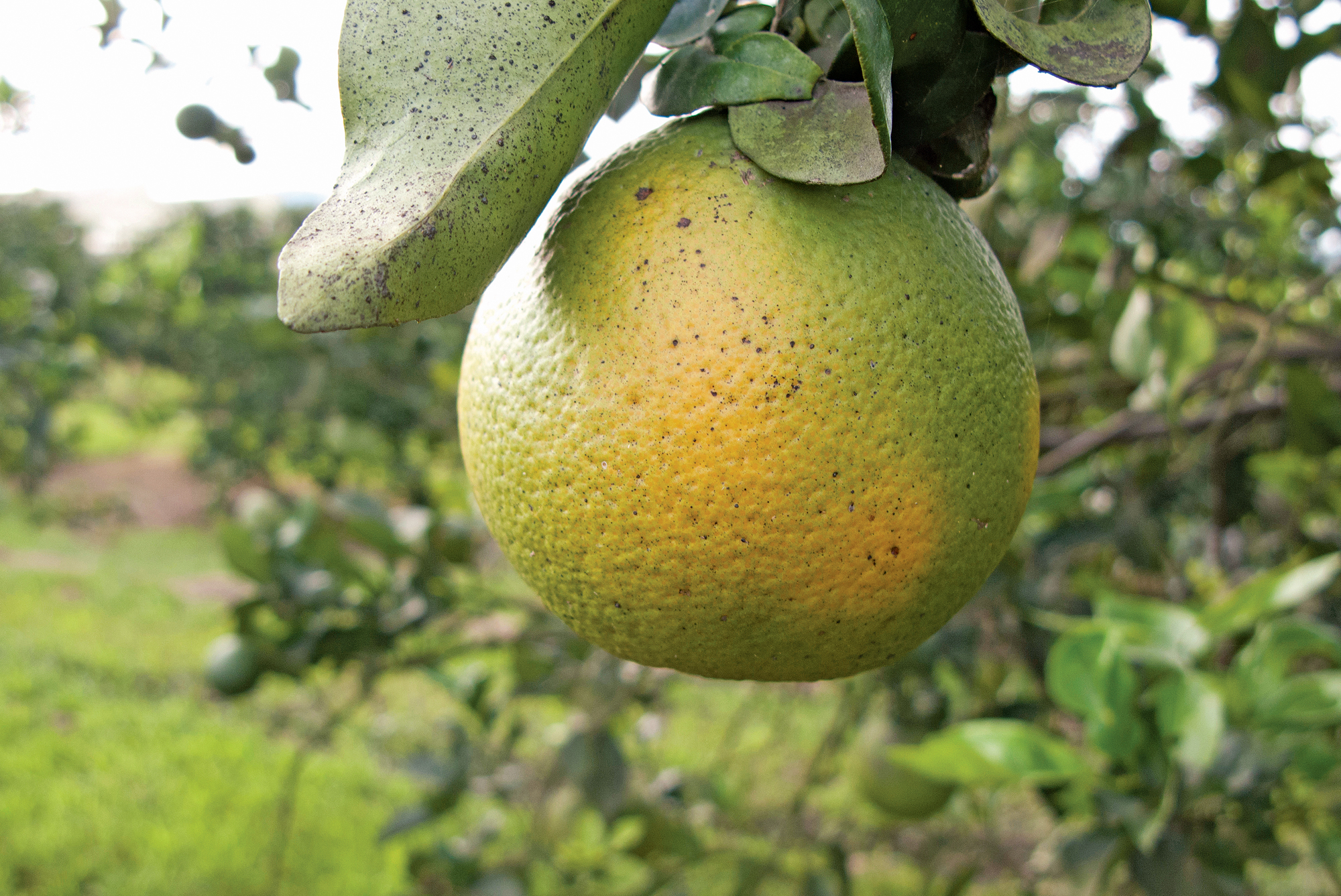
More and more people are voicing their concern over the danger represented by Citrus greening, a bacteria also known as Huanglongbing (HLB) that is maybe the greatest threat to global citrus cultivation. It has already destroyed millions of plants in extra-European countries including the US (Florida, California), China and Brazil. Now Europe is also at risk, as the insect that transmit the disease is already present in Spain, Portugal and Israel, i.e. in the leading countries producing citrus fruit, oranges and lemons in the Mediterranean basin.
The worry is shared by the CREA research center in Acireale, which is working on a way to contain the phenomenon. FreshPlaza has talked about it with Concetta Licciardello, first researcher at CREA and supervisor, together of Alessandra Gentile - tenured professor of General arboriculture and arboreal cultivations at the University of Catania - of two activities part of Horizon 2020 project "preHLB", which has the objective of adopting short, medium and long-term preventive measures against Citrus greening. The European project involves research bodies, Universities and private companies in Spain, France and Italy, to which Brazil and China are added as countries affected by the presence of this disease.
"CREA is studying greening resistance sources through the sequencing of the Eremocitrus glauca genome, one of the very few species resistant to the disease. The University of Catania is contributing to the use of new biotechnologies to introduce resistance in citrus commercial species, which are almost entirely susceptible. Sexual incompatibility and grafting non-affinities do not make greening resistance introgression easy and simple. This is why a lot of people are worried, also due to the recent discovery of vectors in Spain, Portugal and Israel."
"Following a comparison between the genome of susceptible species and that of resistant species, it is possible to identify the mutations and genes responsible for susceptibility and resistance through an in-depth bioinformatic study."
"This way, it will be possible to use assisted evolution technologies (cisgenesis and genome editing) in the future to make resistant species that are currently susceptible. These techniques, in addition to intervening not only on the gene or, more precisely, in correspondence of the mutation to modify, also have the advantage of maintaining the remaining genetic heritage unchanged, saving time and money compared to classic techniques which are still the most used approach, to add the resistance character in susceptible species."
CREA Acireale is the coordinator of the è CITRUS sub-project, one of the 13 part of the BIOTECH project financed by MIPAAF thanks to which assisted evolution technologies have ben acquired to improve citrus fruit quality.
Source - https://www.freshplaza.com