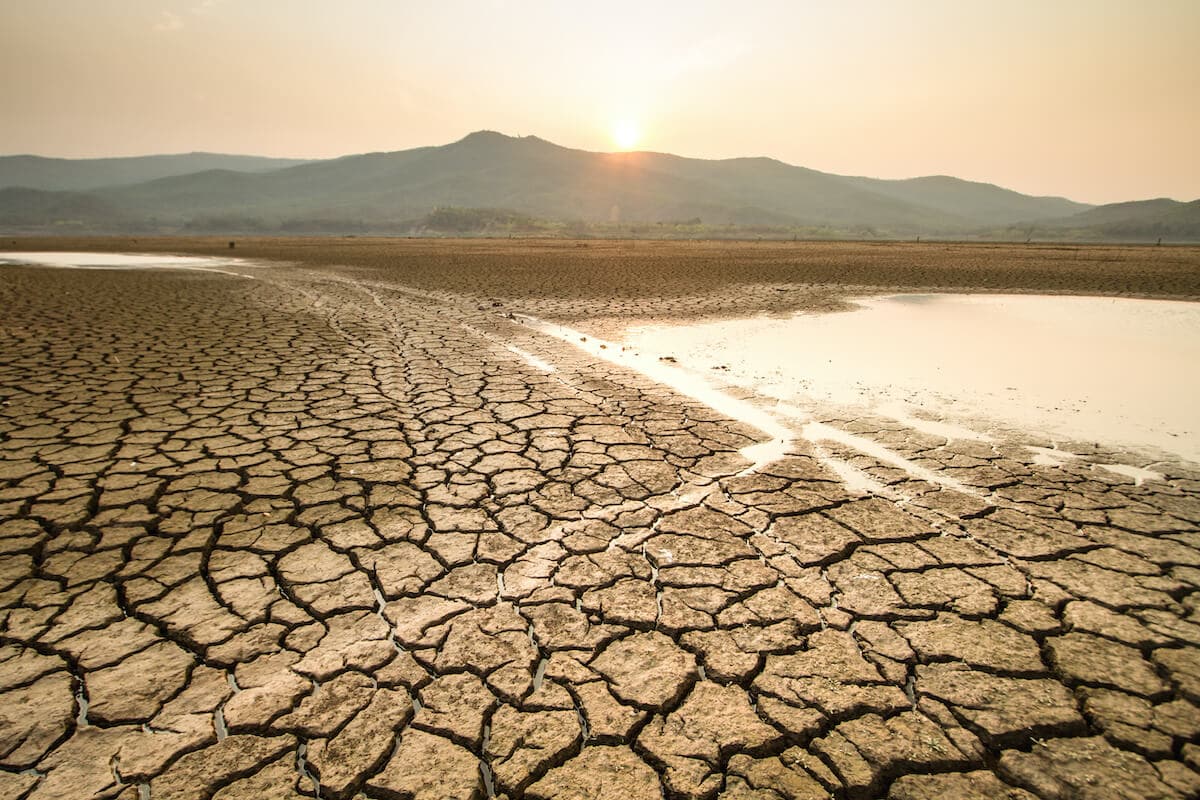
The European Commission’s “Drought in northern Italy - March 2022” report offers an assessment of the evolution and impact of the 4-month long drought in the region, based on data from the JRC Global Drought Observatory (GDO) of the Copernicus Emergency Management Service (CEMS).
Precipitation deficit, abnormal temperatures and dry soil moisture
Since December, there has hardly been any precipitation in Northern Italy. This lack of precipitation — also reflected in poor snow accumulation — combined with mild winter temperatures, led to low soil moisture and low water level in the reservoirs and lakes. A winter temperature anomaly of +2.1 °C and an average precipitation deficit of 65% (compared to the 1991-2020 average) have been observed too. Researchers indicate that such a combination of mild and dry winter has not occurred in Lombardy, Piedmont and southern Switzerland in the past 30 years.
Severely drier than normal weather conditions are also predicted in the coming months, causing concern for the evolution of the current drought that could become an extreme drought event.
Rivers and mountains are also affected
In early March, shallow streams across different Po river sections were registered. As a result, some sections of the Po river are already considered under extreme hydrological drought. Other sections are under severe or moderate hydrological drought.
By late February, snow water resources were approximately 40% of the 2009-2021 median conditions across Italian Alps. The extremely low snow accumulation — especially in the Southern Alps — causes concerns about low snowmelt contribution to river discharges in late spring. This will likely increase the hazard of hydrological drought occurring over the coming months.
Agricultural impacts
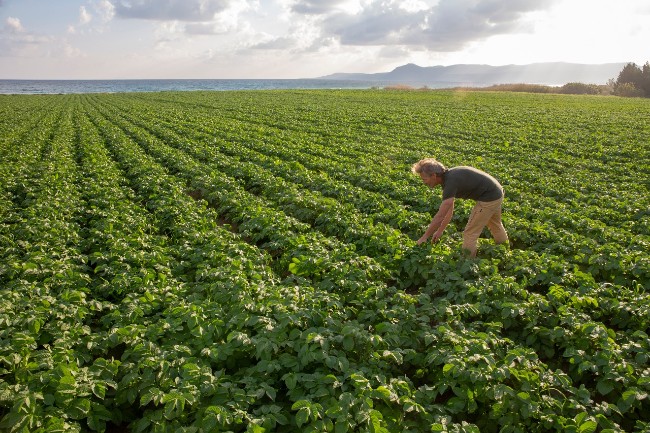
The precipitation deficit and mild weather have caused lower than average soil moisture for most of northern Italy, already before the plants start the real growth season, meaning the problem is likely to be exacerbated once plants really start to extract water. Therefore, even if winter crops in northern Italy still appear normal, the water stress reduces the yield potential, and rain is urgently needed. Not only to avoid further reducing the yield potential but also to favour fertiliser application and allow for good spring-crops sowing conditions.
The researchers warn that water availability for irrigation will be lower than usual. Higher water competition among different sectors and within the agricultural one is likely to occur if the current deficit will not be reduced by abundant rainfall. The low level of the Po river creates further problems and concerns in its delta as it favours salt seawater infiltration into the fertile low lying agricultural areas. This phenomenon may further exacerbate agricultural losses.
Drought impact on energy production
The stored water volume in Italian hydropower reservoirs is already at its historically low (considering the period 1970-2019), and the competition for other water uses such as agricultural irrigation is therefore likely to start earlier than usual. In mid-March, the stored energy value in the Italian reservoirs was only at 28.2% of the total storage capacity vs a historical (1970-2019) observed minimum of 30.4% for the same period.
Therefore, the current low water level in Italian hydropower reservoirs may exacerbate the already difficult situation faced by the Italian power market which is already experiencing record-breaking wholesale prices due to geo-political factors.
Monitoring the drought evolution in the following months will be essential to accurately assess its impact and start developing warning diligence. If no effective mitigation strategies are implemented, climate models indicate that with climate change the risk of recurrent severe-to-extreme drought events will increase in the coming decades.
Background
The Joint Research Centre produces real-time drought information through the European and Global Drought Observatories (EDO and GDO), part of the Copernicus Emergency Management Service (CEMS). The European Observatory will be extended with a multi-sectoral drought risk and impact assessment under the ‘EDO for Resilience and Adaptation’ (EDORA) project, which aims to improve drought resilience and adaptation in EU Member States.
Source - https://joint-research-centre.ec.europa.eu