_female.jpg)
A drive by the Kenyan government to kill up to 6 million red-billed quelea birds that have invaded farms will have unintended consequences for raptors and other wild species, experts have warned.
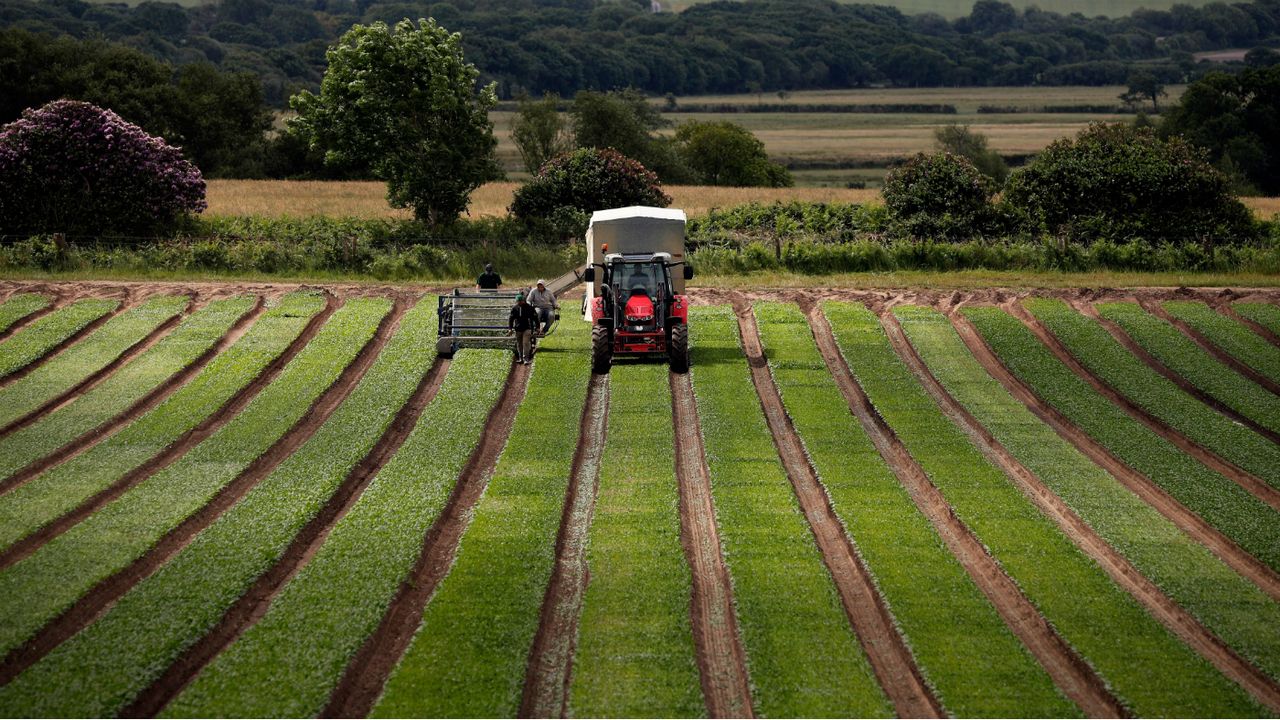
The continuing drought in the Horn of Africa has reduced the amount of native grass, whose seeds are queleas’ main food source, causing the birds to increasingly invade grain fields, putting 2,000 acres (800 hectares) of rice under threat. About 300 acres of rice fields have been destroyed by the birds.
A single quelea can eat up to 10 grams of grain a day, according to the Food and Agricultural Organization (FAO). Farmers in western Kenya stand to lose close to 60 tonnes of grain to the birds. In 2021, the FAO estimated crop losses attributable to the birds amounted to $50m (£40m) annually.
The spraying of fenthion, an organophosphate pesticide, has been the method of choice in fighting the pests in Africa, but the chemical has been described by researchers as “toxic to humans and to other non-target organisms”.
“Fenthion can therefore injure or kill indiscriminately, with consequent adverse effects on non-target organisms,” the reasearchers concluded.
Paul Gacheru, species and sites manager at Nature Kenya, a local affiliate to BirdLife International, said the method used to control quelea should be well-informed since “widespread use of non-target species avicides can result in environmental contamination and mass deaths of other birds and animals”.
“Often, there is poor post-spraying site management, thus increasing the risk of poison-related wildlife deaths, especially among scavenging animals – hence the need to enhance education and awareness on quelea control,” he said.
With an estimated breeding population in Africa of 1.5 billion birds, ornithologists say there are neither enough birds of prey to wipe out vast quelea colonies nor effective, environmentally friendly solutions.
Simon Thomsett, a director at Kenya Bird of Prey Trust, said the culture of guaranteeing human food security above all else would be amplified “due to what we now perceive to be a probability, owing to climate change, as open grasslands that were quelea feeding grounds quickly turn into farmlands”.
In wheat-growing parts of Kenya, Thomsett added, farmers have sprayed any species of birds deemed to be a threat to farms, “yet some of the birds are there to feed on insects that feed on their wheat”.
But it is the effect the pesticide may have on the few remaining raptors that worries him most. “Those on the raptor conservation side of the fence are greatly alarmed at the spraying. Today, all raptors [in Kenya] are endangered. In any case, how effective has the spraying been in the last 60 to 70 years?”
The FAO and the United Nations Environment Programme jointly administer the Rotterdam convention, whose aims include reducing risks from hazardous chemicals in agriculture. They have been considering listing fenthion in Annex III of the treaty, a list of pesticides and industrial chemicals banned or severely restricted on environmental or health grounds.
A report prepared by Robert A Cheke from the University of Greenwich and which was used as a working document in a 2017 FAO workshop in Sudan recommended alternatives to the use of the chemical, including a forecast and control planning method.
“If the efficiency of control operations could be improved, then the quantities of fenthion used could be reduced. One way of improving the efficiency of control strategies is to detect the presence of suitable quelea breeding areas by satellite imagery … or to forecast where the birds are likely to breed,” the report said.
It added: “Given that the birds’ migrations and breeding opportunities are determined by patterns of rainfall, it is possible to devise forecasting systems to predict where the birds are likely to breed and, thus, to concentrate activities in search of the colonies to areas where the birds are likely to be.”
Quelea invasion frequently occurs in many African countries. Six months ago, the FAO released $500,000 to the government of Tanzania to support pesticide spraying, surveillance and capacity-building after 21 million quelea invaded rice, sorghum, millet and wheat fields.
Source - https://www.theguardian.com