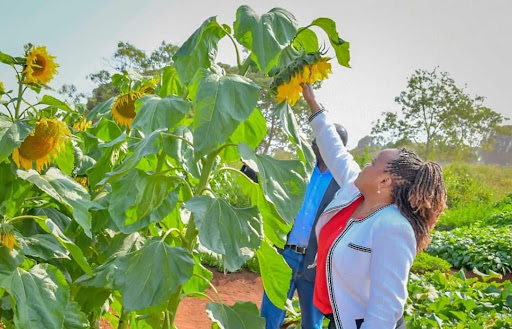
Senator Onyonka questioned the government’s decision to procure sunflower seeds from Zambia instead of sourcing them locally, particularly from Trans Nzoia County.
Lawmakers have demanded explanations from President William Ruto's government over the Sh981 million edible oil crop promotion project, raising concerns about its progress and effectiveness.
The edible oil crop project, launched in October 2023, aimed to increase sunflower production to reduce Kenya’s reliance on imported edible oils and lower the cost of cooking oil.
Kenya currently spends around Sh160 billion annually on edible oil imports, the second-largest import expense after petroleum. The project identified 24 counties, including Nakuru, Bungoma, Busia, Uasin Gishu, and Meru, for support in boosting local production.
Through the initiative, the government allocated Sh1 billion to distribute 570 metric tonnes of seedlings, targeting increased productivity and expanding oil crop farming.
The lawmakers, led by Kisii Senator Richard Onyonka, have now questioned the Agriculture and Food Authority (AFA) about the status of the five-year initiative.
Probe programme’s implementation
Senator Onyonka called on the Senate Agriculture Committee, chaired by Murang’a Senator James Murango, to investigate the programme’s implementation, including how the funds were utilised and the counties involved.
“The committee should provide details on the distribution of the sunflower seeds across the country, disclosing the criteria for distribution, the number of farmers who have received the seeds so far, as well as the support to be offered to the farmers in the short and the long term,” Onyonka said.
The senator also questioned the government’s decision to procure sunflower seeds from Zambia instead of sourcing them locally, particularly from Trans Nzoia County. He urged the committee to explain the rationale behind the move and its implications for local farmers.
Vihiga Senator Godfrey Osotsi said the government must disclose details about factories capable of processing sunflower and oil seeds into edible oil. He called for an assessment of whether these facilities are government-owned, private, or cooperative-run.
“We expect the committee to inquire and explain how the government plans to monitor and evaluate the implementation of this project, indicating when the evaluation report will be released,” Osotsi said.
The project, spearheaded by the Nuts and Oil Crops Directorate under AFA, aims to promote affordable, high-quality inputs, provide technical production support and encourage cottage-level processing.
Sunflower, a versatile crop adaptable to most ecological zones in Kenya, has been identified as a viable solution for achieving self-sufficiency in edible oil production.
The initiative seeks to expand the area under oil crop cultivation from 60,000 hectares to 250,000 hectares, increase productivity from 0.3 to 0.5 tonnes per hectare to two tonnes per hectare, and introduce oil crop farming to 10 non-traditional counties.
The programme also anticipates boosting local production of edible oils from 80,000 metric tonnes to 240,000 metric tonnes while producing 1.5 million metric tonnes of sunflower, soybean, and canola seeds for oil extraction. This expansion is expected to create employment opportunities in seed distribution, production, warehousing, transportation, and agro-processing.
Lawmakers have urged a comprehensive review of the project to ensure transparency and accountability, calling for timely evaluations to safeguard its objectives.
Source - https://eastleighvoice.co.ke