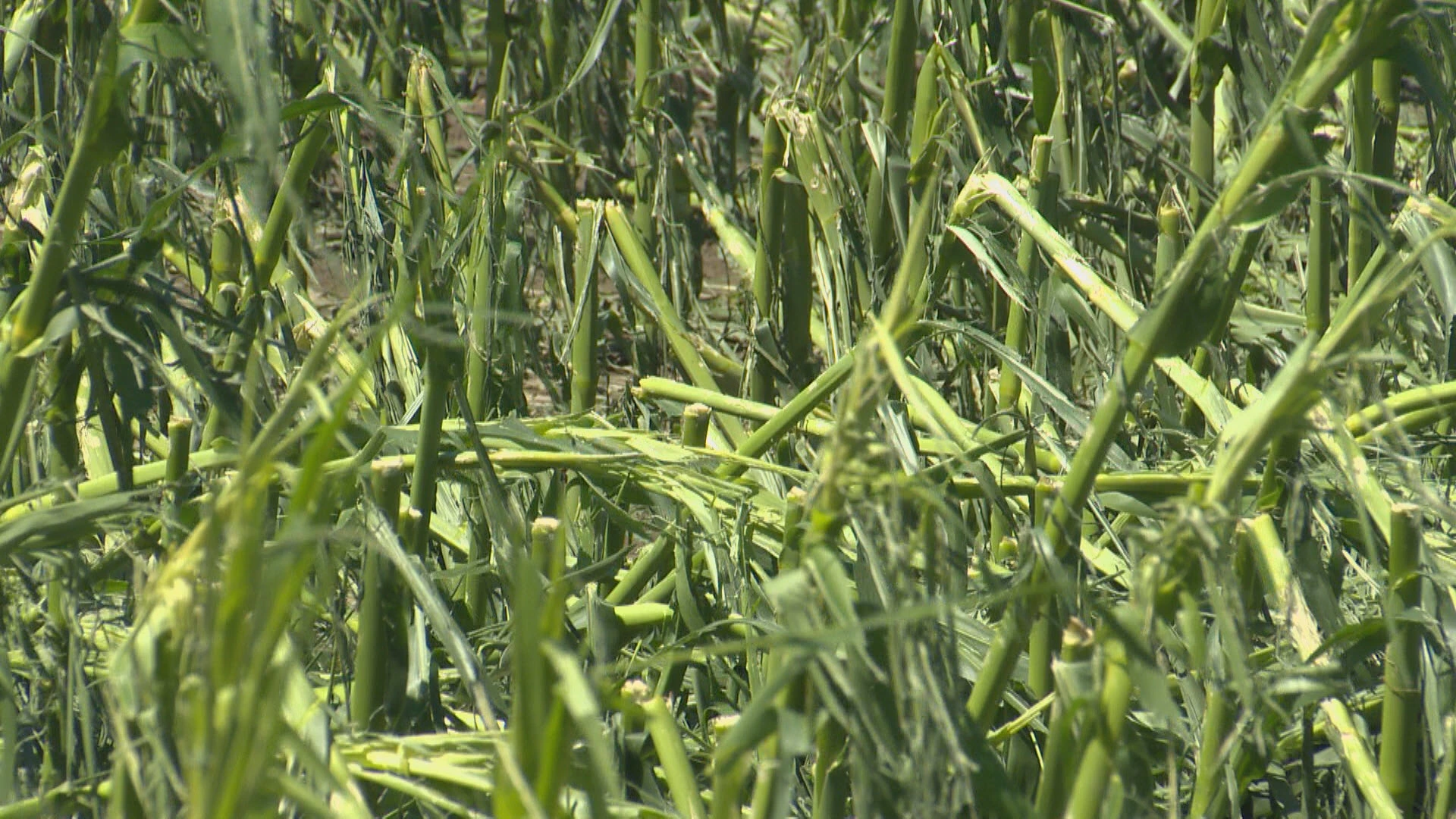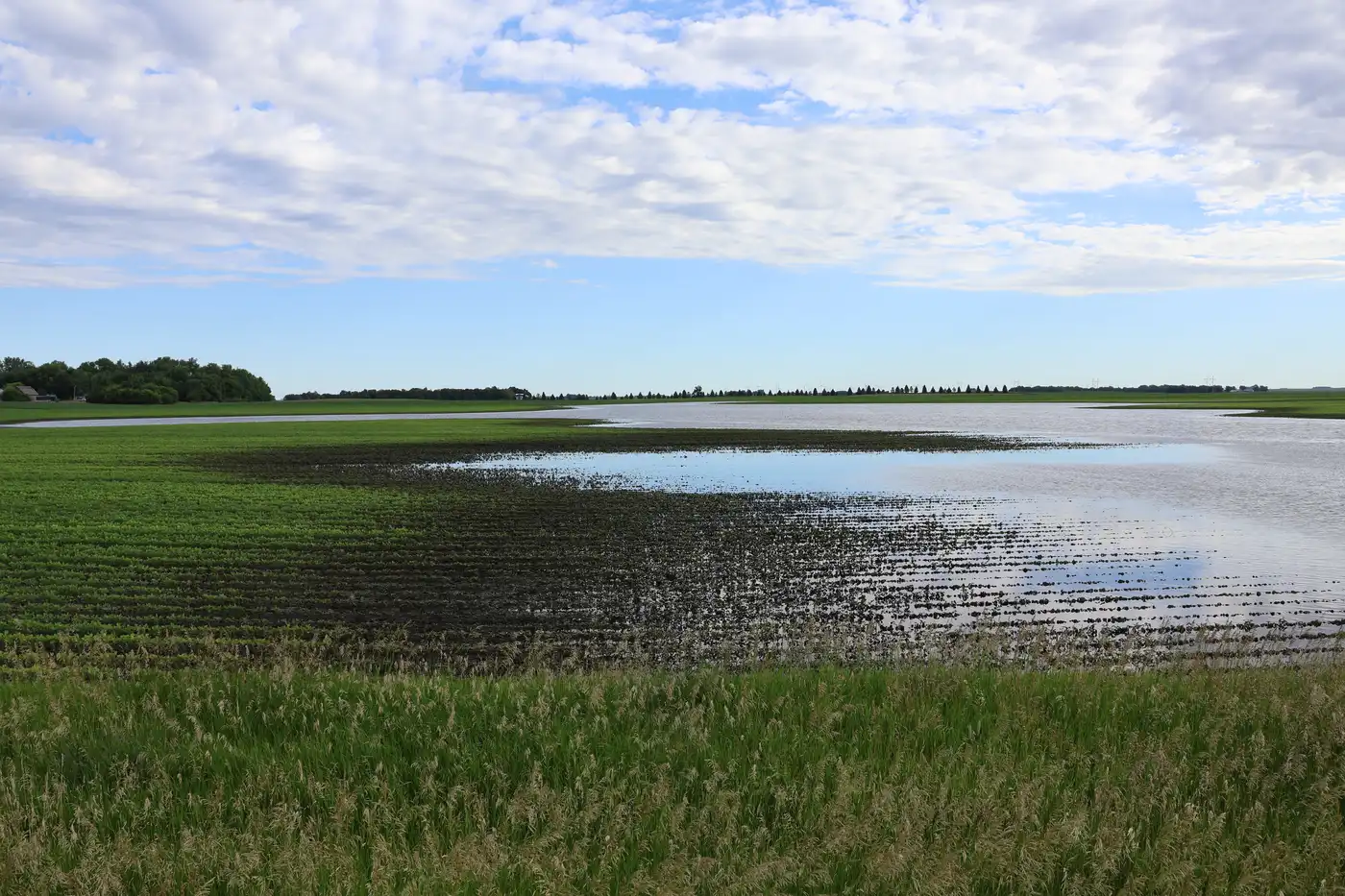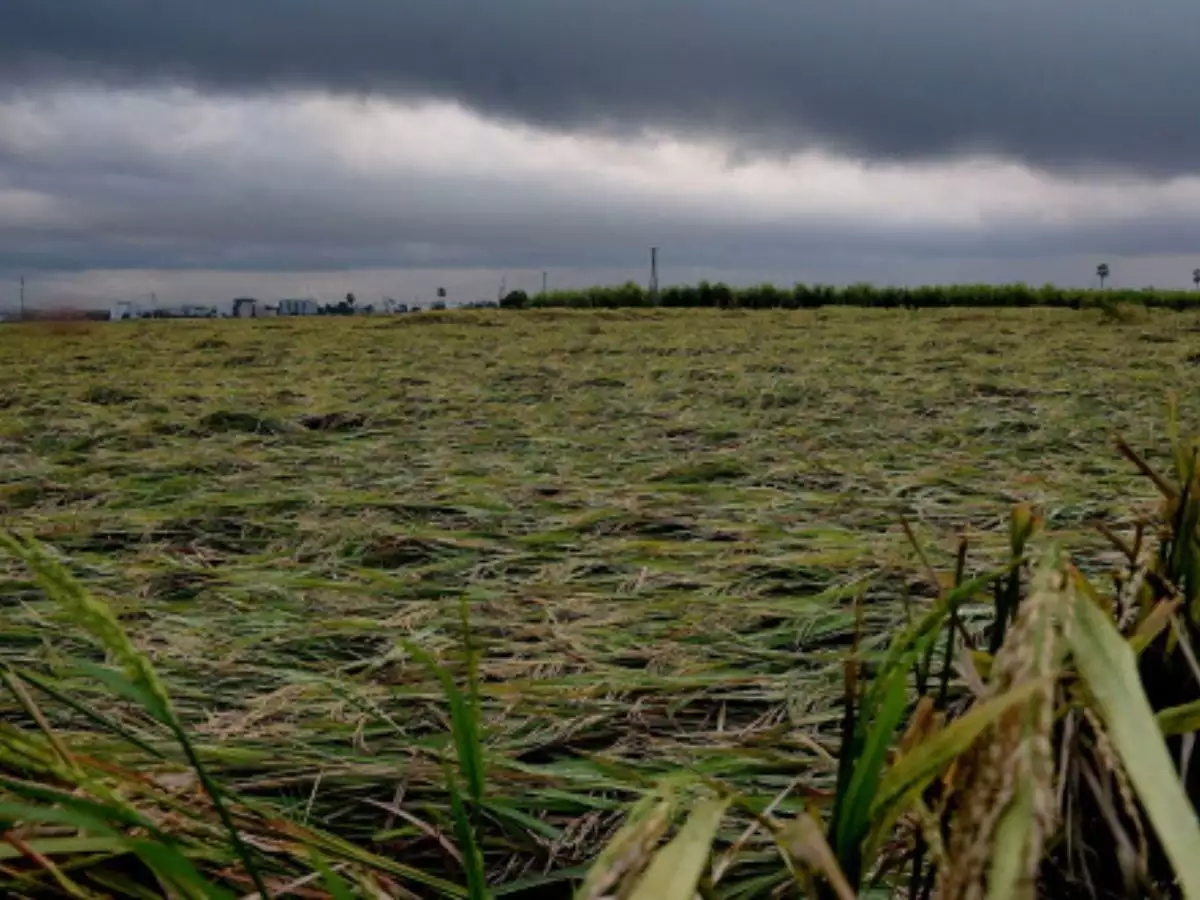
More than 200 people have been confirmed killed by Cyclone Freddy, which tore through southern Malawi for a second time on Monday, washing away homes, roads, and farmers’ fields.
Grace Joseph, in the tea-growing district of Thyolo, was one of the storm’s victims. Her maize crop was looking good this season. That is until Freddy – the longest-lasting tropical cyclone on record – struck again, and this time with more devastating effect than when it first touched down last month.
More than 20,000 people have been displaced, and the government has now declared a state of disaster in the 10 hardest-hit southern regions.
“As it now stands, I will have to continue being dependent on food aid,” Joseph, 62, told The New Humanitarian. After a poor crop last year, she had pinned her hopes on a decent harvest to feed her family and get back on her feet.
Farmers in southern Malawi have faced a series of climate disasters in recent years – from storms to drought – that has deepened the already troubling levels of rural poverty. In January last year, more than 900,000 people were affected by Cyclone Ana, followed two months later by Cyclone Gombe, which caused yet more damage.
“Just as the people were recovering from that experience, Freddy has washed away all what they hoped for; it’s now hard to imagine how these people will survive,” Senior Chief Malemia of Nsanje district told The New Humanitarian.
Densely populated and agriculture-dependent, Malawi is extremely vulnerable to the effects of climate change – even under scenarios predicting only modest future temperature increases. As a result, experts are calling on the authorities to urgently rethink their agricultural policies and find “climate-smart” alternatives to better insulate smallholder farmers from climate-related shocks over the coming seasons.
Unpredictable weather already makes it difficult for rural producers to feed themselves – let alone coax out a surplus. In the 2021/2022 farming year, maize output dropped by almost 19% to 3.7 million metric tonnes compared with the previous season’s 4.6 million. Storms, followed by dry spells, in southern Malawi accounted for much of those losses.
Even before adding in the toll from Freddy, this year’s harvest, which begins next month, was already expected to be below average as a result of prior poor rainfall and the rocketing global cost of fertiliser. Regularly, more than 60% of Malawian families are deemed food insecure, with 3.8 million people – 20% of the population – needing food aid during the October to March lean season.
Fertiliser, subsidies, and corruption
Since the 1970s, successive Malawian governments have tried to boost the yields of rain-dependent subsistence farmers – the backbone of the economy – through subsidy programmes that provide cheap fertiliser and improved seeds.
In seasons when the weather has been good, these schemes have boosted maize production – the dominant food crop – but costs have spiralled, raising concerns over the sustainability of the programmes. It’s now cheaper for Malawi to import maize rather than the fertiliser to grow it, according to a study by the International Food Policy Research Institute (IFPRI).
“We need to have a better solution for such citizens affected by food insecurity rather than condemning them to a life of dependency on a programme that is not suited for them.”
Last year, an expanded Affordable Inputs Programme (AIP) swallowed 85% of the agriculture budget, crowding out expenditure on irrigation and other much-needed farmer support services. The government was forced to scale back the number of farmers it aimed to reach – from the planned 3.7 million to 2.5 million – partly as a result of rising global fertiliser prices.
But the overall management of the AIP has also been a challenge. Hurdles include the logistical headache of getting fertiliser and seeds to farmers on time to allow them to plant with the first rains; the tendency of poor farmers who need immediate cash to sell the subsidised inputs; and the broader problem of corruption within the system.
Last year, President Lazarus Chakwera promised a reformed AIP to better target the farmers who need the support and prevent rural dealerships running out of stock. “We need to have a better solution for such citizens [affected by food insecurity] rather than condemning them to a life of dependency on a programme that is not suited for them,” he said at the time.
But little has been done to tackle the broader structural issues that have failed to lift subsistence farmers out of poverty. The subsidy programmes tend to target individual growers. They have not encouraged the clubs and cooperatives – or equipped farmers with the market knowledge – to enable them to develop as commercial producers.
For the poorest farmers, direct cash transfers could be a better solution, according to IFPRI. A thriving market for subsidised fertiliser – whereby some farmers sell their allocation to more productive growers – is already an unofficial step in that direction.
The subsidy programmes have all revolved around the distribution of chemical fertilisers. But over the long-term these compounds deplete the soil’s nutrients, requiring more fertiliser each year to produce the same yield. More sustainable organic fertilisers improve soil structure and leave farmers experiencing less crop failure during dry spells.
The government uses maize production as the metric to measure success. Yet with less than 10% of Malawi’s maize irrigated, farmers are extremely susceptible to dry spells, and in some agricultural zones maize is not the most suitable crop.
Critics say politics encourages the retention of the subsidy programmes, and gets in the way of reform. It’s a vote-winner among the rural electorate, allegedly a “cash cow” for agribusiness, and part of “deeply entrenched rent-seeking tendencies” that have plagued subsidy schemes since the late 1990s, notes researcher Blessings Chinsinga.
Becoming ‘climate-smart’
More than 70% of Malawi’s farmers produce little more than a subsistence crop on less than a hectare of land. It’s a precarious living made all the harder by the erratic weather, declining soil fertility, weak markets, and the limited uptake of new technologies.
Confronted by the looming climate crisis, just getting more inputs to farmers on time is not the answer. “Adaptation [is] the only solution,” Tamani Nkhono Mvula, an agricultural policy adviser with the US government’s foreign aid agency, the Millennium Challenge Corporation, told The New Humanitarian.
That includes an aggressive promotion of “climate-smart” agriculture by the government to help farmers adjust to the inevitability of higher temperatures and more variable rainfall. But conservation farming – based on improved land and water use management – is currently practised on only 2% of cultivated land.
Although the government recognises the need for adaptation, at least formally, implementation and policy coordination remain problematic, according to the World Bank. That also includes securing the necessary international financing. As a result, “the agenda for [climate-smart agriculture] is mostly driven by international NGOs rather than the national government,” the Bank points out.
“There is a need to facilitate upscaling and implementation of adaptation practices at the community level to enhance resilience, as well as availing climate information to help farmers make timely and informed livelihood decisions,” Zhijun Chen, representative of the UN’s Food and Agriculture Organization, told The New Humanitarian.
To help do that, the government needs to spend far more than it currently does on agricultural extension officers – locally based experts who work directly with growers, noted Lilian Saka, executive director at the Civil Society Agriculture Network.
Malawi also needs to find a way to halt land degradation and forest loss. Without these investments to jumpstart adaptation, climate change could reduce Malawi’s GDP by 3-9% by 2030 and by 6-20% by 2040.
That would trap farmers like Joseph – vulnerable to the storms and droughts that are forecast to worsen – in an unending cycle of poverty.
Source - https://www.thenewhumanitarian.org