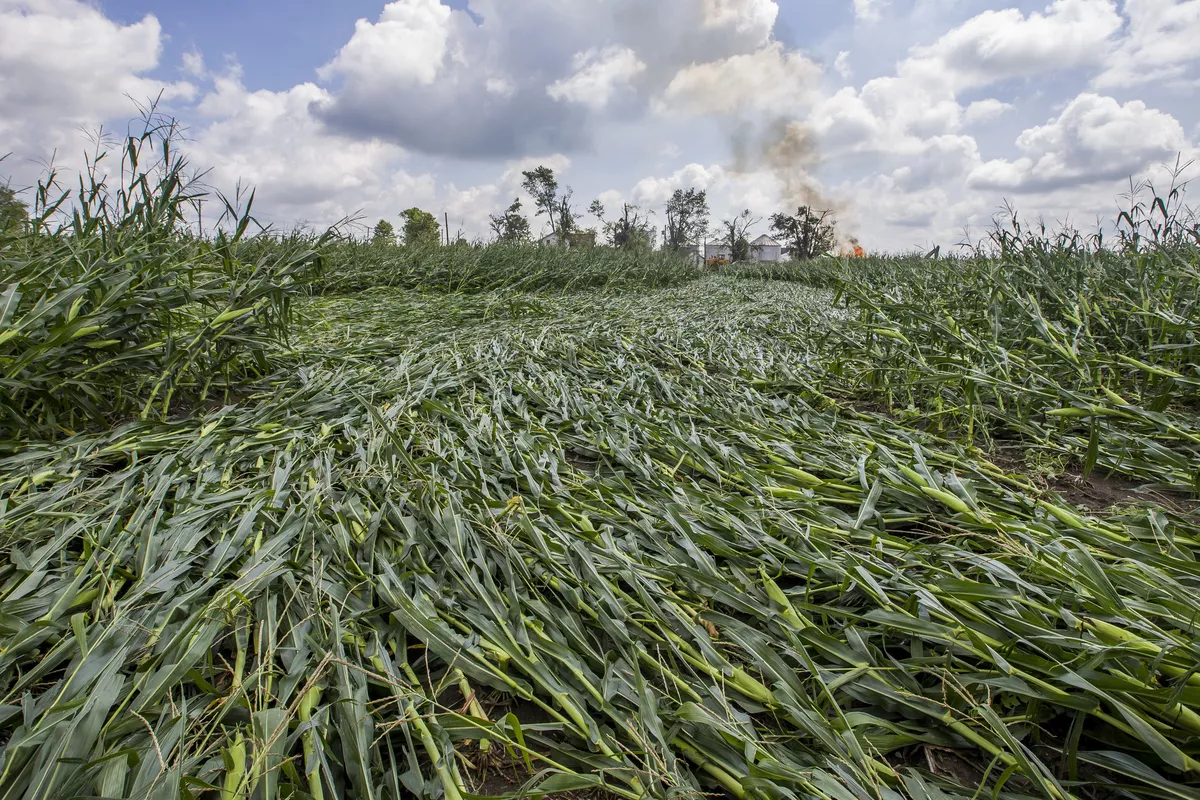
The agricultural season in Morocco is drawing to a close, with the last summer fruit calendars, mainly table grapes, and watermelons. Drought and poor weather conditions have set the tempo for the season and caused a sharp drop in crop yields, even those for which Morocco had achieved export records until recent years.
Anas Mansouri, an engineer at the International Center for Agricultural Research in the Dry Areas (ICARDA), declared: "Water scarcity has become a major challenge in Morocco. The situation is critical and requires urgent solutions, although not all regions are affected in the same way. We have seen many disruptions in the agricultural sector this season, and unfortunately, this year is no exception, and the problem is likely to worsen in the future."
The drop in yields of several crops, including strategic crops for the local market, such as cereals and beet, and the most exported crops, such as citrus, fruit, and early vegetables, is in the order of 50%, according to professionals. Mansouri comments: "The impact is very visible in terms of yield. In many parts of the country, crops have not even reached the germination stage, particularly in the south. Many farmers have simply given up production this year, as in the case of alfalfa growers, or have even given up farming altogether to migrate to other sectors. Other farmers, particularly those growing perennial crops such as arboriculture, have drastically reduced their acreage. And then, of course, there are the regions that have not been affected at all."
Morocco can be divided into three water zones, according to Mansouri, "the oasis and mountainous zones, the small and medium hydraulic zones, which have small water sources, and the large hydraulic zones, which have large dams. All these areas have been affected by water stress this year. Even the filling level of the dams is as low as 27%, a critical rate. The bulk of the dams' reserves are intended for drinking water, and the authorities have been forced to reduce the volume of water intended for crop irrigation."
Producers are then in one of two situations: those located in regions with high water tables can continue to produce, and the rest have to reduce the irrigated areas, or even stop production, "in some regions, where the water table is depleted, digging a well has become a financial adventure for farmers, since they may simply not find any water."
Mansouri lists the regions most affected: "This is the case in the south, (in the regions of Tata, Tinghir, Errachidia), in the Rhamnas region (Youssofia, Bengrir, Chemaaia, as far as Kelaat Seraghna), in the east of the country, (such as Outat El Haj, Guercif, Taourirt, Jerada, Oujda, as well as in the center-east as in Doukala".
"Some regions, such as the Souss Massa and its capital Agadir, still benefit from a water table that has not yet dried up, but rising salinity levels will force the replacement of seeds and even crops. The region also benefits from a seawater desalination plant, enabling vegetable production to continue."
In contrast, the northern and western regions of the country enjoy large underground water reserves and good levels of rainfall, which mitigate the impact of drought and have even enabled the region to produce water-intensive crops such as avocados and watermelon in large volumes.
Anas comments: "This is the case of the Lokous and Sbou basins, or the Tetouan/Tangier to Kenitra/Rabat axis. Rainfall exceeds 500mm per year, and these regions have several large dams and rivers, as well as significant groundwater resources. But we mustn't forget that the water table is defined by rainfall and that the crisis could yet reach these regions."
According to the expert, everything points to a continuation of the crisis, since its causes are persistent: "Morocco, because of its geographical location, is one of the first victims of climate change, caused by carbon emissions. The world's demographic growth will require more food production and industries and therefore more water resources. The water crisis will worsen, as the issue goes beyond the agricultural sector to include drinking water."
Mansouri concludes: "We simply have to adapt to this new reality. The seawater desalination plant in Agadir has proved its effectiveness, and the multiplication of plants can provide part of the solution. We can also suggest transferring water supplies from the north and west of the country, which are wasted in the sea, to the affected regions. Whatever the solution, it needs to be taken urgently."
Source - https://www.freshplaza.com